SIR contends that payments toward transarterial radioembolization (TARE)/selective internal radiation therapy (SIRT) should extend beyond the current coverage limitations in patients with liver cancer and metastases.
Investigators with University Hospital Basel, Switzerland, recently explored the use of a “promising” new option that reduces energy consumption during brief, inter-examination idle intervals.
The company offers a suite of services including AI-powered safety monitoring in case something goes wrong in the MRI suite, staffing, training and certification.
Updated large language models have been trained to process both text- and image-based questions, potentially making them more effective in radiology settings.
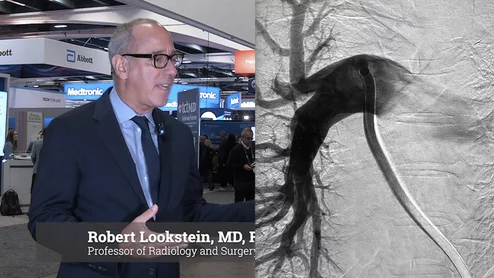
Highly anticipated trial data comparing mechanical thrombectomy to anticoagulation alone for intermediate- and high-risk pulmonary embolism showed that the more aggressive strategy improved outcomes.
Six years ago, two radiologists with dissimilar backgrounds and divergent clinical interests put their heads together and launched a new practice. One physician was an academic subspecialized in musculoskeletal reads. The other, a private practitioner, concentrated on oncologic imaging. That’s how Transparent Imaging was born, powered by Konica Minolta.
In a private dining room in Miami, something unusual is happening. Leaders from competing imaging centers are openly discussing their best practices—even sharing vendor recommendations and operational strategies that have doubled their volumes while cutting costs in half.
A growing number of private insurers are now covering these advanced technologies. Roosha Parikh, MD, told Cardiovascular Business that the hard work of SCCT and other groups has helped make this happen.
Researchers used AI-enabled software developed by Cleerly to evaluate the CCTA results of more than 6,000 patients. The software was consistently effective, identifying patients who may face an increased risk of poor outcomes.