A new paper details how radiologist-directed expedited recalls can prioritize resources for highly suspicious findings and reduce the time patients wait for further evaluation.
If enacted, the legislation would require healthcare facilities, including imaging centers, to disclose their use of AI in clinical decision-making through website postings and written patient notifications, among other things.
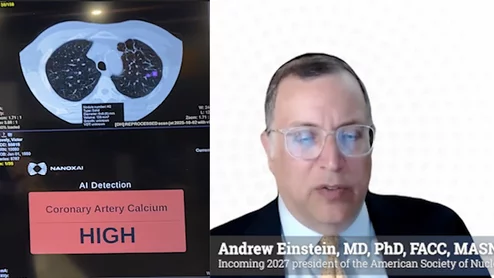
Andrew Einstein, MD, PhD, spoke to Cardiovascular Business about the potential benefits and limitations of using coronary CT angiography as a screening modality.
Heartflow filed the lawsuit after Elucid received FDA clearance for its new AI-enabled FFR-CT software. Elucid, meanwhile, is standing behind its technology and plans on responding through the appropriate legal channels.
"Particularly strong" performance among women in their 70s signals the importance of continuing screening into later ages, experts write in RSNA's Radiology: Imaging Cancer.
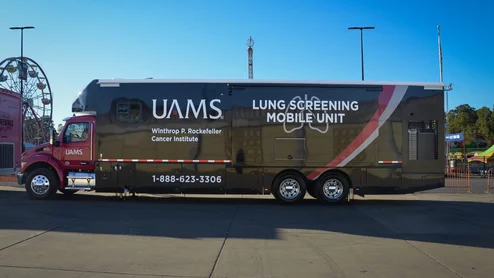
With the help of a $4M appropriation from HHS, the UAMS Winthrop P. Rockefeller Cancer Institute is rolling out 2 of 3 new state-of-the-art mobile lung screening coaches, with the third following soon.
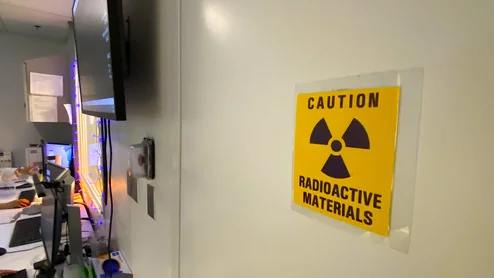
UW-Madison is adding to its radionuclide research and production facilities, including the nation’s first cyclotron dedicated to producing alpha-particle-emitting radionuclides.
Thanks in no small part to a former surgeon who traded her scalpel for a microscope more than a decade ago, digital pathology is today finding a sure foothold in the largest region of Spain.