
Beyond Efficiency: Why Medical Imaging Needs a Capacity Strategy
EXECUTIVE SUMMARY
Medical imaging has spent decades pursuing greater efficiency through technology, automation and workflow improvements. Yet as patient demand grows, clinical complexity increases and workforce pressures persist, a larger question is emerging: Are these investments simply helping organizations manage today’s workload, or are they creating the capacity needed for tomorrow?
Creating capacity requires a shift in perspective. Rather than addressing staffing, technology and operational challenges independently, healthcare organizations must consider how people, expertise, workflows and technology work together to expand their capabilities.
As the experiences of Banner Health and South Tampa Cardiology demonstrate, sustainable capacity creation depends on deliberate workflow design, automation, specialized expertise and collaboration with experienced technology partners. At the enterprise level, it also means reconsidering where expertise resides, how advanced visualization capabilities are managed and how technology can be standardized across the organization.
In short, today’s call for smart and sustainable capacity creation trumps healthcare’s earlier imperative to “do more with less.”
Read on for more.
I. It is shortsighted to think of capacity as synonymous with maximum potential volume.
Concentrating on a specialized setting within medical imaging helps explain why.
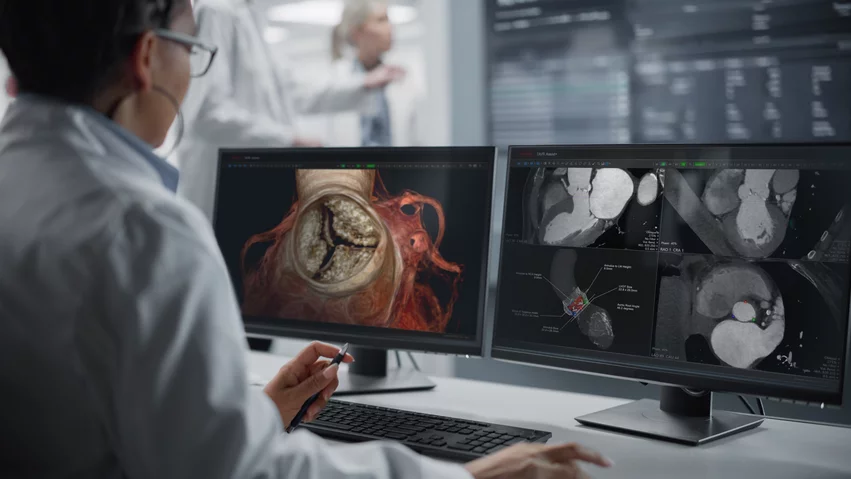
In a postprocessing operation such as a medical 3D lab, for example, capacity may be appropriately understood as the ability to consistently process, quality-check and deliver advanced imaging analysis without sacrificing accuracy or speed.
One proponent of this view is Kimberly Hatch. As 3D imaging specialist and de facto technical director of the 3D visualization lab at six-state, 33-hospital Banner Health in Phoenix, Hatch manages a team of six specialized technologists. All are expressly trained in acquiring and processing coronary CT and MR angiography images.
The team’s cumulative output averages around 450 studies per week. That’s a remarkable 15 sophisticated imaging reconstructions per team member every day.
“This level of capacity is only doable for us because we have heavily invested in workflow optimization, standardization and the use of automation,” Hatch tells Radiology Business.
Importantly, such efficiency and productivity are not the 3D lab’s guiding objective. Rather, they are means to an end.
“The true measure of our capacity isn’t just how many exams we complete but whether we are quickly and consistently providing cardiologists with the information they need to make definitive diagnoses,” Hatch explains.
Technology can enable tremendous growth, but realizing that potential still depends on well-trained teams, standardized workflows and a culture of continuous improvement.
—Kimberly Hatch, 3D Imaging Specialist at Banner Health

It helps, she acknowledges, that postprocessing technologies have come so far over the 15-plus years she’s been working in the field.
“When I started, there was no software purpose-built for what we do,” she recalls. “All postprocessing was manual. It would take two or three hours to properly render a single exam in diagnostic-quality 3D.”
Diagnostics in Demand
Getting from that manual starting point to 15 radiologist-ready renderings per tech per day—around two per hour—didn’t just happen, Hatch points out. Rather, the 3D lab at Banner Health has created capacity through focused deployment of two overarching elements: proactive management and purpose-built technology adoption.
Hatch and colleagues learned that managing the effort in a concerted way starts with identifying variables that can stand in the way of capacity creation. Among the factors she names are several that likely apply to medical-imaging operations across the U.S. Here are three examples she suggests:
- The demand curve is rising much faster than the staffing curve. Growing patient volumes, increasingly complex imaging studies and expanding clinical applications are placing greater demands on imaging teams. While adding staff may seem like the obvious solution, recruiting and retaining specialized talent is neither simple nor always sustainable. Organizations must find ways to expand their capabilities without relying solely on workforce growth. “A few years ago, meeting greater demand with the same sized staff was our No. 1 challenge,” Hatch reports.
- Case complexity has become a given. “We have more TAVR cases than ever before,” Hatch says. “We have more structural interventions and more advanced coronary CTA. All of this requires more sophisticated procedural planning.” Stated another way: Welcome to the new normal of capacity creation in advanced medical imaging.
- Technology helps achieve scale, but neither software (like digital post-processing toolkits) nor hardware (like CT and MR scanners) runs itself. Experienced cardiovascular technologists will always be as essential to capacity creation as physicians, Hatch emphasizes. Expanding capacity takes more than simply increasing headcount; it requires the right expertise, training and workflows to support increasingly complex imaging demands. “Training and retaining highly specialized staff is still one of our biggest challenges,” she says.
Technology Designed with Outcomes in Mind
When you combine top talent and meticulous management with purposeful technology—and orient all three toward achieving diagnostic excellence daily—you organically expand capacity, Hatch suggests.
Citing automation as one of the most important contributors to her operation’s capacity-building efforts over the past decade, Hatch credits Canon Medical Informatics’ Vitrea advanced visualization software with helping streamline complex postprocessing workflows and reduce time spent on traditionally manual tasks.
On the macro level, by sustaining sound management and leveraging purpose-built technology, Hatch and team have found:
- Tasks that once took hours to complete can now be performed in minutes* with automation reducing the manual effort involved in segmentation, quantification and measurements. At Banner Health, the 3D team’s impressive output—450 imaging reconstructions every week—pairs with automated postprocessing workflows to set a new bar for sustainable capacity creation.
- Automation belongs in radiology and cardiovascular imaging. For a time, some doubted that proposition. The only question now, Hatch believes, is “how effectively we can integrate these amazing, automation tools into our workflows” with an eye on capacity optimization and, always, good patient outcomes.
- Medical imaging operations of all kinds must meet soaring patient demand while simultaneously improving care quality, imaging consistency and patient-centered service. By defining capacity as inclusive of all those aims, the 3D lab at Banner Health stands as a sterling example for other imaging teams to follow.
Hatch emphasizes that technology provides tools, but it’s her team that creates capacity. “One of the things I’ve experienced firsthand is that technology can enable tremendous growth,” she says, “but realizing that potential still depends on well-trained teams, standardized workflows and a culture of continuous improvement.”
Capacity should never be just a matter of patient throughputs or case volumes, Hatch reiterates. “It’s much more,” she says. “That’s where we are with capacity creation now, and it’s where we’ll be headed for the foreseeable future.”
II. Sustainable capacity creation requires respect for capacity’s human dimension.
Burnout is an important consideration in any discussion of imaging capacity. Capacity initiatives should seek to reduce unnecessary burden on radiologists, cardiologists, technologists and support teams—not simply increase the number of cases they are expected to handle.
A 2026 report from the American Medical Association indicates that burnout affects 45.2% of radiologists and 43.5% of cardiologists1, underscoring the need to rethink how healthcare organizations respond to rising demand. Creating capacity should not mean asking clinicians and staff to work harder or manage ever-increasing workloads. Rather, it should focus on reducing unnecessary burdens, streamlining workflows and enabling imaging teams to work more effectively while protecting their well-being.
Burnout data points should inform all hospital discussions on building capacity, because capacity is frequently discussed as a function of IT infrastructure, architecture, bandwidth, software and other tech-specific factors.
Of course, capacity in medical imaging is indeed tied to IT investments. These are often determinative of a practice’s capabilities on the one hand and its limitations on the other. However, when it’s successfully executed, capacity creation always owes as much to people power as to compute power.
So notes Alberto Morales, MD, owner and CEO of South Tampa Cardiology and Advanced Imaging Center. Morales launched his practice in 2017 and has seen its patient caseload mushroom as adult Floridians of all age brackets have sought out subspecialized services in preventive cardiology.
Small Staff, Big Capacity
Notably, Morales has kept up with the skyrocketing demand while keeping his practice’s staffing needs at or below a dozen professionals. Presently these include an associate cardiologist, five nurse practitioners, two nurses and several technologists and support staff.
By combining skilled clinical staff, Canon Medical Informatics’ Vitrea advanced visualization software and thoughtfully designed workflows, South Tampa Cardiology has automated traditional manual tasks and streamlined its imaging operations. Complementing Vitrea is Canon Medical Informatics’ VISTA approach, which combines professional services, clinical education and ongoing support to help healthcare organizations optimize workflows, help maximize the value of their technology investments and support the creation of sustainable capacity.
Anything you can do to free up time is going to enhance workflow, improve throughput and, yes, create capacity. It also will avoid the overwhelming of your best asset, your people.
—Alberto Morales, MD, Owner and CEO of South Tampa Cardiology and Advanced Imaging Center
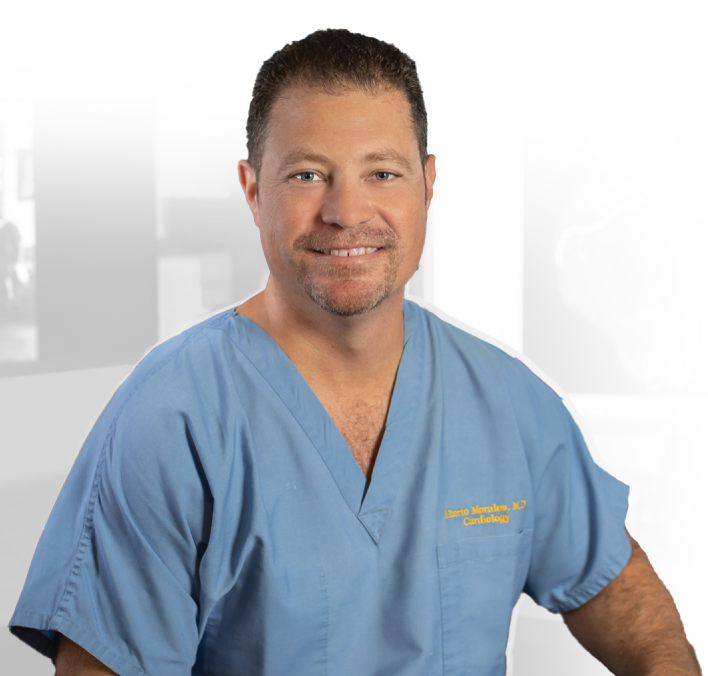
For example, South Tampa Cardiology’s small but mighty team is able to host 50 to 60 patients a day*—that’s up from 30 to 40 in years past—and they’re daily scanning 20 to 40 in their vascular and echo clinic while also performing 18 to 20 in-office CT angiographies.
“This is a well-oiled machine, and we couldn’t run it without a talented clinical crew and amazing support staff,” Morales says. “When we get reviews from patients, they usually talk about the staff and the team more than the high-tech clinical expertise—or anything else, for that matter.”
That said, the practice’s clinical findings and productivity metrics speak to the success of Morales’s approach to preventive cardiology in the four years since South Tampa Cardiology installed a CT scanner and went live with Vitrea in 2022.
Consider these CCTA statistics from the practice:
10,000+ patients had a heart CT scan over the past four years.
50%+ had symptoms such as chest pain or shortness of breath.
~25% were scanned for screening or other reasons.
The rest were followed for known heart disease.
~80% of CCTA patients showed at least some coronary artery disease on their scan.
~50% of asymptomatic patients under 50 years old already had some plaque in their heart arteries, though usually only a small amount.
“A lot of people are walking around with extensive heart disease and no clue about it,” Morales remarks. “That’s why we started screening patients in their 40s. Since then we’ve seen growing numbers in their 30s and even 20s self-referring for preventive heart care.”
He acknowledges the surprise of imaging younger and younger patients, pointing out that few insurers cover screening imaging exams for asymptomatic cardiovascular patients of any age.
Morales shares some key pointers for significantly expanding capacity without dramatically staffing up.
- Cross-train team members so their skillsets overlap. “Who is the premier person at inserting IV lines and pre-medications? If someone calls out sick, that expertise—that capacity—won’t go missing,” Morales says. “And on normal days when you’re at full staffing, you’re not overwhelming anyone with too much to do.” What’s more, people can take their breaks and not break their own back or anyone else’s.
- If the volume is there, don’t be afraid to increase capacity by adding talent. Morales onboarded a second nurse when it became clear communicating with patients pre-visit and triaging them as needed were two separate jobs. Meanwhile the move has enabled the practice to add a step in the workflow for proactively heading off clinical risks like IV infiltrations.
- “We’ve started vascular ultrasounds for all our patients,” Morales shares. “We’re now sure we have a very efficient, accurate way to head off infiltration or similar problems.” As a result of the robust program with vascular ultrasound, Morales reports, the practice has substantially increased patient throughput.
- Leverage automation to expand capacity—and tap experienced industry partners for help setting it up. Morales recalls reaching out to Canon Medical Informatics for assistance with image postprocessing. “One of the options they had was CT VScore+, where instead of highlighting calcium manually, you let the software do the job automatically,” he says. “This has significantly shortened the amount of time we spend on image postprocessing and improved the quality of our postprocessing too.”
The practice’s experience is supported by a 100-case evaluation of CT VScore+, which demonstrated a 57% reduction in processing time and a 2.3-fold improvement in processing efficiency compared with the manual workflow. In 79% of cases, the automated results required no edits. These findings illustrate how targeted automation can reduce manual interaction and create additional capacity at South Tampa Cardiology while maintaining clinician oversight*.
“Anything you can do to free up time—even if it’s just one minute per patient—is going to enhance workflow, improve throughput and, yes, create capacity,” Morales says. “It also will avoid the overwhelming of your best asset, your people.”
Neither automation nor any other technology is a replacement for a living, breathing, thinking person, Morales maintains. Still, given the purposeful prowess of today’s information technologies, he adds, “there are times when adding technology is a wiser way to create capacity than staffing up.”
III. Creating Capacity Requires Acting with Intentionality
Capacity cannot be created in a hospital, health system or imaging practice without a deliberate plan to envision, invest in and sustain it. Someone has to take the lead, championing the effort and galvanizing the stakeholders.
Ideally that someone will be not one individual but, rather, a group united around the goal of perpetual capacity creation. Whether it’s called a capacity task force, steering committee, working group, governing body or advisory panel, such a leadership ensemble will prove itself highly valuable as ideas and words begin to yield actions and changes across the enterprise.
A comprehensive approach considers three connected opportunities: workflow optimization to reduce manual effort and bottlenecks; 3D insourcing to retain expertise, collaboration and control; and advanced visualization consolidation to reduce fragmentation and establish consistent access, workflows and governance across sites.
This is the consensus of three capacity-creation experts at Canon Medical Informatics. Collectively they bring more than 50 years of technology consulting experience to bear on the present discussion.
Sharing their thoughts on capacity creation are:
- Genady Knizhnik, chief executive officer
- Jeff Hendrikse, vice president of product
- Robert O’Leary, senior director of services and support
The conversation surfaces numerous points of guidance for medical imaging operations seeking to create, expand or otherwise increase capacity. Here are the trio’s top 10 (in no particular order).
- Start with the endpoint and work backward through the steps it takes to get there. In most cases the goal will be capacity creation born of dedicated healthcare workers equipped with thoughtfully engineered technology. Which steps between image acquisition and final diagnosis could be automated? Which ones should be—and which ones shouldn’t?
- Remember that the physician is the clinical decision-maker and, thus, the patient’s champion. Everyone else along the chain between the scan and the diagnosis must balance the call to create capacity with the duty to serve the physician and, by extension, the patient.
- Technology R&D will never anticipate every nuance that clinicians will encounter in real-world patient care. For this reason, the performance of capacity-building technologies—especially but not only AI-equipped medical devices—must be validated periodically throughout the product’s lifecycle at the hospital using the technology.
- As essential contributors to capacity creation, physicians should not hesitate to suggest refinements for technology products. This holds for all clinicians using capacity-affecting software in patient care, not just those who already collaborate with industry partners in product design and engineering.
- Capacity can be created at both the micro level—in discrete steps within workflows—and the macro level. Opportunities in the latter category often occur in processes that can snowball, for better or worse, across the duration of the patient treatment pathway. Examples: fragmented chains of communication, administrative and documentation overloads, siloed IT systems, supply-chain gaps and inventory-tracking blind spots.
- Impactful and sustainable capacity creation goes not to the swift but to the intentional. This is so throughout operations in hospitals, healthcare systems and imaging groups: Urgent exigencies squeeze out merely important initiatives. Within medical imaging, the effect tends to show up as a never-ending impulse to get to the next image and put off everything else until “later.” These situations are precisely the kind that need outside help with capacity strategizing as patient demand for healthcare services continues to rise.
- Substantial capacity can be created through ownership. 3D insourcing is a prime example: It lets organizations build the technology, expertise, workflows and operating model they need to develop advanced visualization capabilities internally. Rather than viewing insourcing as an alternative to outsourcing, imaging operations should explore how building internal capabilities can create capacity while giving organizations greater control over their expertise, workflows and operating model.
- Look beyond individual departments to create capacity across the enterprise. As healthcare organizations consolidate imaging infrastructure and expand multidisciplinary collaboration, advanced visualization should be part of the same strategic conversation. Fragmented applications disconnected workflows and inconsistent access to specialized tools can introduce unnecessary complexity and limit the ability to scale imaging services. Consolidating advanced visualization capabilities offers an opportunity to standardize workflows, simplify technology management and make specialized expertise more accessible across the enterprise. Just as health systems have pursued PACS consolidation, advanced visualization deserves consideration as part of a broader capacity strategy.
- Smart capacity creation necessitates sensitive change management. Hospital and imaging center leadership may have a natural—or duty-bound—affinity for capacity creation. Mid-level administrators, however, may initially receive any new initiative as one more thing adding to their already heavy workload. This also may hold for many clinicians and support staff. It is essential to communicate across the imaging organization—if not the entire enterprise—that a central aim of creating capacity is relieving burnout. Which brings the conversation to the next key point.
- Creating capacity is never to be confused with doing more with less. Consider: “Doing more with less” relies on individuals to work harder if not longer. It rewards heroics and invites workaholism. It ensures widescale burnout. By contrast, creating capacity alters the flow of work. It involves revamping inefficient processes, automating low-value tasks, eliminating stubborn bottlenecks and otherwise making deliberate choices to expand an organization’s operational limits.
CONCLUSION
No healthcare operation can optimize capacity creation without an assist from qualified industry partners.
The future of medical imaging will not be defined solely by faster scanners, more powerful software or increasingly sophisticated automation. It will be shaped by how effectively healthcare organizations translate these advances into the capacity to deliver care.
Creating capacity requires a broader perspective—one that considers how clinical expertise, workforce capabilities, technology, workflows and organizational priorities work together. It means looking beyond individual efficiency improvements to address the underlying constraints that limit growth, scalability and the ability to respond to changing patient needs.
For healthcare organizations, the opportunity is to make capacity creation an intentional and ongoing strategic priority. For industry partners, it is to support that ambition through technology, expertise, education and services that help organizations realize the full potential of their investments.
The question is no longer simply how to do more with the resources available. It is how to deliberately create the capacity needed for what comes next.
- To learn how Canon Medical Informatics can help your healthcare organization orchestrate intelligent and humane capacity creation, go here ahead of RSNA 2026—and be sure to book your appointment to meet us at Booth 7313.
1. Sara Berg, American Medical Association, “These 9 physician specialties report highest burnout rates.” AMA-assn.org, April 16, 2026.
*Results may vary and are not predictive of other sites.