His former colleagues say he was a "ceaseless champion for advancing the radiology industry" and that his contributions to the field "will be remembered with immense gratitude.”
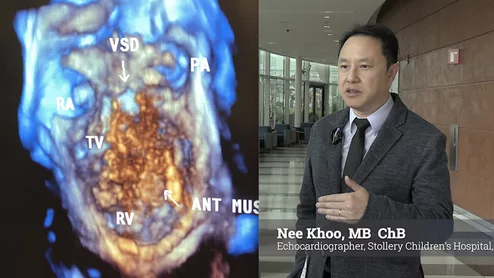
Nee Khoo, MBChB, director of the echocardiography lab at Canada's Stollery Children’s Hospital, explains the rapid adoption of pediatric 3D transesophageal echo.
The exam effectively helps providers manage patients’ treatment options, but for some, the costs associated with those treatments may negate the value of its findings.
Neiman researchers recently scoured for factors that might impact screening rates across cancers of the colon/rectum, lung, breast and prostate, using nationwide Medicare data.
Six years ago, two radiologists with dissimilar backgrounds and divergent clinical interests put their heads together and launched a new practice. One physician was an academic subspecialized in musculoskeletal reads. The other, a private practitioner, concentrated on oncologic imaging. That’s how Transparent Imaging was born, powered by Konica Minolta.
In a private dining room in Miami, something unusual is happening. Leaders from competing imaging centers are openly discussing their best practices—even sharing vendor recommendations and operational strategies that have doubled their volumes while cutting costs in half.
A growing number of private insurers are now covering these advanced technologies. Roosha Parikh, MD, told Cardiovascular Business that the hard work of SCCT and other groups has helped make this happen.
Researchers used AI-enabled software developed by Cleerly to evaluate the CCTA results of more than 6,000 patients. The software was consistently effective, identifying patients who may face an increased risk of poor outcomes.