United Regional Health Care System recently announced the construction project’s kickoff, noting its desire to remain “responsive to the needs of our community.”
Up to 72% of CT requisitions from ED providers could be considered inadequate according to RI-RADS, which was developed to evaluate the clinical reasoning quality of imaging orders.
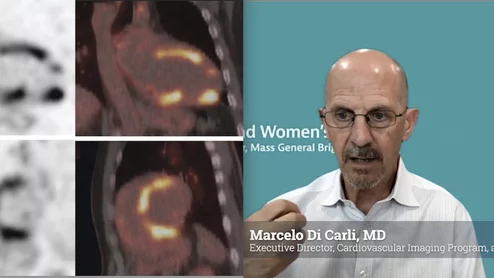
Beyond amyloidosis, nuclear cardiology is also increasingly used to image inflammation and infection in the myocardium, especially in diseases such as cardiac sarcoidosis and myocarditis.
Researchers with the University of Virginia recently aimed to answer this question, sharing their findings in the Journal of Imaging Informatics in Medicine.
Six years ago, two radiologists with dissimilar backgrounds and divergent clinical interests put their heads together and launched a new practice. One physician was an academic subspecialized in musculoskeletal reads. The other, a private practitioner, concentrated on oncologic imaging. That’s how Transparent Imaging was born, powered by Konica Minolta.
In a private dining room in Miami, something unusual is happening. Leaders from competing imaging centers are openly discussing their best practices—even sharing vendor recommendations and operational strategies that have doubled their volumes while cutting costs in half.
A growing number of private insurers are now covering these advanced technologies. Roosha Parikh, MD, told Cardiovascular Business that the hard work of SCCT and other groups has helped make this happen.
Researchers used AI-enabled software developed by Cleerly to evaluate the CCTA results of more than 6,000 patients. The software was consistently effective, identifying patients who may face an increased risk of poor outcomes.