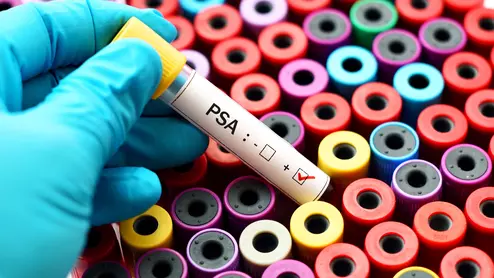
The exam should be performed on patients with greater than 10 years of life expectancy and between the ages of 50 and 70, with earlier imaging recommended for black men.
Lawmakers have opted against authorizing funding for the Wasteful and Inappropriate Service Reduction Model, citing concerns it will overburden patients and providers.
Though both modalities offer providers insight into the extent of a patient’s disease, WB-MRI may be more beneficial for patients than the current standard of care.
MRI-detected signs of cardiac remodeling may tell clinicians a thing or two about a patient's odds of developing certain cancers. Changes in heart muscle mass, for example, were linked to an increased risk of breast cancer.
The NSA independent dispute resolution process was updated by federal agencies on May 28, with the final rule including a slew of changes that affect radiology providers.
The ratings agency contends RadNet is constrained by its geographic concentration in 11 states and high fixed costs, including sizable interest expenses.
Stacy Sanso—director of patient access for ARA Diagnostic Imaging, the Austin, Texas, affiliate of Radiology Partners—takes over as president of the association.
Complaints stemming from such delays prompted officials to look further into the issue, eventually leading them to discover that nearly 200 reports had not been sent to patients’ referring providers.
High consumption of these foods could lead to increased levels of intramuscular fat—a known marker of poor muscle health, according to new research published in Radiology.
“As I step into the role of president, I look forward to continuing strong advocacy for interventional radiologists and ensuring our members are recognized for the value they provide to the healthcare system and improving patient access to high-quality care."
MRI-detected signs of cardiac remodeling may tell clinicians a thing or two about a patient's odds of developing certain cancers. Changes in heart muscle mass, for example, were linked to an increased risk of breast cancer.