• Management
      |Management
    • Compensation
    • Economics
    • Leadership
    • Legal News
    • Mergers & Acquisitions
    • Patient Care
    • Policy & Regulations
    • Practice Management
    • Professional Associations
    • Quality
    • Staffing
  • Imaging
      |Imaging
    • CT
    • MRI
    • Nuclear Medicine
    • Ultrasound
    • Women's Imaging
    • X-ray
  • Technology
      |Technology
    • Artificial Intelligence
    • Enterprise Imaging
    • Imaging Informatics
    • Informatics
    • PACS
  • Videos
  • Conferences
      |Conferences
    • ACR
    • AHRA
    • ARRS
    • ASRT
    • RBMA
    • RSNA
    • SBI
    • SCCT
    • SIIM
    • SIR
    • SNMMI
  • Custom Content
      |Custom Content
    • Experience Stories
    • Webinars & Videos
  • Subscribe
  • Forty Under 40 Award
      |Forty Under 40 Award
    • Class of 2026
    • Class of 2025
    • Class of 2024

Search form

Home

News You Need to Know Today
Molecular Imaging | May 2018
Wednesday, May 23, 2018
Link to Twitter Link to Facebook Link to Linkedin Link to Vimeo

Today's News and Trends

Researchers create novel method predicting tumor response in radioligand therapy

A team of German researchers used PET/CT and modeling practices to create a new method to pattern and predict tumor response in radioligand therapy (RLT), which authors say is the first attempt to do so.
READ MORE >
Share on Twitter Share on Facebook Share on Linkedin

Researchers create novel method predicting tumor response in radioligand therapy

Share on Twitter Share on Facebook Share on Linkedin
A team of German researchers used PET/CT and modeling practices to create a new method to pattern and predict tumor response in radioligand therapy (RLT), which authors say is the first attempt to do so.
READ MORE >

Radiopharmaceutical can ease symptoms in some cancers, improve survival outlook

A team of scientists found therapeutic treatment using radiopharmaceutical I-131 mIBG can effectively mitigate symptoms of certain neuroendocrine tumors and resulted in improved prognosis for patients with symptomatic progression, radiographic response or stability and biochemical response.
READ MORE >
Share on Twitter Share on Facebook Share on Linkedin

Radiopharmaceutical can ease symptoms in some cancers, improve survival outlook

Share on Twitter Share on Facebook Share on Linkedin
A team of scientists found therapeutic treatment using radiopharmaceutical I-131 mIBG can effectively mitigate symptoms of certain neuroendocrine tumors and resulted in improved prognosis for patients with symptomatic progression, radiographic response or stability and biochemical response.
READ MORE >

PET tracer may predict response to therapy in bone-dominant breast cancer patients

A prospective comparison study of two PET tracers found 18F-FDG could provide valuable measures of activity in bone-dominant (BD) metastatic breast cancer (MBC) patients, while also predicting responses to therapy.
READ MORE >
Share on Twitter Share on Facebook Share on Linkedin

PET tracer may predict response to therapy in bone-dominant breast cancer patients

Share on Twitter Share on Facebook Share on Linkedin
A prospective comparison study of two PET tracers found 18F-FDG could provide valuable measures of activity in bone-dominant (BD) metastatic breast cancer (MBC) patients, while also predicting responses to therapy.
READ MORE >

Could a breast imaging pill eliminate the need for annual mammograms?

The "disease screening pill," developed by researchers from the University of Michigan, lit up malignant tumors in mice when exposed to near-infrared light—all without the use of radiation, according to a study published in Molecular Pharmaceutics.
READ MORE >
Share on Twitter Share on Facebook Share on Linkedin

Could a breast imaging pill eliminate the need for annual mammograms?

Share on Twitter Share on Facebook Share on Linkedin
The "disease screening pill," developed by researchers from the University of Michigan, lit up malignant tumors in mice when exposed to near-infrared light—all without the use of radiation, according to a study published in Molecular Pharmaceutics.
READ MORE >

Tau PET tracer found effective in 1st in-human study of its kind

A team of Johns Hopkins University researchers—conducting the first in-human PET study of three novel tau radiopharmaceuticals in Alzheimer’s disease patients—found [18F]RO-948 was the most capable for characterizing tau pathology in the disease.
READ MORE >
An example of a positive amyloid plaque PET nuclear brain scan. these tests can help identify Alzheimer's patients earlier so they can be prescribed drugs to treat the condition.
Share on Twitter Share on Facebook Share on Linkedin

Tau PET tracer found effective in 1st in-human study of its kind

Share on Twitter Share on Facebook Share on Linkedin
An example of a positive amyloid plaque PET nuclear brain scan. these tests can help identify Alzheimer's patients earlier so they can be prescribed drugs to treat the condition.
A team of Johns Hopkins University researchers—conducting the first in-human PET study of three novel tau radiopharmaceuticals in Alzheimer’s disease patients—found [18F]RO-948 was the most capable for characterizing tau pathology in the disease.
READ MORE >

SNMMI collaborates with industry leaders to advance molecular imaging

On May 17, the Society of Nuclear Medicine and Molecular Imaging (SNMMI) announced the Value Initiative Industry Alliance—a collaboration among corporate community members that will help implement the organization’s Value Initiative and advance nuclear medicine.
READ MORE >
SNMMI
Share on Twitter Share on Facebook Share on Linkedin

SNMMI collaborates with industry leaders to advance molecular imaging

Share on Twitter Share on Facebook Share on Linkedin
SNMMI
On May 17, the Society of Nuclear Medicine and Molecular Imaging (SNMMI) announced the Value Initiative Industry Alliance—a collaboration among corporate community members that will help implement the organization’s Value Initiative and advance nuclear medicine.
READ MORE >

Diamonds may be a sparkling method to reduce costs of medical imaging, drug studies

A new discovery involving diamonds may significantly cut costs related to medical imaging and drug-discovery devices, according to a team of researchers led by the U.S. Department of Energy and the University of California, Berkeley. 
READ MORE >
screen_shot_2018-05-21_at_10.19.59_am.png
Share on Twitter Share on Facebook Share on Linkedin

Diamonds may be a sparkling method to reduce costs of medical imaging, drug studies

Share on Twitter Share on Facebook Share on Linkedin
screen_shot_2018-05-21_at_10.19.59_am.png
A new discovery involving diamonds may significantly cut costs related to medical imaging and drug-discovery devices, according to a team of researchers led by the U.S. Department of Energy and the University of California, Berkeley. 
READ MORE >

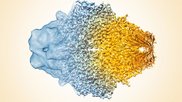
NIH funds development of 3 national cryo-electron microscopy centers

The National Institutes of Health (NIH) announced efforts to widen the scientific community's access to cryo-electron microscopy (cryo-EM) through its Transformative High Resolution Cryo-Electron Microscopy program.  
READ MORE >
20180515-beta-galactosidase.jpg
Share on Twitter Share on Facebook Share on Linkedin

NIH funds development of 3 national cryo-electron microscopy centers

Share on Twitter Share on Facebook Share on Linkedin
20180515-beta-galactosidase.jpg
The National Institutes of Health (NIH) announced efforts to widen the scientific community's access to cryo-electron microscopy (cryo-EM) through its Transformative High Resolution Cryo-Electron Microscopy program.  
READ MORE >

NIH merges microscopes to generate clearer images of processes inside cells

Scientists at the National Institute of Biomedical Imaging and Bioengineering (NIBIB) announced they had merged two microscope technologies to generate clearer images of rapid processes occurring inside human cells.
READ MORE >
20180507-shroff.jpg
Share on Twitter Share on Facebook Share on Linkedin

NIH merges microscopes to generate clearer images of processes inside cells

Share on Twitter Share on Facebook Share on Linkedin
20180507-shroff.jpg
Scientists at the National Institute of Biomedical Imaging and Bioengineering (NIBIB) announced they had merged two microscope technologies to generate clearer images of rapid processes occurring inside human cells.
READ MORE >

Canadian particle accelerator produces Tc-99m isotopes

A team at the University of Alberta in Canada has devised a method utilizing a cyclotron particle accelerator to produce the radioactive tracer technetium-99m—the parent of Molybdenum-99. It may be able to produce enough radioactive isotope for the entire province, CBC.ca reports.
READ MORE >
Radioactive
Share on Twitter Share on Facebook Share on Linkedin

Canadian particle accelerator produces Tc-99m isotopes

Share on Twitter Share on Facebook Share on Linkedin
Radioactive
A team at the University of Alberta in Canada has devised a method utilizing a cyclotron particle accelerator to produce the radioactive tracer technetium-99m—the parent of Molybdenum-99. It may be able to produce enough radioactive isotope for the entire province, CBC.ca reports.
READ MORE >

Innovate Healthcare thanks our partners for supporting our newsletters.
Sponsorship has no influence on editorial content.

Interested in reaching our audiences, contact our team

*|LIST:ADDRESSLINE|*

You received this email because you signed up for newsletters from Innovate Healthcare.
Change your preferences or unsubscribe here

Contact Us  |  Unsubscribe from all  |  Privacy Policy

© Innovate Healthcare, a TriMed Media brand
Innovate Healthcare

Recent Newsletters

Radiologists get most PTO among docs | Roundup of radiology feedback on MPFS | Repeat MRIs' heavy burden | ASRT challenges NRC
Ketamine safe for IR procedures | Reintervention rates after PAE | IRs see notable pay gain | Stroke-related costs on the rise
EM docs quash thousands of CT scan requests | Societies push Congress to help radiology | CT links bone density and brain aging
Concerns over CMS cuts to imaging spending | FDA to stop mailing MQSA materials | ACR opposes radiation safety rule change
Telix and ITM join forces in $1.6B radiopharma merger | More rads concentrating practice on IR | AI reduces GBCA reliance | More
The economic impact of the contrast shortage | New data on smoking and aortic calcification | AI reduces repeat GBCA exposures
FDA clears brain cancer imaging agent | GE mulls $1B radiopharma purchase | ACR concerned with proposed CMS imaging cuts | More
Newsletter archive
  • Home
  • News
  • Article Archive
  • Custom Content
  • Webinars
  • Press Releases
  • Content Studio
  • Advertising
  • Submit Press Release
  • Contact Us
  • Terms of Use
  • Privacy Policy
  • Cardiovascular Business
  • HealthExec
  • Radiology Business
 
© 2026 Innovate Healthcare | All Rights Reserved. | Terms of Use | Privacy Policy
 
Design by Adaptive Theme
Trimed Popup