• Management
      |Management
    • Compensation
    • Economics
    • Leadership
    • Legal News
    • Mergers & Acquisitions
    • Patient Care
    • Policy & Regulations
    • Practice Management
    • Professional Associations
    • Quality
    • Staffing
  • Imaging
      |Imaging
    • CT
    • MRI
    • Nuclear Medicine
    • Ultrasound
    • Women's Imaging
    • X-ray
  • Technology
      |Technology
    • Artificial Intelligence
    • Enterprise Imaging
    • Imaging Informatics
    • Informatics
    • PACS
  • Videos
  • Conferences
      |Conferences
    • ACR
    • AHRA
    • ARRS
    • ASRT
    • RBMA
    • RSNA
    • SBI
    • SIIM
    • SIR
    • SNMMI
  • Custom Content
      |Custom Content
    • Experience Stories
    • Webinars & Videos
  • Subscribe
  • Forty Under 40 Award
      |Forty Under 40 Award
    • Class of 2025
    • Class of 2024

Search form

Home

Week in Review: The importance of AI use cases | Native Spanish speakers unaware of breast density | How to improve imaging protocols

News You Need to Know Today
Week in Review: The importance of AI use cases | Native Spanish speakers unaware of breast density | How to improve imaging protocols
Saturday, November 3, 2018
Link to Twitter Link to Facebook Link to Linkedin Link to Vimeo

This Week’s News

Top Stories

ACR’s Allen on why AI use cases are so important to radiology

On Oct. 26, the American College of Radiology Data Science Institute (ACR DSI) announced the release of standardized artificial intelligence (AI) use cases designed to improve AI adoption in radiology. Why, exactly, are these use cases so vital to the specialty?
READ MORE >
Share on Twitter Share on Facebook Share on Linkedin

ACR’s Allen on why AI use cases are so important to radiology

Share on Twitter Share on Facebook Share on Linkedin
On Oct. 26, the American College of Radiology Data Science Institute (ACR DSI) announced the release of standardized artificial intelligence (AI) use cases designed to improve AI adoption in radiology. Why, exactly, are these use cases so vital to the specialty?
READ MORE >

Medicare is in trouble—and that’s bad news for radiologists, patients

The American College of Radiology (ACR) worked alongside many other organizations to help get Congress to repeal Medicare’s sustainable growth rate (SGR) formula in 2015. However, as Rakesh A. Shah, MD, wrote in a recent commentary in the Journal of the American College of Radiology, that victory did not fix serious problems with the U.S. economy.
READ MORE >
Share on Twitter Share on Facebook Share on Linkedin

Medicare is in trouble—and that’s bad news for radiologists, patients

Share on Twitter Share on Facebook Share on Linkedin
The American College of Radiology (ACR) worked alongside many other organizations to help get Congress to repeal Medicare’s sustainable growth rate (SGR) formula in 2015. However, as Rakesh A. Shah, MD, wrote in a recent commentary in the Journal of the American College of Radiology, that victory did not fix serious problems with the U.S. economy.
READ MORE >

Featured Articles

Many native Spanish speakers unaware of breast density information

Spanish-speaking women are faced with unique challenges when receiving information such as dense breast notifications (DBN) and mammogram results, according to new research published in the Journal of General Internal Medicine.
READ MORE >
Share on Twitter Share on Facebook Share on Linkedin

Many native Spanish speakers unaware of breast density information

Share on Twitter Share on Facebook Share on Linkedin
Spanish-speaking women are faced with unique challenges when receiving information such as dense breast notifications (DBN) and mammogram results, according to new research published in the Journal of General Internal Medicine.
READ MORE >

Meaningful change: 4 steps to improved CT imaging protocols, fewer dose alerts

Updated Joint Commission requirements have left healthcare providers across the United States working to standardize imaging protocols and analyze why some CT exams exceed predetermined radiation dose thresholds.
READ MORE >
Share on Twitter Share on Facebook Share on Linkedin

Meaningful change: 4 steps to improved CT imaging protocols, fewer dose alerts

Share on Twitter Share on Facebook Share on Linkedin
Updated Joint Commission requirements have left healthcare providers across the United States working to standardize imaging protocols and analyze why some CT exams exceed predetermined radiation dose thresholds.
READ MORE >

Physicians largely ignore CDS implemented to reduce unnecessary imaging

The authors of a new study in Academic Radiology developed a clinical decision support (CDS) algorithm to help physicians reduce overutilized imaging examinations in the emergency department (ED). The physicians, however, consistently disregarded its recommendations.
READ MORE >
Share on Twitter Share on Facebook Share on Linkedin

Physicians largely ignore CDS implemented to reduce unnecessary imaging

Share on Twitter Share on Facebook Share on Linkedin
The authors of a new study in Academic Radiology developed a clinical decision support (CDS) algorithm to help physicians reduce overutilized imaging examinations in the emergency department (ED). The physicians, however, consistently disregarded its recommendations.
READ MORE >

Radiology research focused on a single gender more impactful than gender-neutral research

In major radiology journals, research focused on men's or women's health often has a greater impact than gender-neutral research, according to a study published in the Journal of the American College of Radiology.
READ MORE >
Share on Twitter Share on Facebook Share on Linkedin

Radiology research focused on a single gender more impactful than gender-neutral research

Share on Twitter Share on Facebook Share on Linkedin
In major radiology journals, research focused on men's or women's health often has a greater impact than gender-neutral research, according to a study published in the Journal of the American College of Radiology.
READ MORE >

New lactation policy helps radiology residents feel less anxious on the job

A new case study in the Journal of the American College of Radiology detailed how one radiology department developed a policy in support of radiology residents who are breastfeeding mothers, which led to decreased anxiety and less time away from daily work.
READ MORE >
Share on Twitter Share on Facebook Share on Linkedin

New lactation policy helps radiology residents feel less anxious on the job

Share on Twitter Share on Facebook Share on Linkedin
A new case study in the Journal of the American College of Radiology detailed how one radiology department developed a policy in support of radiology residents who are breastfeeding mothers, which led to decreased anxiety and less time away from daily work.
READ MORE >

3 areas radiology residency programs can focus on to meet new ACGME requirements

When the Accreditation Council for Graduate Medical Education (ACGME) updated its Common Program Requirements to focus more on patient safety, quality, supervision, accountability and fatigue mitigation, it left residency programs with a significant number of changes to consider.
READ MORE >
ACR debuts turnkey PQI project
Share on Twitter Share on Facebook Share on Linkedin

3 areas radiology residency programs can focus on to meet new ACGME requirements

Share on Twitter Share on Facebook Share on Linkedin
ACR debuts turnkey PQI project
When the Accreditation Council for Graduate Medical Education (ACGME) updated its Common Program Requirements to focus more on patient safety, quality, supervision, accountability and fatigue mitigation, it left residency programs with a significant number of changes to consider.
READ MORE >

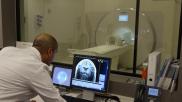
FDA approves 7T MRI scanner at USC for clinical use

The 7T MRI scanner at the Keck School of Medicine of USC in Los Angeles has received FDA approval for clinical use.
READ MORE >
The University of Southern California was among the first imaging centers in the U.S. to install a 7T MRI. This high-end part of the MRI market is small and is mainly made up of academic research centers. The main MRI market is made of of 1.5T systems, but there is rising demand for 3T, which Signify research may eventually become the standard for MRI.
Share on Twitter Share on Facebook Share on Linkedin

FDA approves 7T MRI scanner at USC for clinical use

Share on Twitter Share on Facebook Share on Linkedin
The University of Southern California was among the first imaging centers in the U.S. to install a 7T MRI. This high-end part of the MRI market is small and is mainly made up of academic research centers. The main MRI market is made of of 1.5T systems, but there is rising demand for 3T, which Signify research may eventually become the standard for MRI.
The 7T MRI scanner at the Keck School of Medicine of USC in Los Angeles has received FDA approval for clinical use.
READ MORE >

Innovate Healthcare thanks our partners for supporting our newsletters.
Sponsorship has no influence on editorial content.

Interested in reaching our audiences, contact our team

*|LIST:ADDRESSLINE|*

You received this email because you signed up for newsletters from Innovate Healthcare.
Change your preferences or unsubscribe here

Contact Us  |  Unsubscribe from all  |  Privacy Policy

© Innovate Healthcare, a TriMed Media brand
Innovate Healthcare

Recent Newsletters

Top 10 most popular radiology video interviews this past month
State investigating fatal MRI incident | Radiologist-AI combo excels at PE detection | Only 18% of docs remain independent
RadNet's latest expansion | $85M isotope production deal | Hologic closes merger | GEHC finalizes $2.3B Intelerad acquisition
Novel test reduces need for MRIs | Rads should be discussing WB-MRIs more, experts charge | Siemens scores 6 new FDA clearances
GE HealthCare recalls CT systems | Deceased patient's family pursues lawsuit against radiologist | SIR endorses KOA treatment
A new warning about MRI safety | RadNet sees revenues jump 22% | Administration lifts hold on immigration applications for docs
Best of the Week: Radiologists speak against whole-body MRI screening | 4D mammo up to 4 times more accurate | Telerad wins case

Pagination

    • First page « First
    • Previous page ‹‹
    • Page …3
    • Page 4
    • Page 5
    • Page 6
    • Current page 7
    • Page 8
    • Page 9
    • Page 10
    • Page 11 …
    • Next page ››
    • Last page Last »
  • Home
  • News
  • Article Archive
  • Custom Content
  • Webinars
  • Press Releases
  • Content Studio
  • Advertising
  • Submit Press Release
  • Contact Us
  • Terms of Use
  • Privacy Policy
  • Cardiovascular Business
  • HealthExec
  • Radiology Business
 
© 2026 Innovate Healthcare | All Rights Reserved. | Terms of Use | Privacy Policy
 
Design by Adaptive Theme