
Sol Radiology: Bigger Only Counts if It’s Better

Many know Sol Radiology as the Southern California-based practice that, in this decade, grew from three radiologists to 45 in only three years. But other key indicators of Sol’s development might be the pieces from which presently small practices stand to learn the most.
So suggests Sol Radiology President Rahul Nayyar, MD.
“For me, the most important metric isn’t volume. It’s how much more work we can manage without creating proportional administrative and technological complexity.”
— Rahul Nayyar, MD, President, Sol Radiology
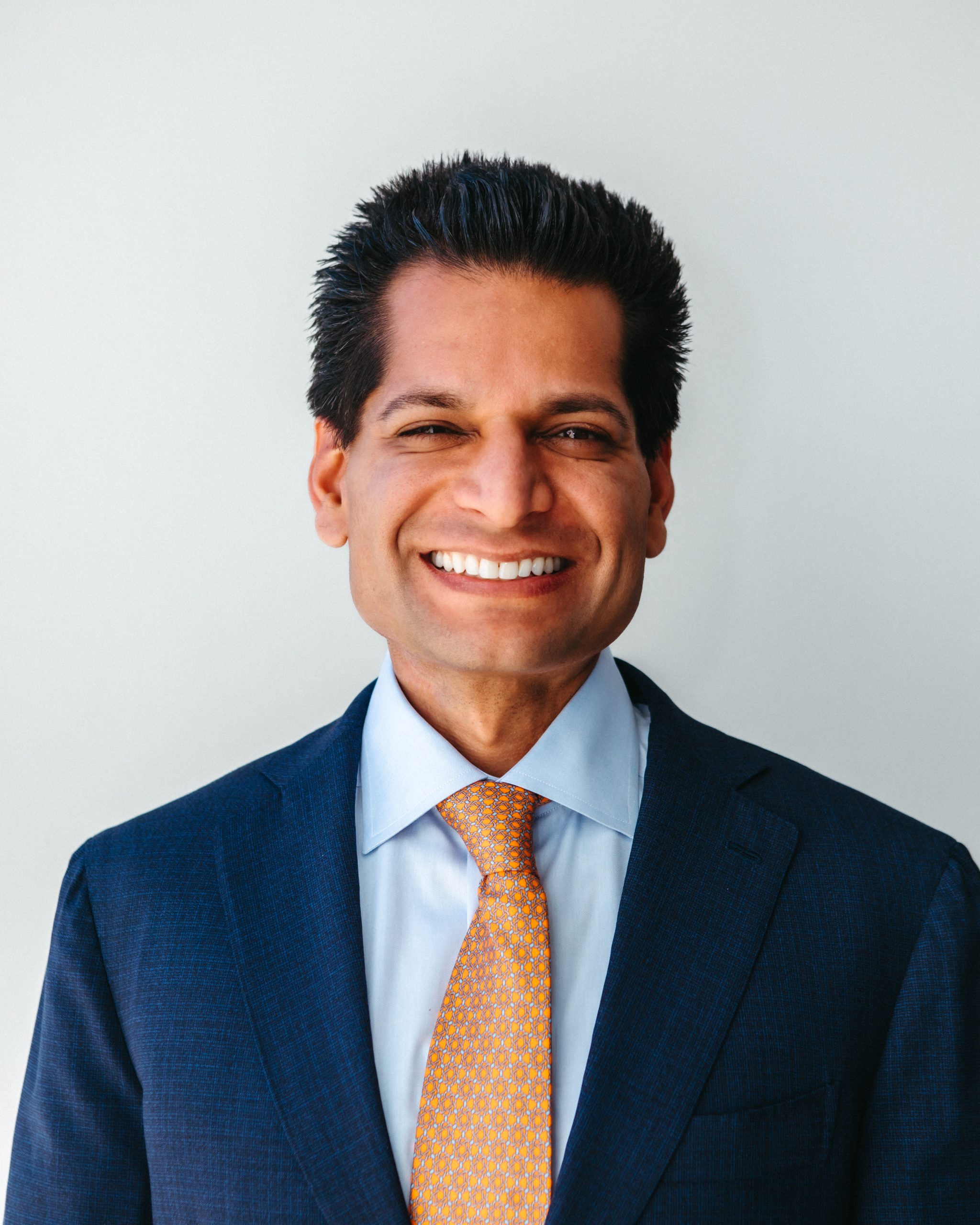
Given the advanced state of radiology-specific information technologies in the 2020s, it’s not surprising that software and related tools have had much to do with Sol’s success.
At the core of the practice’s technology strategy is its close partnership with the radiology technology company CIVIE.
(For background, read “At Sol Radiology, a Smart Digital Ecosystem Fosters Fast Yet Sustainable Growth.”)
Nayyar’s firsthand experiences and related insights may benefit other radiology practices of all sizes.
Philosophical fitness
Asked to describe the single biggest contribution that technology has made to Sol Radiology’s ongoing efforts at continuous improvement, Nayyar doesn’t have to pause and think.
“As we’ve grown, we haven’t had to build a fragmented technology environment around every new hospital or imaging center” as each one comes online, he says. “CIVIE technology has allowed us to onboard and integrate new sites into a common workflow.”
He’s quick to add that unifying workflow practice-wide has elevated Sol’s internal culture.
“One of our guiding philosophies at Sol is that the radiologist’s attention is our most valuable resource,” Nayyar says. “Radiologists want to practice radiology. They don’t want to spend their day figuring out which PACS they’re in, searching for priors, dealing with different worklists, troubleshooting interfaces”—or doing anything else that takes their eyes off of diagnostic images.
Removing all barriers to image interpretation, he adds, makes the radiologist’s job “not only easier but also more enjoyable and fulfilling.”
Integrated foundation beats instrumental approach
Ultimately, as Nayyar sees things, leveraging technology tools in radiology—from selecting to implementing to assessing—has little to do with the sophistication of the software per se.
“In our case, realizing ROI has meant working with CIVIE to help us scale up without losing physician control, quality or culture.”
— Rahul Nayyar, MD, President, Sol Radiology
“We use CIVIE across essentially the entire radiology workflow—RIS, revenue cycle, workflow/worklist functionality, PACS viewing, voice recognition and other integrated components,” Nayyar continues. “Having those systems operate as an ecosystem rather than independent instruments is extremely valuable.”
He further notes Sol’s integration of technologies from other suppliers into radiologists’ workflow, citing an AI solution from a third-party supplier as an example.
“The important part there isn’t just having AI,” Nayyar says. “It’s having AI appear naturally within the radiologist’s existing workflow.”
Sol Radiology by the numbers
September 2025–August 2026:
- 480,445 studies read—about 7 times Sol’s 2023 volume
- 332,874 wRVUs
- 45 radiologists
- 19 facilities/hospital partners in 5 states
- Monthly volume steady at 38,000 to 43,000 studies, with no seasonal dip
Median 2026 turnaround times from patient exam to signed report:
- All studies = 11 minutes
- STAT studies = 7 minutes
- Routine studies = 25 minutes
- 89% of all exams read in <60 minutes
- 78.5% of all exams read in <30 minutes
2026 full-year volume estimates (all active SOL sites, Jan–Aug monthly average x 12):
- Orders received: ~505,000
- Studies billed: ~475,000
- Work RVUs: ~336,000
‘Everything together as one workflow’
Seeing the big picture is part of the job of a practice president. Are there any specific technology innovations that Nayyar considers indispensable for all Sol’s radiologists?
“If you took everything away and asked me what I would immediately want back, CIVIE’s AI-powered workflow with integrated universal worklist would probably be at the top,” he replies. “A radiologist shouldn’t have to think about which hospital a study came from. The work should come to the appropriate radiologist with the images, priors and relevant information instantly available.”
Nayyar underscores that, individually, each tech product may be excellent in its own right—but “the real value comes when the radiologist experiences everything together as one workflow.”
High-performing radiologists work in concert
All practice leaders have to dust off their change-management skillsets from time to time in the lifespan of a practice. Has this fact held at Sol as it’s adopted new operating technologies?
For sure, Nayyar says.
“There’s always some resistance to new ways of doing things,” he says. “Radiologists are creatures of habit. Experienced radiologists can be particularly attached to whatever PACS or dictation environment they’ve been using and liking.”
He recalls several instances when radiologists reacted to a tech-based change with a flat declarative: I like my current system, and I don’t want to change it.
“What’s interesting is that, after they become comfortable with the CIVIE ecosystem, the conversation often reverses,” Nayyar says.
“They soon enough realize CIVIE’s ecosystem technology isn’t asking them to change how they think as radiologists,” he clarifies. “On the contrary, it eliminates many of the things that were hindering them from consistently performing at a very high level.”
Patient lives on the line
Has Nayyar seen a case in which CIVIE software proved decisive in saving or improving the life of a patient?
“There isn’t one patient case I would want to credit to a technology platform,” he replies with unvarnished candor. “But there have been countless situations in which quickly putting the right study in front of the right radiologist—complete with priors and other relevant clinical information—has made a difference.”
“In emergency radiology, minutes can matter. Stroke, pulmonary embolism, aortic pathology and other critical findings are obvious examples,” he says. “Technology doesn’t make the diagnosis; the radiologist does. But good technology removes friction between the patient getting scanned and the radiologist making that diagnosis.”
Creative collaboration for continuous improvement
One of the reasons Sol Radiology has remained loyal to CIVIE since the days when it was Collaborative Imaging is that the relationship hasn’t felt like a traditional, transactional vendor–practice arrangement, Nayyar says.
“We’re constantly giving CIVIE feedback,” he says. “Sometimes that feedback is probably more direct than they would like it to be, but they listen.”
Speaking as a practicing radiologist who happens to run a rapidly growing radiology organization, he adds, “I see workflow problems every day. We can bring those problems to CIVIE and ask, ‘Can we solve this differently?’”
That ability to influence product improvement is “extremely valuable,” Nayyar says. “I don’t want Sol’s technology environment to look exactly the same three years from now as it looks today. I want it continually getting smarter, more automated and more customized to how our radiologists actually practice.”
Bigger, better radiology ahead
Looking ahead, Nayyar offers that right now is “one of the most exciting times in history” to be a radiologist.
“There is still a lot of discussion about whether AI will replace radiologists,” he says. “I see it differently. I think AI and better workflow technology will continue to remove many repetitive and inefficient parts of our jobs, allowing radiologists to spend ever more time doing clinical work that actually requires a physician.”
Sol’s own numbers already point in that direction, he adds. “In the fourth quarter of 2023, the median STAT study at Sol took 36.8 minutes from exam to signed report,” Nayyar says. “Today the median of every study we read—routine included—is 36.8 minutes. We do about seven times the volume, and routine work now clears as fast as STATs used to.”
Over the next three to five years, Nayyar wants Sol Radiology to demonstrate the feasibility of building a large, geographically distributed radiology practice without turning the specialty into a commodity.
“We want to continue expanding nationally, adding outstanding radiologists and hospital partners, while preserving the culture and physician involvement that made us successful in the first place,” Nayyar says before concluding:
“Technology is what makes that combination possible. Our goal isn’t simply to become bigger. It’s to become better as we become bigger.”
For in-depth information on all things CIVIE, visit CIVIE.com.

Dave P. has worked in journalism, marketing and public relations for more than 30 years, frequently concentrating on hospitals, healthcare technology and Catholic communications. He has also specialized in fundraising communications, ghostwriting for CEOs of local, national and global charities, nonprofits and foundations.