
From Deconstructed PACS to Reconstructed Radiology
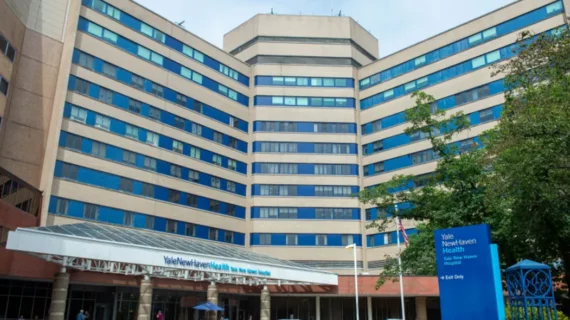
Let’s conduct a quick thought experiment. We enter a time machine and set the controls for Connecticut in 2015. As luck would have it, we land in a meeting room of the imaging department at the Yale-New Haven Health system. There we overhear a conversation. Imaging aficionados that we are, we quickly realize two groups are present—IT leaders and ranking radiologists. It’s hard to make out the exact words through the time warp. However, we clearly hear one term repeated several times: “deconstructed PACS.”
“It’s as simple as it is brilliant,” someone seems to be saying. “By breaking traditional, all-in-one PACS into its individual components, we can pick and choose the vendors and products we like best for each piece.”
Deconstructed PACS, another adds, cutting through the electrical hiss, is all about interoperability. “Or vendor neutrality, if you like. Whatever. Point is, it’ll let us use an image archive from one supplier, a dictation product from another, a workflow engine from a third …”
“So we’ll finally be able to take a true best-of-breed approach,” a third voice cuts in, “for everything having to do with handling digitized medical images. Is that what you’re saying?”
“Yes. That’s right.”
Heads nod, signaling not only comprehension but also approval. We see two colleagues exchange fist bumps.
OK, experiment over. It was a success. We’re back in the present.
Performance metrics don’t exaggerate
“As I remember it, our incumbent PACS vendor was having issues with both software performance and third-party integrations,” Jonathan Siriano, YNHH’s Senior Manager for Enterprise Imaging and Clinical Applications, recalls for Radiology Business. “We were frequently having trouble routing image data for sharing between clinicians, and that was only one issue among many. It had just become obvious to everyone involved that the time was right for making the leap from ‘PACS 1.0’ to ‘PACS 2.0.’”
Ten years on, the resulting ROI tells its own story. Yale Radiology’s 2025 diagnostic imaging volumes are up nearly 70% over 2016 (from 945,000 then to 1.6 million now). Its annual Hyland exam license limit recently topped 2 million. And its “Ditch the Disk” efforts are closing in on the coveted 100% disk-free goal. (Siriano acknowledges that, given the fondness some end-users have for physical media, Yale Radiology may remain stuck below 100% disk-free—but not by much—for some time to come.)
What’s more, Siriano says, the department expects its deconstructed PACS decision of 2015 to continue paying significant dividends for years to come.
Which raises an obvious question. What, exactly, does YNHH’s “PACS 2.0” consist of?
Short answer: Hyland’s VNA and NilRead universal viewer—together—play a key role.
Lofty goals centered in care quality
Scrapping an old monolithic PACS is easy enough for experienced IT professionals. But Siriano and colleagues were well aware that the replacement process would be a major undertaking. For starters, there would be myriad products to weed through in a sprawling, highly competitive marketplace. And assembling the deconstructed model would mean shopping with careful discernment for all of them.
“We did our due diligence,” says Siriano. To review the wide and varied offerings the department’s RFP yielded, project leaders brought in the hospital’s server team, network specialists and security experts—“really everyone who might have a hand in servicing the new system over the long haul.”
Another key would be front-end input from radiologists, radiology business managers, diagnostic imaging support staff, applications specialists and others.
“The overall idea was to improve patient care and outcomes,” Siriano says. “The strategy called for leveraging best-of-breed solutions to build a deconstructed PACS model that would standardize and automate diagnostic imaging operations. Everyone came together around that vision.”
It all started with 1 standout feature
Meanwhile the project team’s guiding aim was to automate as many tasks as possible so as to lessen the daily burden on IT’s clinical partners. Siriano notes that the department’s patient mix is around 60% outpatient, making high-volume patient throughput—and with it fast radiology turnaround times—a vital performance indicator.
It was largely with that awareness in mind that Yale Radiology let Hyland Software enter the picture.

“Leveraging the Hyland VNA, our radiologists can focus more on patient care and less on looking for the data they need to make an educated prognosis.”
Jonathan Siriano, Senior Manager for Enterprise Imaging and Clinical Applications, Yale-New Haven Health
As it happened, the department had been a customer of Lexmark. After Hyland acquired a key software business unit of Lexmark, a deal finalized in 2017, Hyland’s “routing tier” capabilities caught the eye of Siriano and team. The ability of the routing tier to automate distribution of imaging data according to predetermined rules “brought about an unprecedented level of efficiency” for that task, Siriano says.
“We could see that Hyland’s routing tier innovation would save our radiologists quite a bit of time,” he adds. “By standardizing the data we create and leveraging the Hyland VNA to autoroute data, our radiologists can focus more on patient care and less on looking for the data they need to make an educated prognosis.”
A sum greater than its parts
Other pieces fell into place from there. Hyland won Yale’s business for most of the project after earning a spot as one of three finalists, and the company has maintained the original lineup ever since. Updates and upgrades have been regular across the portfolio, Siriano says.
Heading into 2026, major pieces include Hyland Acuo vendor-neutral archive (VNA), Hyland OnBase enterprise imaging management (EIM) platform and Hyland NilRead enterprise viewer.
Acuo VNA consolidates imaging information generated across the enterprise. Incoming datasets include not only DICOM images from radiology and cardiology, Siriano explains, but also visible light images from dermatology, wound care, ophthalmology and other ologies. Acuo also handles ultrasound cine loops and endoscopy videos.
“Our VNA database is massive,” Siriano says, adding that YNHH owns its own storage hardware—which houses all imaging data the institution has generated since the early days of X-rays. “We don’t delete anything,” he says. “We have digitized historical imaging films and keep hundreds of petabytes of image data available for viewing in our Hyland NilRead universal viewer.”
NilRead viewer is the means by which those credentialed users directly interface with YNHH’s image data. Siriano and colleagues like that it has no footprint since it’s web-based. For their part, credentialed clinical staff and patients have the ability to view imaging exams.
Which brings the present discussion back to the central point of the 2015 initiative: optimizing patient care at scale and at speed.
NilRead helped a lot with YNHH’s zero-CD initiative, Siriano says before pointing out that patients can access their imaging studies within MyChart via NilRead. “We empower the patient to own the ability to share their imaging studies,” he explains. “NilRead lets the patient share the imaging study with anyone they choose. This digitization eliminates the need for physical media and introduces cost savings for the healthcare organization and the patient.”
Meanwhile, OnBase EIM eases the management of not just data but also processes, helping Yale Radiology automate workflows, boost service levels and cut costs. While it’s managed by a team separate from Siriano’s group, he appreciates that OnBase integrates with other applications to give credentialed users access from practically any device in just about any location.
People, products, service
Before he leaves the call, Siriano wants to mention his conviction that solid service is no less important than powerful products. “My technical team regularly works with Hyland to resolve any issues that come up,” he says. “We have a very good partnership with Hyland.”
He recounts a recent infrastructure refresh. “It wasn’t an easy undertaking. We had to keep the VNA live while building, testing and backfilling data into our new cutting edge VNA infrastructure,” Siriano says. “The project had its challenges, but, looking back, I’d say it was very successful.”
Siriano’s team members—he manages 18 experienced analysts and engineers while reporting to Senior VP of Digital Technology Solutions Matthew Zawalich—roundly appreciate the work ethic of Hyland support staff as much as they enjoy their camaraderie.
“I’m convinced that satisfaction with a vendor can be gauged by the comfort level that my staff has with theirs,” he says. “Hyland’s people know my people by name—and vice-versa. It’s almost as if Hyland Support is part of my team.”
“Hyland Software is just a solid operation all around,” he adds. “They were that when we first engaged with them. And they’re still that today.”
To learn more about Hyland’s products, services and unique approach to medical content management, peruse the company’s website.

Dave P. has worked in journalism, marketing and public relations for more than 30 years, frequently concentrating on hospitals, healthcare technology and Catholic communications. He has also specialized in fundraising communications, ghostwriting for CEOs of local, national and global charities, nonprofits and foundations.