
15 years into digital pathology, Memorial Sloan Kettering offers questions to ask, data to learn from
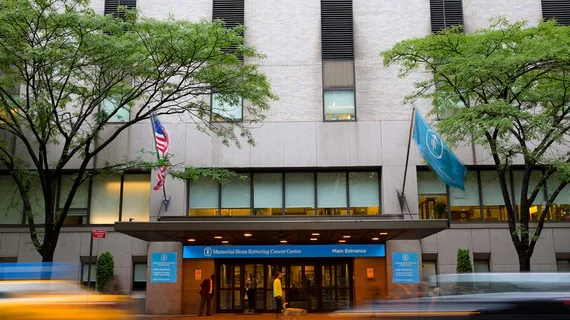
Q&A with Orly Ardon, PhD, MBA, Director of Digital Pathology Operations at Memorial Sloan Kettering Cancer Center
With more than 7 million digitized slides on hand, the pathology department at Memorial Sloan Kettering Cancer Center in New York City represents one of the largest repositories of whole slide images in the world. It’s no surprise the library is so large, as it’s been accruing new images since 2008. And with total case volumes exceeding one million slide reads per year, the inventory continues to grow at that scale.
What’s more, because Memorial Sloan Kettering is entirely focused on cancer, many of the images are of rare or otherwise unusual samples. This makes the collection important for academic pathology professionals involved with teaching and research. And indeed, for most of its 15-year history, education and research were the repository’s primary reason for being and growing.
That changed in 2020. That year, during the COVID-19 pandemic, the department validated its digital pathology systems for clinical practice. It did so to the satisfaction of the New York State Department of Health, which cleared it to proceed on a test basis.
In 2023 the team knew it was time for a deep dive—what had they learned, how much had it cost, how are resources being allocated and how to garner C-suite support? And they knew many other programs were asking the same questions without the experience to answer them. They fleshed all of that out in a comprehensive study that’s been the buzz of pathology, published in the Journal of Pathology Informatics.1
The study’s lead author, Orly Ardon, PhD, MBA—Memorial Sloan Kettering’s director of digital pathology operations—took questions from Health Imaging on operational lessons learned and economic benchmarks set. Here’s the conversation, lightly edited for clarity.
Can you trace your digital pathology journey over the last 15 years?
Fifteen years is a long time, and your digitization project is still a work in progress. Along the way, how have you known you’ve been on the right track?
From the beginning, we’ve been pursuing digitization in increments, taking a phased approach. We started small, using technologies as they became available. Because whole slide imaging wasn’t a proven technology when we were just starting out, it was essential to get that all-important C-suite support. So we achieved some small successes and built on them. Institutions starting out today don’t require a 15-year development window. They can learn from what others have done, including Memorial Sloan Kettering, and shorten their timeframe.
One thing you have to do, as we’ve learned, is build a strong business case. You can refine it as you go, but you have to follow it as much as possible. One of the reasons we decided to do the 2023 study was the questioning we were getting from both inside and outside Memorial Sloan Kettering. A lot of people were impressed by our progress into digital pathology, but they wanted to know what it was costing us. When we dug in deep to get a full and accurate accounting, we realized the data was not readily available.
As we began compiling the data we needed, we quickly saw that, when it comes to disruptive healthcare technologies, there are always different ways to look at making investments and building infrastructure. As we were capturing costs, we realized that there are other costs that need to be included. There are confounding factors like depreciated costs, equipment lifecycle expectations and other variables that aren’t easily quantified with simple mathematics. You can’t just add up 15 years of investments and think you’ll be able to capture every expense instantly.
What you can do is examine one year’s costs as a snapshot in time. I decided we would take 2021 since it was recent and, just as importantly, easy enough to analyze for innovation and development costs we had incurred in getting to the state of digitization we were in as of that year.
How do hospitals and healthcare systems start with digital pathology? What are the key factors and costs to consider?
Your study shows that, in 2021, information technology costs—infrastructure, storage, hardware and software—made up 33% of your total spend. That portion dwarfed slide scanner invoices, staff compensation and everything else. From what you know, is this typical?
I’d say the answer is both yes and no. We’re in a unique situation at Memorial Sloan Kettering because we were such early adopters. We needed tools that were not commercially available when we started down this road. For example, because the industry was still in its infancy, we needed a universal viewer that had yet to be developed. Today universal viewers are becoming the digital pathology standard. They’re offered by multiple vendors.
We also needed a way to de-identify images for teaching and research purposes. We needed tools to connect the dots between the hardware and the images. That alone required a major investment in infrastructure. And again, we had to take into account a certain amount of the development costs we’d incurred over those many years leading up to 2021. So our spending for digital pathology has been typical in some ways and atypical in others.
What are the top costs of bringing on digital pathology?
Going forward, I expect we’re going to see lower spending on software and technology development, but we have to remember that getting into digital pathology is not just a matter of plugging in slide scanners. Those scanners have to be monitored for image quality, usage patterns, failures and downtimes and so on. You need a lot of IT support. You need integration with your laboratory information system and your image management system. You need to acquire or develop various tools to run AI and other applications. All of these needs have costs, and many, if not most, of the costs have IT components.
Part of the issue is the sheer size of the digital image files, correct?
Yes, that’s right. Right now we have about 7 petabytes (PB) of data stored. And data storage size is something that many pathology operations are only now starting to appreciate, from what I’ve seen and heard. A lot of people are getting sticker shock when it comes to the cost of storage for these files. It doesn’t matter if you look at cloud storage or on-prem storage. Either way you go, it’s a large expense that many institutions are not prepared for.
AI is one of the key benefits of digital pathology. Where are you with AI adoption?
The AI revolution is driving pathology departments to start their digital journey sooner rather than later. And AI itself is highly demanding of compute power, infrastructure wherewithal, IT support and all that comes along with those kinds of things.
AI is definitely a big reason to digitize slides in the first place. In 2024 and beyond, everyone doing medical imaging of any kind needs to accept the inevitability of AI, and you cannot do AI without digital images. We’ve developed some of our own algorithms, and we’re also looking at algorithms developed elsewhere. We have several algorithms in various phases of testing and adoption.
Your pathologists got a taste for remote work during the pandemic. Is telepathology another motivator for digitization?
Telepathology is definitely something that we can do right now. We have a validated remote sign-out ability. It’s a huge plus for our pathologists. And when you think about the global demand for pathologist expertise, especially in underserved regions, telepathology is probably going to grow quickly over the coming years.
What were the key reasons for conducting the research and publishing your June 2023 study?
As you wrote the study report, what did you discover—or re-learn—about the role of corporate culture and C-suite support in sustaining a long-horizon and investment-intensive project?
I think those factors are the deal-maker for all innovation. We all know institutions with similar capabilities. Some have been successful and some have not. And attaining success has much to do with following your original vision. You’re always taking the long view of where you can go with whole-slide imaging in service to your parent institution.
If you think about stamina—the ability to sustain a years-long project like this without a quick return on investment—there’s really only one end goal that justifies the investment of time and money, and that’s improving patient care. All the other benefits may or may not be sufficient to justify the commitment.
In our situation, we talk about the business case regularly. We break down our costs. That was a big reason for doing the study we’re discussing here. I needed to write a business plan to expand the project, and I wanted to base the plan on real data. I wanted to be able to go to leadership and explain why we needed what we were asking for in objective terms. We’ll have to wait and see how that goes, as our digital pathology adoption journey is still a work in progress. Who knows what the future will bring?
Can you talk about pathologist workflow?
Picture a pathology department at a provider institution with less-deep pockets than Memorial Sloan Kettering. Assume they’re mulling a move toward whole slide imaging. What guidance or advice might you offer them?
First, I would point them to our study. It’s really hard to proceed when you don’t know what questions to ask. You need to understand what you’re getting into in order to understand all the components. This was really part of why we wanted to publish this paper—to help other institutions see what you need to think about and look into before developing their business case.
At the same time, it is important to emphasize that the answers will differ greatly among institutions. Every parent institution and pathology department has its own priorities and potential use cases. Some small academic institutions will not need to get into this at the same scale as us.
Regardless, one of the things that just makes sense for everyone is to start small. Nobody has the resources to do everything all at once. You really can’t expect to scan every histopathology slide from Day 1. As in other initiatives, you’re wise to concentrate on one small goal and show some success, learn from your mistakes, and then build it up just like any other new technology that you bring in. Pacing is important because you don’t want to fail. That’s why we took a phased approach.
Similarly, in digital pathology, you really want to have that small success to get things going. Focus on just one use case, like scanning H&E slides [which are stained with hematoxylin and eosin, the most commonly used dyes in diagnostic histopathology practice]. Think of something discrete, very well-defined, and what it is that you want to achieve. People at every institution will have to think about their unique needs, their immediate needs. What would make sense to leadership? What would make sense for pathologists? What aspects of the profession are they teaching or researching? With those preliminary points in hand, you can divide your project into phases; once you have those phases outlined, you can begin to write your business plan.
How far along is your department heading into 2024? Asked another way: When will clinical pathology be 100% digital at Memorial Sloan Kettering Cancer Center?
I think we should be there in the next year or two. Our pathologists still receive glass slides, but we are prospectively digitizing all our H&E slides and a lot of our IHC [immunohistochemical] slides. What we have is a hybrid workflow. Of course, if you
think about return on investment, this doesn’t make perfect sense. It means we’re allowing and supporting traditional workflows at the same time we’re adding digital ones. But the hybrid approach lets us make sure all our pathologists are getting comfortable with digital workflows.
As of January 2024, I would say most of our pathologists are opening digital images, but some still refer to the glass slide for sign-out. It really varies from one pathologist to the next. We have some pathologists who are 100% digital or close to it, and we have some who are more resistant to the change. But lately we’re starting to see that even they are getting on board.
How excited in your pathology team with the benefits they are seeing?
As a group, how enthusiastic is your team about leveraging this technology to save and improve life for cancer patients and their families?
There’s a lot of excitement, and it’s not just among the younger team members who grew up with digital technologies. We have some older pathologists who are very excited about whole slide imaging. At this point, I think everyone understands the numerous benefits of the technology. Everyone knows it’s the future. It’s going to change the profession of pathology. At Memorial Sloan Kettering, that change is well underway.
This story was created independently by the editorial team at Health Imaging, Radiology Business and HealthExec that are both part of Innovate Healthcare’s news sites. Pure Storage provided an educational grant but did not have a hand in the content.
--
- Orly Ardon, Matthew Hanna, et al., “Digital pathology operations at a tertiary cancer center: Infrastructure requirements and operational cost.” Journal of Pathology Informatics, June 7, 2023.
To read the other two articles in this series, please click here:

Dave P. has worked in journalism, marketing and public relations for more than 30 years, frequently concentrating on hospitals, healthcare technology and Catholic communications. He has also specialized in fundraising communications, ghostwriting for CEOs of local, national and global charities, nonprofits and foundations.
