
AI-powered lung cancer screening support tool nabs FDA clearance
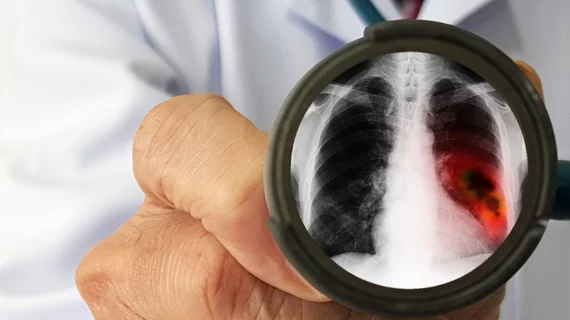
An artificial intelligence-powered software targeted at lung cancer detection was recently cleared by the U.S. Food and Drug Administration this week.
Median Technologies, which specializes in the development of AI-based imaging solutions, announced the clearance of Eyonis LCS on Monday. Eyonis is an AI/ML-powered computer-aided detection software as a medical device that assists in the interpretation of low-dose CT scans for lung cancer. The software was designed to address issues with inter-reader variability common to low-dose CT screenings.
Fredrik Brag, CEO and founder of Median Technologies, believes the clearance will improve access to lung cancer screenings.
“Eyonis LCS is the first end-to-end detection and diagnosis device FDA cleared, specifically targeting lung cancer screenings,” Brag said in a news release. “We believe Eyonis LCS will prove to be a game changer for clinical teams as they manage rising screening volumes and help healthcare systems deliver high-accuracy and timely lung cancer diagnosis for eligible patients.”
The tool performed well in manufacturer performance testing, achieving 93.3% sensitivity, 92.4% specificity and a 99.9% negative predictive value on a dataset from a lung cancer screening reference population. The high NPV is especially beneficial in lung cancer screening, as it could help spare patients from having to undergo additional imaging and procedures that can be both invasive and costly.
What’s more, Median indicates that the software can easily integrated into hospitals’ existing workflows and PACS. The software also should be eligible for reimbursement, as AI-driven CT tissue characterization is currently reimbursed under Category 3 CPT codes 0721T and 0722T.
“Lung cancer screening combined with Eyonis LCS has the capacity to deliver one of the most impactful advances in cancer care by identifying cancer at a stage where it can be cured. Eyonis LCS will empower U.S. clinicians to significantly transform lung cancer patient outcomes,” Brag said, adding that the company will soon set its sights on additional clinical indications, including incidental pulmonary nodules, hepatocellular carcinoma, pancreatic, colon and prostate cancer.
Read more here.

In addition to her background in journalism, Hannah also has patient-facing experience in clinical settings, having spent more than 12 years working as a registered rad tech. She began covering the medical imaging industry for Innovate Healthcare in 2021.