
AI spots more pancreatic cancer than radiologists
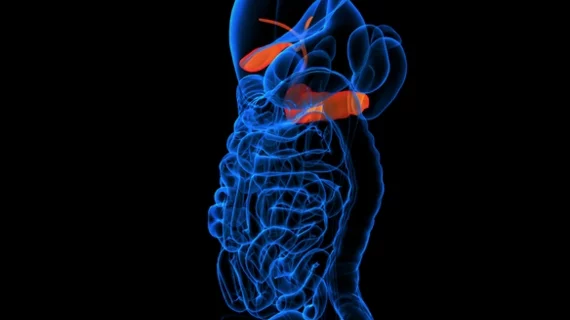
The use of artificial intelligence has the potential to significantly improve the diagnosis of pancreatic cancer, new data suggest.
Pancreatic ductal adenocarcinoma is most often accompanied by a poor prognosis. It has a median overall survival of just four months and is credited with over 467,000 deaths annually, mostly due to it being diagnosed in later stages.
“Its lethality is driven by asymptomatic early progression and rapid metastatic spread, resulting in late diagnosis when therapeutic options are limited and ineffective,” Natalia Alves, MSc, with the Diagnostic Image Analysis Group at Radboud University Medical Center in the Netherlands, and colleagues explained in The Lancet Oncology. “By contrast, patients with early-stage disease who undergo resection have markedly improved prognosis (median survival 32 months), positioning early detection as the most effective strategy to improve patient outcomes.”
This is where AI comes into play; the technology has proven to be extremely beneficial in helping diagnose numerous cancer types in earlier stages. Though research into its utility for pancreatic ductal adenocarcinoma diagnoses has been promising thus far, there are limited data on how AI compares to radiologists in terms of detection performance.
To address this, researchers conducted an observational comparative study that assessed the performance of 68 radiologists and an AI tool trained and externally validated using an international benchmark. The reference standard was established with histopathology and at least three years of clinical follow-up. The group used metrics of mean area under the receiver operating characteristic curve to measure performance.
Of the 3,340 CT scans included in the analysis, 32% were deemed positive for pancreatic ductal adenocarcinoma. The AI tool achieved an area under the receiver operating characteristic curve of 0.92 for detecting cancer, while the radiologists’ performances yielded an average AUROC of 0.88, respectively. The AI achieved a sensitivity of 85.7% and specificity of 83.5% and also reduced false positives by around 38% compared to human readers.
The team suggested their tool also has potential to assist with opportunistic screening for pancreatic cancer on any contrast-enhanced CT scan that visualizes the pancreas.
“Given the widespread and increasing availability of contrast-enhanced CT, AI also shows potential for opportunistic screening towards early [pancreatic ductal adenocarcinoma] detection in asymptomatic patients, leveraging routine imaging without added costs or radiation exposure,” the authors advised. “Future research is needed to assess the value of AI in opportunistic screening and pre-diagnostic cohorts for early cancer detection, particularly focusing on the reduction of false positive findings, which can lead to substantial clinical and economic implications when AI is deployed at scale.”
Read more about the team’s findings, including how to access their algorithm, here.

In addition to her background in journalism, Hannah also has patient-facing experience in clinical settings, having spent more than 12 years working as a registered rad tech. She began covering the medical imaging industry for Innovate Healthcare in 2021.