
AI ultrasound software accurately predicts expectant mothers' delivery timelines
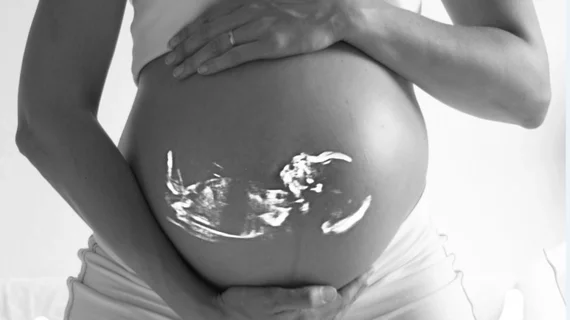
Researchers have developed a new artificial intelligence model they say could improve pregnancy outcomes based on imaging alone.
The system is said to predict expectant mothers’ time to delivery with great accuracy. Developed by Ultrasound AI—a company that specializes in AI applications for medical imaging—the software was trained on more than 2 million images, enhancing its generalizability and utility in maternal-fetal care across all trimesters.
Experts involved in its development describe the model's capabilities as “a major milestone” in women’s health.
“Our AI’s ability to accurately predict delivery timing—and learn and improve over time—has profound implications for both clinical practice and public health, especially in settings where early risk identification is critical and access to specialist care is limited,” Founder and President of Ultrasound AI, Robert Bunn, said in a statement.
The software was developed and trained using de-identified ultrasound images of women who delivered at the University of Kentucky from 2017 to 2021. It was taught to estimate the number of days until delivery and predict the likelihood of preterm deliveries.
When tested, the tool showed promising improvements throughout multiple rounds of testing, increasing its accuracy from 0.48 for the first iteration to 0.72 for the fourth iteration. It achieved an AUC of of 0.95 for predicting term births and 0.92 for all births, maintaining its performance in a diverse range of patient demographics and across all trimesters.
With continued training, the team is confident their AI’s accuracy will further improve, and they are hopeful its predictions could allow providers to proactively manage complicated pregnancies.
“AI is reaching into the womb and helping us forecast the timing of birth, which we believe will lead to better prediction to help mothers across the world and provide a greater understanding why the smallest babies are born too soon,” John M. O’Brien, MD, division director of maternal-fetal medicine (MFM) at the University of Kentucky. “AI will eventually provide greater insights in how to target and prevent adverse pregnancy outcomes. This work is an important first step in the start of a powerful advance in technology for the field of obstetrics.”
Learn more about the research here.

In addition to her background in journalism, Hannah also has patient-facing experience in clinical settings, having spent more than 12 years working as a registered rad tech. She began covering the medical imaging industry for Innovate Healthcare in 2021.