
Stanford Radiology’s AI Lab inks strategic partnership with Rad Partners
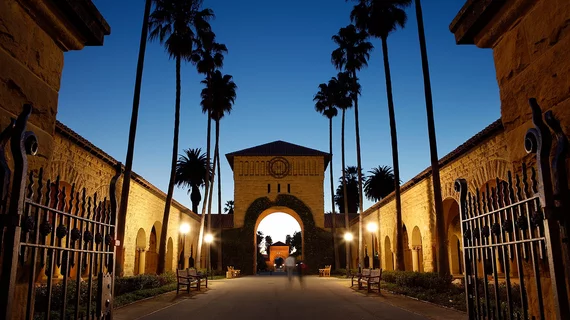
Stanford Radiology’s AI Development and Evaluation Lab has inked a partnership with imaging industry giant Rad Partners, the two announced Wednesday.
Under terms of the new team-up, the two organizations plan to pioneer methods for assessing and monitoring artificial intelligence tools in medical imaging. They’ll eventually share their insights broadly, developing research frameworks to help others evaluate AI tools worldwide.
Rad Partners—the largest radiology practice in the U.S.—already has a head start, having operationalized and scaled artificial intelligence across thousands of clinical sites. Stanford, a noted leader in AI research, will add further weight to these efforts, bringing “academic rigor” and its commitment to safety, reliability and equity to these conversations.
“This partnership allows us to learn from and help disseminate RP’s existing work in implementing and facilitating AI adoption across their practice,” David B. Larson, MD, MBA, a Stanford radiology professor and founding director of the AI Lab, said in a statement. He added that the two will work together to “uncover patterns in AI performance across different settings, predict AI pitfalls and biases, and further develop evaluation and monitoring frameworks that can be used throughout radiology.”
The partnership comes after Rad Partners launched a new technology services division last July called Mosaic Clinical Technologies, offering a cloud-based, AI-supported operating system. RP also acquired healthcare AI firm Cognita Imaging for $80 million in November. Founded in 2024 by Stanford University scientists, the company offers AI solutions that help radiologists “work more accurately, efficiently and with greater satisfaction.”
Rad Partners said the collaboration already has produced early research findings, translating its own “on-the-ground” AI learnings into peer-reviewed insights. They plan to investigate further through studies conducted at Stanford with active participation from RP radiologists and data science experts. The two institutions hope to develop new guidelines and frameworks to make AI integration “safer, smarter and more scalable” across different healthcare settings.
“This partnership underscores our shared commitment to advancing the responsible development and integration of AI in clinical practice,” said Nina Kottler, MD, chief clinical AI officer at Rad Partners.
Altogether, the Stanford Radiology AIDE Lab employs a team with over 50 years of combined clinical, research and industry in imaging and machine learning. Its aim is to address the “challenges and complexities that exist at the intersection of AI and medicine. Rad Partners, meanwhile, employs 4,000 radiologists who service over 3,400 healthcare facilities across the country.

Marty Stempniak has covered healthcare since 2012, with his byline appearing in the American Hospital Association's member magazine, Modern Healthcare and McKnight's. Prior to that, he wrote about village government and local business for his hometown newspaper in Oak Park, Illinois. He won a Peter Lisagor and Gold EXCEL awards in 2017 for his coverage of the opioid epidemic.