
White House executive order aims to curb ‘excessive’ state regulation of AI
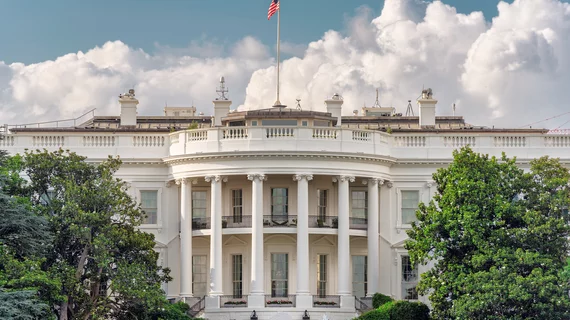
The White House issued an executive order Thursday, which it says is aimed at stopping states from enacting “excessive” regulations tied to artificial intelligence.
President Donald Trump also wants to establish an AI Litigation Task Force to challenge any AI laws that may “harm innovation.” In addition, the order directs the secretary of commerce to publish an evaluation of state laws that “conflict with national policy.”
It also calls for the development of a national “AI legislative framework” that would preempt state laws that potentially “stifle innovation.”
“Investment in AI is helping to make the U.S. economy the hottest in the world, but overregulation by the states is threatening to undermine this major growth engine,” President Trump said in a fact sheet shared Dec. 11. “We must have one federal standard instead of a patchwork of 50 state regulatory regimes,” he added later. “If we don’t, then China will easily catch us in the AI race.”
The sweeping executive order also targets any attempts to imbed DEI (diversity, equity and inclusion) into AI models. It additionally aims to remove unnecessary red tape, update out-of-date rules created before AI advancements and clarify new rules for certain sectors or use cases.
The fact sheet calls out states such as California and Colorado, claiming they are “considering requiring AI companies to censor outputs and insert left-wing ideology in their programming.” Golden State Gov. Gavin Newsom (D) criticized the executive order Thursday, charging it “advances corruption, not innovation.” He claimed the order will “hurt states like California,” a “leader in advancing AI” that has sought to protect the public and vulnerable populations.
“President Trump and [White House AI Advisor] David Sacks aren’t making policy—they’re running a con. And every day, they push the limits to see how far they can take it,” Newsom said in a statement Dec. 11. “California is working on behalf of Americans by building the strongest innovation economy in the nation while implementing commonsense safeguards and leading the way forward.”
Meanwhile, Premier Inc.—a healthcare improvement company that provides group purchasing, consulting, and analytics services to hospitals—praised the executive order Thursday. The White House estimated that state legislatures have introduced over 1,000 different AI bills, creating confusion and uncertainty among the AI industry.
“The current patchwork of state-level requirements for AI compliance creates a chilling effect on investment and innovation,” Soumi Saha, PharmD, senior VP of government affairs or Premier, said in a statement. “This is particularly true in the heavily regulated healthcare industry, where the absence of a comprehensive national privacy law has already created untenable complexity for providers.”
Sacks said Thursday that the administration will be selective in which state laws to target, NPR reported.
“Kid safety, we're going to protect. We're not pushing back on that, but we're going to push back on the most onerous examples of state regulations,” he told reporters.
NPR noted the executive order is likely to face challenges in court. Plus, tech researchers have said the administration cannot restrict state regulation in this fashion without an act of Congress (the order also directs Sacks to work with lawmakers on legislation).

Marty Stempniak has covered healthcare since 2012, with his byline appearing in the American Hospital Association's member magazine, Modern Healthcare and McKnight's. Prior to that, he wrote about village government and local business for his hometown newspaper in Oak Park, Illinois. He won a Peter Lisagor and Gold EXCEL awards in 2017 for his coverage of the opioid epidemic.