
AI could eliminate imaging contrast for some MRI scans
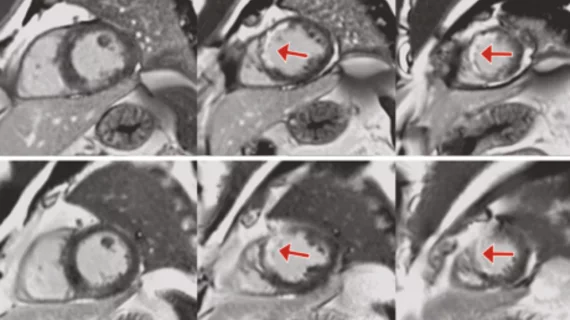
Researchers have developed an artificial intelligence tool that can generate contrast-like cardiac MR images without a gadolinium-based contrast agent (GBCA), the use of which could shorten scan times and improve access to critical diagnostics.
Late gadolinium enhancement on MRI is the clinical standard for detecting myocardial scarring caused by heart attacks and other cardiovascular diseases, but it requires GBCAs. The use of contrast increases scan times and makes the exam less suitable for some patients who may be more sensitive to gadolinium, including children and individuals who are pregnant, lactating or have advanced kidney disease. To address these limitations, researchers with the University of Oxford developed Virtual Native Enhancement, an AI technique that analyzes standard pre-contrast cardiac MRIs to produce “virtual contrast” images resembling conventional contrast-enhanced scans.
The team recently evaluated the technology in 136 patients who underwent cardiac MRI scans at hospitals in the U.K. and China. To ensure the AI's performance could generalize across institutions, researchers generated the images without access to the original contrast-enhanced scans or patient information, while independent clinicians blindly reviewed the results.
When the Virtual Native Enhancement images were deemed high quality, the tool identified myocardial scars with approximately 94% accuracy. The readers determined that nearly 70% of the cohort had high quality, high confidence images, suggesting that many could potentially undergo cardiac MRI without contrast administration while also maintaining the diagnostic quality of the exam.
"A major problem with medical AI is that systems which work well in one hospital often fail when tested somewhere else," senior author Stefan Piechnik, PhD, said in a statement. "We designed this study very carefully to make sure the scans were performed consistently and the AI was tested fairly in real clinical settings."
The team emphasized that larger studies are still needed before Virtual Native Enhancement can reliably replace contrast-enhanced cardiac MRI broadly, but they believe the technology could soon help clinicians determine which patients truly require GBCAs.
"This technology could make heart MRI scans quicker, simpler and easier for many patients by reducing the need for contrast injections," added senior author Vanessa Ferreira, MD, PhD. "Our long-term goal is to make cardiac MRI as straightforward and accessible as an ultrasound heart scan."
Read more about the team’s work here.

In addition to her background in journalism, Hannah also has patient-facing experience in clinical settings, having spent more than 12 years working as a registered rad tech. She began covering the medical imaging industry for Innovate Healthcare in 2021.