
University of Chicago receives $3M NIH grant to develop pediatric imaging database
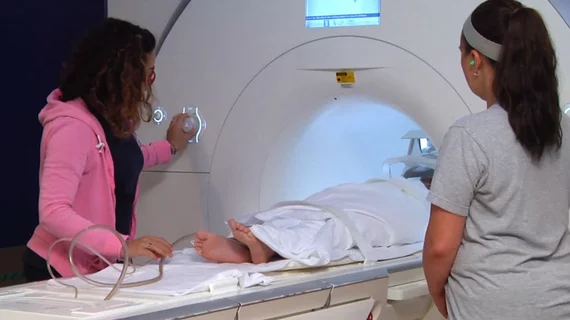
The University of Chicago has received a $3.1 million National Institutes of Health grant to develop artificial intelligence tools that generate synthetic pediatric head images.
Hospitals often cannot share patient imaging data with outside institutions because of privacy concerns. Synthetic images could help address that barrier, allowing researchers and surgeons at institutions with fewer resources to access broader reference datasets without exposing identifiable patient information.
The project, led by Antonio Porras, PhD, an associate professor of neurological surgery at UChicago, will create a publicly accessible resource for cranial development research. It will use one of the largest curated collections of clinical images from pediatric patients to train generative AI models; researchers will develop realistic synthetic images representing different ages and stages of cranial development, including healthy children and patients with craniosynostosis, a condition in which skull sutures fuse prematurely.
The initial goal is to build a comprehensive image dataset of healthy children, followed by a repository of images from patients with craniosynostosis before and after surgery. The team then plans to develop a publicly available data-sharing platform with a graphical interface. This will allow clinicians to compare their patients' images with reference data without requiring specialized technical expertise.
The resource could be especially beneficial for planning craniosynostosis procedures. Because infants' skulls change rapidly as they grow, their anatomy can differ significantly between initial imaging and eventual surgery. A robust reference dataset could help surgeons assess skull development, anticipate postoperative changes and compare outcomes associated with different surgical approaches. It also could reduce the need for additional imaging solely to obtain reference measurements.
Porras said the project aims to produce synthetic datasets that are both scientifically accurate and protective of patient privacy. The team also hopes the approach can eventually be applied beyond pediatric neurosurgery.
The research team includes collaborators from Children's National Hospital in Washington, D.C.; Children's Hospital Los Angeles and the University of Southern California; and Children's Hospital Colorado and the University of Colorado Anschutz Medical Campus.
Read more here.

In addition to her background in journalism, Hannah also has patient-facing experience in clinical settings, having spent more than 12 years working as a registered rad tech. She began covering the medical imaging industry for Innovate Healthcare in 2021.