
Despite tariffs, GE HealthCare sees sales growth in imaging systems and radiopharmaceuticals
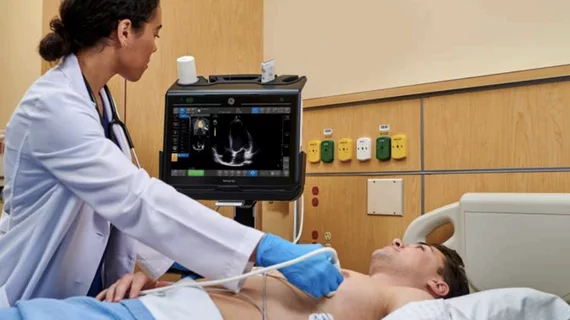
Despite tariffs and the ongoing trade war, GE HealthCare Wednesday announced a positive second quarter earnings report, which shows revenue growth of 3% and continued orders. This includes a big contract for PET/CT and artificial intelligence enhanced ultrasound systems.
There were concerns about the impact of tariffs when its Q1 report released April 30, but GE reported $4.8 million in revenue and minimal impacts from tariffs, partly due to ongoing mitigation efforts. In Q2, the company is reporting $5 billion in revenue.
“We were pleased with solid orders and revenue performance in the second quarter across all segments, reflecting healthy customer investment in capital equipment. We also reported strong earnings performance while leveraging our lean capabilities and demonstrating progress on tariff mitigation. Overall, we believe we are driving long-term value through our strategic priorities and are well positioned operationally,” President and CEO Peter Arduini said in a statement.
GE HealthCare sees growth across it four product segments
Revenue growth was seen in all four of GE HealthCare's business segments. The biggest was 14% in its pharmaceutical diagnostics business, which focuses on contrast agents for CT, MR and nuclear imaging.
“In the second quarter, we saw increased demand for our radiopharmaceutical products, including Vizamyl, Cerianna and Flyrcado, and we secured our largest-ever order of Omni Legend PET/CT systems in the U.S.,” Arduini explained.
GE's imaging systems business was up 2%, advanced visualization solutions (which includes its interventional cath lab image guided therapies) was up 3%, and patient care solutions up 1%. The advanced visualization solutions segment was the largest earner in the quarter with $267 million in revenue, followed by $213 million for the pharmaceutical segment.
Arduini said a large amount of growth was seen in capital equipment purchases for the rapidly expanding out-patient cardiac and orthopedic settings.
"Excluding tariffs, the imaging system segment margin would have increased year-over-year and sequentially," GE HealthCare Vice President and CFO Jay Saccaro said during the company's Q2 earnings call.
In the advanced visualization segment, he said growth was largely driven by U.S. sales as customers continue to invest in artificial intelligence-enhanced ultrasound solutions across multiple care settings.
"The fast growing sector of nuclear medicine, where we play significant role, in the first half of the year orders grew in strong double digits across our proprietary imaging agents and leading molecular imaging solutions made up of AI-enabled equipment and digital tools," Arduini explained.
He said PET is rapidly growing and customers have turned to GE for both imaging agents and scanners. A big example of this trend is the rapid growth of GE's PET Alzheimer's amyloid detection radiopharmaceutical agent Vizamyl (flutemetamol F-18), which recently gained an FDA indication for helping select patients for new drug treatment. It is on track to double in revenue globally from 2024 to 2025. Arduini said this is because the FDA recently cleared the first targeted agent to treat Alzheimer's, so there is an explosion of interest to detect and treat the disease.
GE also acquired MIM Software, which offers AI for detailed amyloid assessments, and has now integrated the technology into its devices. MIM also offers capabilities for theranostics, another rapidly growing area of nuclear medicine where agents are used to both image and treat patients at the same time.
Updated oncology guidelines have helped increase the demand for GE's agent Cerianna (fluoroestradiol F-18) for disease detection in recurrent or metastatic breast cancer patients. "Cerianna revenues have increased significantly year-over-year," Arduini said as a result.
Earlier this year, GE launched cardiac PET agent Flyrcado (flurpiridaz F-18). Production is being ramped up and is widely expected to expand the use of cardiac PET. He said about 60% of commercially insured patients are now covered for Flyrcado scans.
Tariff impacts on GE HealthCare
"We are pleased that the global tariff environment has become clearer since our last earnings call. We made significant progress implementing mitigating actions," Saccaro explained.
He said there is a better understanding of what the true tariff rates will be in the coming months, which helps enable better financial estimates. The gross impact of tariffs in 2025 was projected in Q1 to impact on GE HealthCare stock earnings per share (EPS) by about $1.1 billion, but the new projections put them at a lower impact of about $550 million.
This is partly due to the net reduction in tariff exposure from bilateral U.S. and China tariffs by 75% to 50% from the rates earlier this year.
GE has been working on mitigation actions since April to lower its tariff profile on products. Scott said the company has now mitigated about 50% of gross tariff costs. This includes United States-Mexico-Canada Agreement certification for tariff exemptions now completed on 75% of eligible imports with the goal of getting closer to 100%. The company also is leveraging duty drawback programs, free trade zones, and bonded logistics to lower tariff costs. It is working on dual sourcing of materials and components to avoid tariffs for products made in the U.S., and at its factories elsewhere in the world where reciprocal tariffs on U.S. goods will now be in place. GE said this includes manufacturing shifts.
Scott expects 2026 tariff expenses on stock shares to be below the forecasted 2025 level of $0.45. This will be accomplished through the multisourcing of its factories and suppliers by region and selective price increases.
Tariff rates might be stabilizing
Projections of costs due to tariffs for the rest of the year are largely based on what the currently agreed upon rates are assumed to be. New tariff rates kick in on Aug. 1 and 12:
• Bilateral U.S. and China tariffs introduced this year continue and will rise on Aug. 12 to a rate of 54% for U.S. tariffs imposed on goods imported from China to the U.S., and to 34% for Chinese tariffs on goods exported from the U.S. to China.
• U.S. tariffs on European Union and Japanese products will be 15% effective Aug. 1.
• Tariffs increase for goods imported from Mexico to 30%, and from Canada to 35% on Aug. 1, but certain exemptions for eligible imports will continue.
• U.S. reciprocal tariffs on all other impacted geographies return to pre-pause levels on Aug. 1. This includes increases of 10% or more.
Stock earnings projected to be better than expected, despite tariff costs
The EPS for GE stock was originally forecasted in Q1 to decline in the range of $3.90 to $4.10, with a tariff impact per share of 85 cents. This would have been a 9%-14% decline year-over-year. However, with the easing of tariffs, GE projects the impact will now only be about 40 cents per share. This resulted in a positive adjustment in the range of $4.43 to $4.63, even with with a $0.45 per share tariff impact.
GE HealthCare stock prices were at $79.36 per share on the eve of President Trump's major tariff announcement April 2. After which, it dropped to a low of $59.75. In the months since it made a gradual rebound to a high of $77.72 July 29, and then dropped to a low of $70.46 July 30 with the release of the Q2 earnings report.

Dave Fornell has covered healthcare for more than 17 years, with a focus in cardiology and radiology. Fornell is a 5-time winner of a Jesse H. Neal Award, the most prestigious editorial honors in the field of specialized journalism. The wins included best technical content, best use of social media and best COVID-19 coverage. Fornell was also a three-time Neal finalist for best range of work by a single author. He produces more than 100 editorial videos each year, most of them interviews with key opinion leaders in medicine. He also writes technical articles, covers key trends, conducts video hospital site visits, and is very involved with social media. E-mail: [email protected]