
FDA clears algorithm that spots and quantifies incidental lung nodules
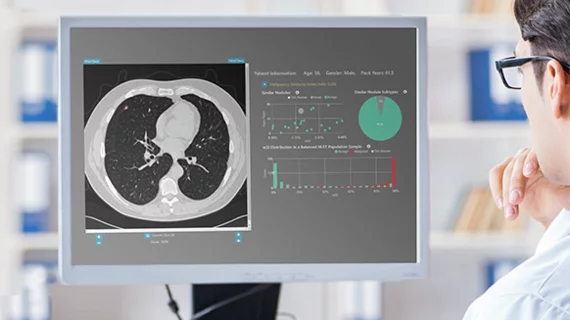
A new artificial intelligence-enabled lung lesion detection tool has been cleared by the U.S. Food and Drug Administration.
RevealDx—a company that specializes in developing AI-powered lung diagnostics—announced the clearance of its RevealAI-Lung platform on Wednesday. The product was developed to identify and characterize lung nodules detected incidentally during routine CT scans.
The platform provides radiologists with a Malignancy Similarity Index (mSI) score, which is used to determine the likelihood that an incidental nodule is malignant. This helps radiologists make more informed decisions on their follow-up recommendations without disrupting workflows. The software can be integrated directly into picture archiving and communication systems, and has already been implemented with both Riverain, a popular lung nodule detection platform, and with Fuji PACS.
The algorithm was trained and benchmarked using real-world data from the National Lung Screening Trial and was later validated on a diverse dataset containing images from over 1,500 patients. Testing thus far has shown the software has strong generalizability across exam types and patient populations.
Now that the platform has been cleared by the FDA, it is reimbursable by Medicare using codes 0721T and 0722T. Organizations interested in purchasing RevealAI-Lung can do so directly from RevealDx or through the company’s U.S. distributor, Sirona.
Learn more about the platform here.

In addition to her background in journalism, Hannah also has patient-facing experience in clinical settings, having spent more than 12 years working as a registered rad tech. She began covering the medical imaging industry for Innovate Healthcare in 2021.