
FDA clears fusion image navigation system for prostate cancer therapy planning
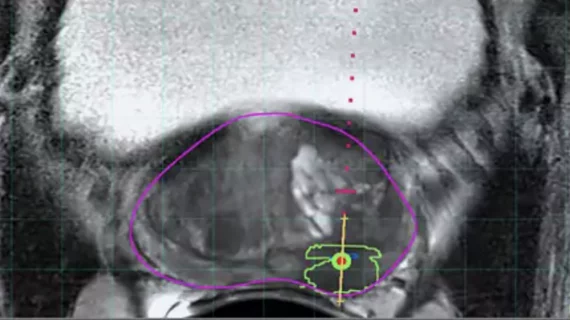
The U.S. Food and Drug Administration just cleared an imaging navigation system capable of significantly enhancing prostate biopsies and focal therapy procedures.
Philips—a leading provider of health technology—announced the clearance of the latest version of its UroNav system on Wednesday. The latest version includes several upgrades, including advanced annotation workflows and image fusion technology.
UroNav’s image fusion technology integrates pre-procedural MR images of the prostate with intraprocedural ultrasound images in real-time. This gives providers visualization of the area of interest from multiple perspectives, enabling precision care and improved accuracy in focal therapy delivery.
Ardeshir Rastinehad, DO, vice chair of urology at Lenox Hill Hospital and system director of prostate cancer at Northwell Health, says the system could pave the way for improved patient outcomes.
“We’re entering a new era of precision prostate cancer care. Philips’ integrated focal therapy platform unifies imaging, biopsy pathology, treatment planning and 3D imaging guidance with MR US fusion giving clinicians end to end efficiency and control,” Rastinehad said in an announcement on the clearance. “With fused imaging and real time ablation guidance in one place, we can personalize therapy with greater accuracy and spare patients the unnecessary side effects of traditional treatments.”
Prior data has shown that fusion imaging during prostate biopsy results in a 30% improvement in high-risk prostate cancer diagnosis. The new system can help achieve this seamlessly, as it integrates into Philips’ DynaCAD Urology software to improve procedural and therapeutic planning. What’s more, the system’s enhanced compatibility means it can be used with a wide array of ultrasound devices and needle guides. Combined, these features could enable a broader group of providers to offer biopsy and therapeutic services to patients.
“We’re helping clinicians deliver more precise prostate cancer care by streamlining complex workflows and delivering the insights they need to support precise diagnosis and expand options for minimally invasive treatments,” Business Leader, Clinical Informatics at Philips, Martijn Hartjes, said. “Our goal is to equip clinicians with the clinical tools required so they can deliver better care for more patients.”
Learn more about the system here.

In addition to her background in journalism, Hannah also has patient-facing experience in clinical settings, having spent more than 12 years working as a registered rad tech. She began covering the medical imaging industry for Innovate Healthcare in 2021.