
Neuroradiology notches $100M in NIH funding, most among imaging subspecialties
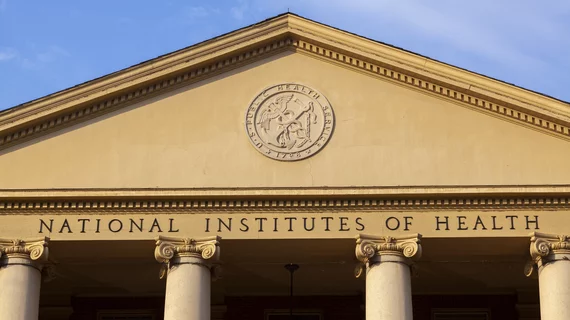
Neuroradiology has notched nearly $100 million in National Institutes of Health funding since 2012—the most among medical imaging specialties—according to new research.
NIH grant awards help shape the research agenda and academic pipeline in radiology, with a small workforce translating imaging science into clinical practice. As such, knowing which subspecialties secure federal research funding is crucial to guiding mentorship strategies and specialty-level investments, experts write in JACR.
“Although prior workforce analyses have described the overall composition of U.S. radiologists, the subspecialty distribution of NIH funded [diagnostic radiology] clinician-scientists has not been systematically characterized,” co-first authors Keervani Kandala, MS, and Paul Timothy Gomez, both with the Yale School of Medicine, wrote Aug. 21
To better understand this landscape, researchers analyzed NIH funding patterns spanning fiscal 2012 to 2025. Altogether, a total of 219 diagnostic rads received at least one grant, for an inflation-adjusted total of $241 million. Neuroradiologists accounted for the largest share at $99.8 million (or 41% of the total pot), followed by nuclear medicine’s $47 million (19%), and body imaging at nearly $39 million (16%).
Those three subspecialties account for about 76% of cumulative funding, with most support flowing from specific disease-focused institutes.
“These disparities reflect differences in research infrastructure, mentorship pipelines, and alignment with NIH institute priorities rather than differences in need or scientific opportunity,” the authors noted. “The dominant role of disease-specific institutes in directing subspecialty funding suggests that DR investigators must compete within institute-level priority frameworks rather than as a unified specialty, which may further disadvantage subspecialties lacking a dedicated NIH home,” they added later.
Other subspecialties receiving funding included breast ($17 million, or 7% of the total pot), pediatric ($15 million/6%), cardiovascular ($11 million/5%) musculoskeletal ($10 million/4%) and general diagnostic radiology ($6 million/2%). Annual NIH diagnostic radiology funding ranged from $9.6 million (or 0.026% of the total pot) to $28.6 million (0.064%). Overall NIH appropriations grew 55%, from $30.9 billion up to $48 billion.
Funding sources varied, the authors noted. Neuroradiology was primarily supported by the National Institute of Neurological Disorders and Stroke and National Institute on Aging (67% across the two). Meanwhile, Body imaging, nuclear medicine and breast imaging were “dominated” the National Cancer Institute, which also provided the largest share to pediatric radiology (43%). Muskuloskeletal imaging research funding was concentrated in National Institute of Arthritis and Musculoskeletal and Skin Diseases (76%) and cardiovascular imaging relied on the NCI (39%) and the National Heart, Lung, and Blood Institute.
Read more, including potential study limitations, in the Journal of the American College of Radiology.

Marty Stempniak has covered healthcare since 2012, with his byline appearing in the American Hospital Association's member magazine, Modern Healthcare and McKnight's. Prior to that, he wrote about village government and local business for his hometown newspaper in Oak Park, Illinois. He won a Peter Lisagor and Gold EXCEL awards in 2017 for his coverage of the opioid epidemic.