
Radiology groups urge Trump administration to exempt docs from $100,000 visa fee
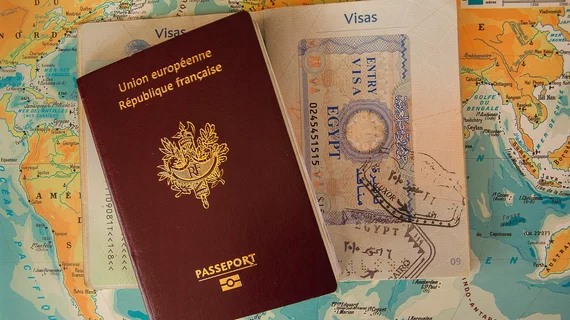
Medical societies representing radiologists and other physicians are urging the Trump administration to exempt docs from a newly announced $100,000 visa fee.
The White House first issued the presidential proclamation on Sept. 19 with the stated goal of restricting certain nonimmigrants’ access to the U.S. Its order applies to the H-1B visa program, created to bring temp workers into the country to perform “additive, high-skilled functions.”
However, the administration contends the program has been “deliberately exploited to replace, rather than supplement, American Workers with lower-paid, lower-skilled labor.”
“The large-scale replacement of American workers through systemic abuse of the program has undermined both our economic and national security,” the proclamation claims.
The White House suggests restricting access to the U.S., “except for those aliens whose petitions are accompanied or supplemented by a payment of $100,000.” Imaging groups such as the American College of Radiology and Society of Interventional Radiology, however, are urging the administration to exempt rads and other physicians from this fee. They shared their concerns in a Sept. 25 letter to Kristi Noem, secretary of the Department of Homeland Security.
ACR, SIR, the American Medical Association and over 50 other doc groups “strongly” urged the administration to issue clarifying guidance on this issue. They want assurance that H-1B physician entry into the U.S. is “in the national interest of the country,” thereby exempting radiologists and other specialists from the order.
“As you establish standards to define categories of H-1B workers covered by this exception, we urge you to clarify that all physicians—including medical residents, fellows, researchers and those working in nonclinical settings—are critical to our national interest and exempt from the proclamation,” ACR, SIR, AMA and others wrote. “Maintaining a robust healthcare workforce in the U.S. that can address the health needs of all our U.S. patients is in the best interest of the health of our nation.”
In making its case, the doc groups cited an AAMC estimate that the U.S. could be short approximately 86,000 physicians by 2036. As of last year, about 23% of licensed physicians in the U.S. were foreign-trained, and about 64% were practicing in medically underserved areas, based on 2021 estimates. “Accordingly, H-1B physicians play a critical role in filling this void, especially in areas of the U.S. with high-need populations,” they wrote.
The American College of Radiology also filed separate comments with the Department of Homeland Security on Sept. 25. These came in response to a proposed rule aimed at time-limiting J-1 and other visas. ACR contended this proposal would impact healthcare occupations currently facing shortages, including physicians and medical physicists.
“Ongoing physician workforce shortages in radiology and other specialties, including primary care, would be significantly exacerbated without the continual influx of internationally born physicians, who come to the U.S. for training and may later apply for citizenship,” CEO Dana H. Smetherman, MD, MPH, MBA, wrote in the letter, which ACR also highlighted in a Thursday news post.
Others signing the AMA message included the American Society for Radiation Oncology (ASTRO), the American Society of Nuclear Cardiology (ASNC), the Medical Group Management Association (MGMA), Society for Cardiovascular Computed Tomography (SCCT) and the Society for Vascular Surgery (SVS).

Marty Stempniak has covered healthcare since 2012, with his byline appearing in the American Hospital Association's member magazine, Modern Healthcare and McKnight's. Prior to that, he wrote about village government and local business for his hometown newspaper in Oak Park, Illinois. He won a Peter Lisagor and Gold EXCEL awards in 2017 for his coverage of the opioid epidemic.