
Medicare beneficiaries less likely to undergo follow-up imaging after cancer screenings
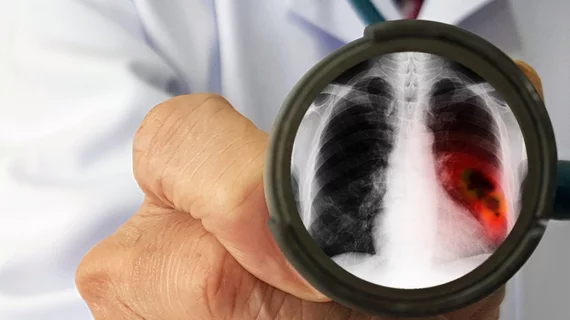
Medicare beneficiaries are less likely than participants in the National Lung Screening Trial (NLST) to receive follow-up imaging after lung cancer screening, according to new research published in the Journal of the American College of Radiology.
The data also suggest that these individuals are more likely to undergo invasive diagnostic or surgical procedures within six months of the exam. The findings suggest that follow-up care after community-based lung cancer screening may differ from the patterns observed in a controlled clinical trial, which could have implications for policymakers.
For their study, researchers analyzed the utilization of thoracic imaging, invasive diagnostic procedures and surgery among NLST participants and Medicare beneficiaries who underwent screening in 2018. The research team compared procedure rates during the six months and one year following screening, along with lung cancer incidence and all-cause mortality.
Within six months of screening, over 21.4% of NLST participants received at least one additional imaging test, compared with 16.5% of Medicare beneficiaries. The difference carried over to the one-year mark as well; at that point, 26.6% of trial participants and 22.3% of Medicare beneficiaries had follow-up imaging.
The opposite trend was observed for invasive or surgical procedures during the first six months; medicare beneficiaries were more likely to undergo an invasive diagnostic procedure or surgery than NLST participants (4.6% versus 0.6%). Surgical procedures also were more common among Medicare beneficiaries (1.5% versus 0.3%). These differences were statistically significant at six months but not at one year.
Lung cancer diagnoses also were more frequent among NLST participants than Medicare beneficiaries, at 3.8% and 2.3%, respectively. Despite this, all-cause mortality did not differ significantly between the two groups.
The team suggested that additional research is needed to determine the underlying cause behind the variations in follow-up care.
Read more here.

In addition to her background in journalism, Hannah also has patient-facing experience in clinical settings, having spent more than 12 years working as a registered rad tech. She began covering the medical imaging industry for Innovate Healthcare in 2021.