
Tips for preventing 'unpredictable' hypersensitivity contrast reactions
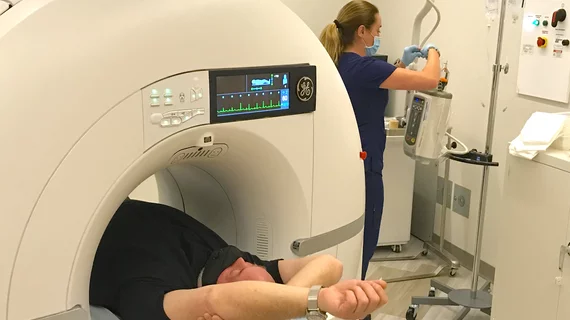
Experts recently developed a new set of recommendations to help providers better navigate decisions related to contrast administration during imaging, publishing their findings in Insights Into Imaging.
Hypersensitivity reactions are considered “Type B” which, by nature, make them unpredictable. Since the 1980s, many have attempted to create guidelines to limit these types of reactions, but this has led to an overabundance of potentially confusing and conflicting rules.
This can create an unnecessary burden for providers managing patient care, the authors of a new risk factor analysis contend.
“This is not helpful and instead leads to uncertainty again,” Ingrid Boehm, MD, from the Department of Diagnostic, Interventional, and Pediatric Radiology at the University Hospital of Bern in Switzerland, and colleagues noted. “From both studies and clinical experience, we know that only a small percentage of patients develop hypersensitivity reactions after [iodinated contrast media] administration.”
The group analyzed 126 publications that focused on adverse reactions to iodine contrast, tallying the total number of risks referenced throughout the papers. Of the 43 identified, the team noted numerous discrepancies, including repetitive references and risks that were essentially the same but were named differently.
To offer greater clarity on legitimate concerns, the group narrowed their findings to describe three separate categories of true risk factors relating to patients, contrast agents and management.
The most relevant patient-related risk factor is a history of iodinated contrast media hypersensitivity or allergic-like reactions. Anyone who has displayed signs of allergies (sneezing, runny nose, watery eyes, etc.) after administration should be considered at greater risk of adverse reactions in the future. This is especially important to recognize in patients who have chronic illnesses and are more likely to have undergone multiple contrast-enhanced studies in the past, as repetitive exposure also ups the odds of hypersensitivity.
Contrast-related factors pertain to the type of contrast used. For example, if a patient has previously shown sensitivity to an agent with higher osmolarity, it is worth considering avoiding that specific agent and opting for a low-osmolar contrast. This decision, however, would require that the patient’s previous experience was well documented to ensure techs can avoid using the same contrast.
On the subject of documentation, errors in patients’ medical histories can put them at greater risk. The group provided the example of discovering instances when patients’ allergies were mislabeled in their chart. Such errors can come in many forms and largely depend on accurate documentation and patients’ accounts of their previous experiences.
It should be noted that there are numerous other risk factors for hypersensitivity reactions—including age, iodinated contrast media compound, contrast dose and injection speed—but they each fall under one of the aforementioned categories.
“These risks directly affect patient safety and highlight the need for precise identification and consistent reporting, rather than an uncritical accumulation of nonspecific factors,” the authors advised, emphasizing the importance of accurate documentation as a critical factor in ensuring patient safety.
Read the rest of the group’s assessment here.

In addition to her background in journalism, Hannah also has patient-facing experience in clinical settings, having spent more than 12 years working as a registered rad tech. She began covering the medical imaging industry for Innovate Healthcare in 2021.