
The future of MRI is helium-free
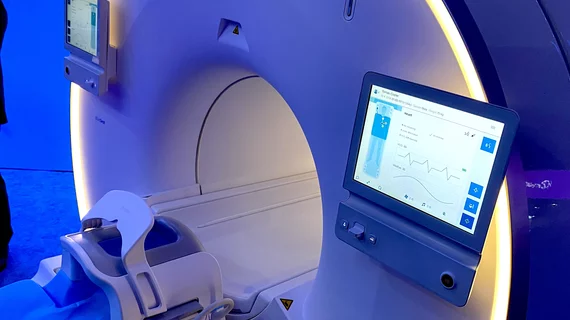
It was evident during this year’s annual meeting of the Radiological Society of North American that imaging equipment manufacturers are prepared to face concerns about the dwindling supply of helium head on.
Most MRI scanners require around 1,500 liters of liquid helium to keep cool, with periodic refills required throughout a machine’s lifetime. The healthcare industry accounts for close to 30% of global helium consumption, with MRI equipment needs accounting for a significant portion of that figure. Although the potential for a helium shortage is not a new concern, worries over the supply woes have echoed a bit louder in recent years. The January 2024 sale of the United States’ helium reserve further escalated these concerns among many in the medical community.
This has prompted leaders in the imaging industry to come up with alternative cooling solutions for MRI systems. Some of those solutions were on display this week at RSNA.
Philips' new 3T helium-free system
Philips is no stranger to helium-free MRI systems. It has been at the forefront of addressing the helium supply for several years, launching its first "helium-free" technology in 2018 and investing significant time and money into research on alternative cooling methods. Building on that momentum, the health tech giant unveiled its latest innovation in helium-saving technology at RSNA—the world’s first helium-free 3T MRI machine, BlueSeal Horizon.
Similar to its 1.5T helium-free predecessor, the 3T system will require just a fraction of the amount of helium standard scanners need to keep cool. What’s more, the system comes equipped with AI-enabled features that reduce scan times while also improving image quality.
“With BlueSeal Horizon we’re freeing MRI from dependence on a valuable resource the world can’t replace and bringing advanced diagnostic capabilities to people previously out of reach,” Ioannis Panagiotelis, PhD, business leader of MR at Philips, said in a news release. “But more than that, BlueSeal Horizon is an entirely new 3T innovation platform that combines breakthroughs in hardware with AI-powered software, eliminating the trade-off between imaging speed and precision and improving outcomes for both practitioners and patients.”
The 3T system is pending clearance by the U.S. Food and Drug Administration.
GE showcases its first helium-free scanner
GE HealthCare also has thrown its hat in the helium-free ring, unveiling its SIGNA Sprint with Freelium during the conference. The 1.5T system uses less than 1% of the helium standard machines require and was designed to support installation almost anywhere, even in remote regions. It also comes equipped with AI-powered workflows and protocols.
The SIGNA Sprint with Freelium also is pending FDA clearance.
Siemens Healthineers expands helium-free portfolio
Additionally, Siemens Healthineers has touted new developments in the helium-free realm. It announced the FDA clearance of its Magnetom Flow.Ace—a 1.5 tesla MRI scanner—in June. This was the company’s second helium-free scanner; its 0.55T Magnetom Free was cleared by the FDA in 2021.
The popularity of these systems reflects the growing trend of radiology stakeholders’ desire to create more sustainable operations.
Read more from RSNA below:

In addition to her background in journalism, Hannah also has patient-facing experience in clinical settings, having spent more than 12 years working as a registered rad tech. She began covering the medical imaging industry for Innovate Healthcare in 2021.