
International experts issue new MRI-based prostate cancer screening guidance
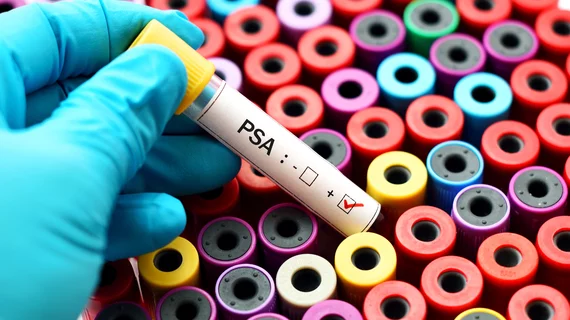
International experts on Thursday issued new recommendations relating to MRI-based prostate cancer screening.
The disease accounts for over 1.4 million new diagnoses each year worldwide, with incidence expected to double by 2040. Screening with blood tests can reduce mortality, experts note, but also can lead to patient harm including unnecessary biopsies, overdiagnoses and low-value treatments.
Magnetic resonance imaging has emerged as a primary option or follow-up after PSA (prostate-specific antigen) tests. But there is a lack of guidance on the optimal implementation of MRI in screening, experts detailed June 11 in JAMA Oncology.
“In the absence of definitive trial data, we convened an international multidisciplinary expert panel to develop consensus recommendations on the acquisition, interpretation and reporting of screening prostate MRI,” lead author Dr. Nikhil Mayor, with the Department of Surgery & Cancer at Imperial College London, and colleagues noted, adding they hope their findings will help inform research and pilot screening initiatives.
The panel included 21 experts across radiology, urology and pathology, spanning six countries. For the study, they systematically reviewed available literature on clinical trials and prospective analyses relating to MRI prostate cancer screening. Their search turned up a total of six studies incorporating over 1,900 participants, with about 74% undergoing upfront MRI screening. The pooled biopsy recommendation rate was 19.2%, with grade group 2 or higher (indicating intermediate cancer risk) detection of 6% and group 2 (low risk) at 1.4%. The positive predictive value—or probability a person who received a positive result has the disease—for group 2 was 36.3%.
These findings helped inform a consensus panel to produce the new Prostate Imaging Standards for Screening Magnetic Resonance Imaging (PRISM) recommendations. Among 323 different consensus statements analyzed on MRI prostate cancer screening, about 73% reached consensus agreement.
Based on these results, Dr. Mayor and colleagues are recommending using MRI screening for men with an estimated life expectancy greater than 10 years and between the ages of 50 and 70. However, they advocate for screening beginning at age 45 among black men, who are disproportionately affected by the disease. Screening MRI should be performed on eligible men after a blood test, but there is no consensus on the optimal PSA threshold. Noncontrast MRI with only T2- and diffusion-weighted imaging was considered appropriate, using a maximum acceptable acquisition time of 15 minutes.
The stage-gated, two-step approach to reporting is recommended, where all MRI sequences are only revealed (second step) if a concordant focal lesion is identified on imaging (first step). Repeat screening should be risk-stratified according to patient characteristics, the authors added. And screening MRI should only be performed in accredited centers with radiologists meeting minimum reporting requirements and quality standards.
“The successful implementation of MRI screening will depend not only on abbreviated, pragmatic protocols but also on rigorous quality assurance/quality control systems to ensure reproducibility across centers,” the authors charged. “Interpretation of screening MRI differs markedly from the diagnostic setting and is particularly challenging in younger men, where diffuse peripheral zone changes commonly return indeterminate clinical suspicion scores. Image quality, particularly for [diffusion-weighted imaging], is therefore critical. To reduce interreader variability, stringent reader training and use of accredited screening MRI centers, akin to the structured frameworks in breast cancer screening, are paramount.”
Read much more, including potential limitations, in JAMA.

Marty Stempniak has covered healthcare since 2012, with his byline appearing in the American Hospital Association's member magazine, Modern Healthcare and McKnight's. Prior to that, he wrote about village government and local business for his hometown newspaper in Oak Park, Illinois. He won a Peter Lisagor and Gold EXCEL awards in 2017 for his coverage of the opioid epidemic.