
MRIs uncover the science behind sports fandom
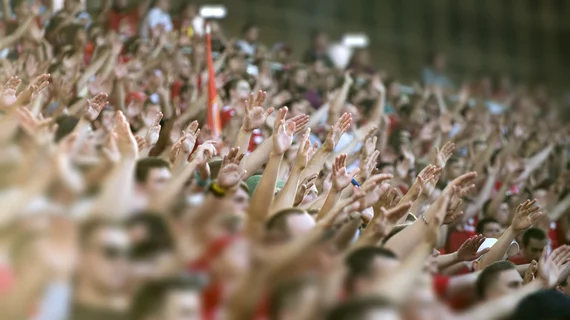
Sports fans may actually be emotionally dependent on their team’s performance on a neural level, according to functional imaging data.
Published in RSNA’s flagship journal Radiology, new research details the impact of teams’ successes and failures on their fans’ brains, revealing that activity in different regions often hinges on how their team plays. This activity was even more pronounced when their team played against its rival, researchers noted.
While the findings are certainly thought-provoking, the authors of the paper contend that their results could have much wider implications for public health.
“Studying fanaticism matters because it reveals generalizable neural mechanisms that can scale from stadium passion to polarization, violence and population-level public-health harm,” noted lead author Francisco Zamorano, PhD, an associate professor of health sciences at San Sebastián University, Santiago, Chile. “In short, investigating fanaticism is not merely descriptive—it is developmentally informed prevention that protects public health and strengthens democratic cohesion. When we discuss fanaticism, the facts speak for themselves.”
The group focused their work on soccer fans, recruiting 60 healthy men ages 25 to 40 to undergo functional MRI scans. Participants were scanned while watching 63 goal sequences from matches involving their favorite team, a rival, or a neutral team. Imaging findings were compared alongside participants’ Football Supporters Fanaticism Scale scores—a 13-item scale that assesses an individual’s fanaticism based on two sub-dimensions: “Inclination to Violence” and “Sense of Belongingness.”
Through this, researchers noted stark differences in neural activity based on how each participants' chosen team was performing. For example, when an individual’s team was shown scoring a goal against a rival, the group observed increased activation in the ventral striatum, medial prefrontal cortex and fusiform face area; these findings reflect reward processing and reinforcement of social identity. On the flip side, when a rival team scored against a participant’s team, imaging showed increased activation of the mentalizing network, visual areas and precuneus, with lower activation in the dorsal anterior cingulate cortex (dACC).
“Rivalry rapidly reconfigures the brain’s valuation–control balance within seconds,” Zamorano noted. “With significant victory, the reward circuitry in the brain is amplified relative to non-rival wins, whereas in significant defeat the dorsal anterior cingulate cortex (dACC)—which plays an important role in cognitive control—shows paradoxical suppression of control signals.”
Zamorano added that the findings were especially prevalent among individuals who considered themselves to be the most serious of fanatics. These individuals, who may typically be emotionally steady on any given day, quickly become more emotionally vulnerable when watching their favorite team.
It is possible that these findings could have implications beyond imaging. The same neural mechanisms that underlie fanaticism “likely generalize beyond sport to political and sectarian conflicts," Zamorano suggested.
Read more about the findings here.

In addition to her background in journalism, Hannah also has patient-facing experience in clinical settings, having spent more than 12 years working as a registered rad tech. She began covering the medical imaging industry for Innovate Healthcare in 2021.