
New MRI findings may explain why some amputees struggle with phantom pain
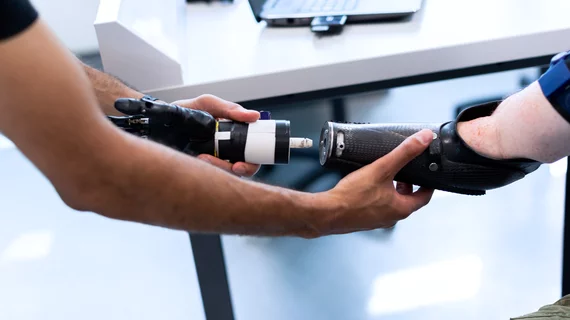
New imaging data may help explain why individuals who have had limbs amputated continue to experience phantom pain.
Phantom limb pain affects up to 80% of amputees. The sensation can be debilitating and is often difficult to treat effectively. For many years, researchers have embraced the notion that parts of the brain controlling specific extremities remap themselves following amputation, which would prevent patients from feeling pain associated with the removed appendage.
However, new research indicates this may not be the case after all.
Experts recently took advantage of a rare opportunity to study brain activity in patients prior to and after undergoing amputation. They learned that amputation may not alter brain connectivity in the way researchers previously theorized.
“For many decades, cortical remapping as a response to amputation has been a literal textbook example of brain plasticity. It’s not often you get the chance to conduct a study like this one, so we wanted to be exceedingly thorough,” Chris Baker, PhD, of NIH’s National Institute of Mental Health (NIMH), said of the findings. “We approached our data from a variety of angles, and all of our results tell a consistent story.”
The study included longitudinal data on three individuals who underwent upper extremity amputations. Participants received two functional MRIs prior to amputation to study their brain activity while they completed a series of small tasks involving finger tapping. Three additional scans were performed in the years and months following the individuals’ surgeries to compare activity in the cortex.
The team observed little to no changes in activity in the cortex after amputation. The pre- and post-op brain maps were so similar, in fact, the team suggested they likely would not have spotted any variations at all if they hadn’t known the timeline of the scans. A further analysis using a machine learning algorithm corroborated the group’s findings, as the algorithm also struggled to differentiate between the scans.
The authors suggested their findings could help researchers in developing more effective strategies for phantom pain.
"This study is a powerful reminder that even after limb loss, the brain holds onto the body, almost like it’s waiting to reconnect in some new way,” lead author Hunter Schone, PhD, noted. “Now, rapidly developing brain-computer interface technologies can operate under the assumption that the brain's body map remains consistent over time. This allows us to move into the next frontier: accessing finer details of the hand map, like distinguishing the tip of the finger from the base, and restoring the rich, qualitative aspects of sensation, such as texture, shape and temperature.”
Read more about the findings here.

In addition to her background in journalism, Hannah also has patient-facing experience in clinical settings, having spent more than 12 years working as a registered rad tech. She began covering the medical imaging industry for Innovate Healthcare in 2021.