
Prostate biopsy success is highly dependent on MRI quality, study shows
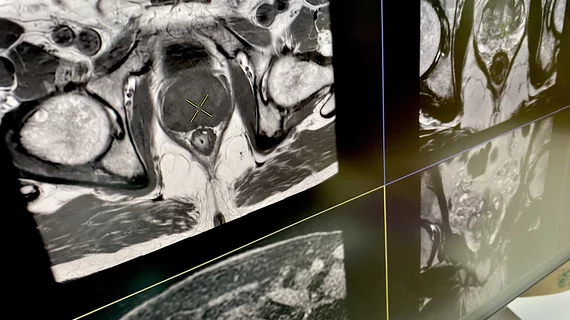
MRI quality may play a critical role in the accuracy of prostate biopsies, with suboptimal imaging emerging as a key potential contributor to missed cancers, according to a new prospective analysis.
New findings highlight a potential limitation of relying on multiparametric MRI (mpMRI) to guide prostate biopsy. Although the modality can improve targeting of clinically significant prostate cancer, its performance depends on obtaining high-quality images. When the quality varies, biopsies that depend on them for accuracy could miss the area of interest up to 12% of the time, new research suggests.
“Over the past decade, multiparametric MRI has been increasingly utilized for lesion localization and enabling MRI-directed biopsy strategies that reduce the detection of indolent disease while maintaining or improving detection of clinically significant [prostate cancer],” Baris Turkbey, MD, with the Molecular Imaging Branch of the National Cancer Institute, and colleagues noted. “However, the diagnostic utility of mpMRI is highly contingent on acquisition and interpretation quality, and real-world variability in scanner hardware, site protocols, and patient-related artifacts can compromise performance and downstream clinical decision-making.”
The study included 124 patients who underwent mpMRI and a subsequent biopsy. Researchers assessed the quality of T2-weighted, diffusion-weighted and dynamic contrast-enhanced sequences using the Prostate Imaging Quality (PI-QUAL) v2 scoring system. They then compared cancer detection from MRI-targeted biopsy with systematic biopsy.
A biopsy “miss” was defined as a case in which systematic biopsy identified a higher Gleason grade group than the targeted biopsy. Overall, 15 patients, or 12.1%, experienced a miss. On univariate analysis, lower-quality T2-weighted and dynamic contrast-enhanced sequences were significantly associated with targeted biopsy failure. T2-weighted quality showed the strongest association, with a multivariate odds ratio of 12.1, although the association did not reach conventional statistical significance after adjustment.
The findings indicate that clinicians should exercise caution when interpreting low-quality exams and recognize that a low PI-QUAL score may reduce the benefit of MRI-targeted biopsy compared with systematic sampling. In particular, inadequate T2-weighted imaging may warrant additional attention because of its possible association with targeted biopsy inaccuracy.
“The clinical implication remains clear: low quality MRI degrades the reliability of [MRI-targeted biopsy],” the authors cautioned. “Consequently, when evaluating patients with low PI-QUALv2 scores, clinicians should maintain a high index of suspicion, consider repeat scans, and ensure that [systematic biopsy] is performed alongside [MRI-targeted biopsy] to prevent clinically significant under-grading.”
Read more here.

In addition to her background in journalism, Hannah also has patient-facing experience in clinical settings, having spent more than 12 years working as a registered rad tech. She began covering the medical imaging industry for Innovate Healthcare in 2021.