
Single MRI finding independently predicts heart failure
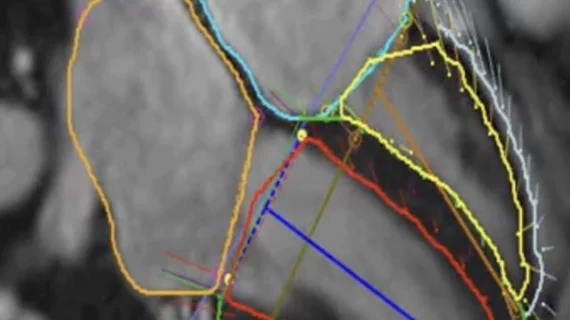
Experts have identified a single MRI finding capable of predicting the onset of heart failure independently, clinical variables and prior established imaging markers aside.
Using cardiac MRI, researchers determined that cardiac right ventricular global longitudinal strain has significant prognostic value. This finding measures the longitudinal shortening of the left ventricle during a heartbeat.
Experts recently have become more interested in measurements of strain as predictive markers of adverse cardiac outcomes in the general population and across several pathologies. This latest work focused on metrics of strain on the right ventricle to get a better understanding of its role in the development of heart failure.
"Ejection fraction is commonly used to evaluate left ventricular systolic function in clinical practice,” Steffen E. Petersen, MSc, MPH, MD, PhD, with the William Harvey Research Institute in London, and colleagues explained. “However, both [left] and right ventricular [ejection fraction] have limitations as indicators of cardiac function and may underestimate the cardiac risk. Recently, ventricular myocardial strain has gained interest as a more sensitive marker of [left ventricular] dysfunction..."
For the work, experts evaluated imaging data from more than 45,000 participants in the U.K. Biobank Imaging Study. Each participant underwent cardiac MRI, which researchers used to compare right ventricular global strain markers to instances of heart failure over three years.
The group observed significant associations between lower absolute right ventricular global longitudinal strain, RV global circumferential strain, RV global radial strain and increased risk of heart failure. When compared to conventional RV imaging markers and clinical variables, right ventricular global longitudinal strain markers alone were stronger predictors of heart failure.
“To our knowledge, this is the first study to demonstrate the independent prognostic value of [right ventricular] strain markers at a population level for [heart failure],” the group noted. “Although our study was conducted in healthy individuals, our findings highlight the potential for integrating RV strain markers into standard cardiac MRI protocols, similar to how tricuspid annular plane systolic excursion is used as a clinically useful marker of RV function in routine imaging..."
Read more about the group’s findings here.

In addition to her background in journalism, Hannah also has patient-facing experience in clinical settings, having spent more than 12 years working as a registered rad tech. She began covering the medical imaging industry for Innovate Healthcare in 2021.