
Whole-body MRI provider Prenuvo launches new research network
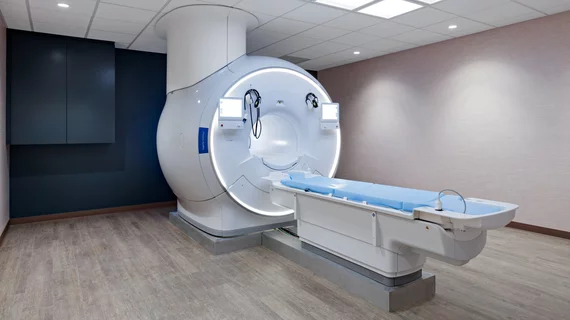
Whole-body MRI provider Prenuvo on Tuesday announced plans to launch a new research network as it seeks to build further momentum around these elective scans.
The Redwood City, California-based radiology group said the network will bring together its own AI tools, internal research and development teams, scientists and academic institutions. Their goal is to “build the evidence base for proactive, preventive medicine.”
Founded in 2018, Prenuvo offers elective whole-body MRIs for approximately $2,500 to healthy individuals looking to root out clinical concerns before they become symptomatic. The company said it has now completed over 200,000 scans and will seek to leverage its trove of data to better track disease patterns.
Prenuvo also employs 100-plus affiliated radiologists and operates 26 imaging clinics across North America, Europe and Australia.
“By combining a large-scale imaging dataset with rigorous analysis, we’re able to study early patterns of disease in ways that have not been possible before,” Alex Exuzides, MD, PhD, vice president and head of research and medical affairs for Prenuvo, said in a statement Sept. 29. “Our goal is to build a strong evidence base for proactive, preventive healthcare through collaborative, clinically grounded research."
Initial collaborators represent experts from over 50 institutions. They include City of Hope, the University of California in San Francisco, and the Moffitt Cancer Center. Prenuvo emphasized that all research will follow applicable ethical, patient safety, data integrity and regulatory compliance requirements. The company has sharpened its research focus as some, such as the American College of Radiology, have questioned this care model’s validity. Critics charge that there is little clinical evidence to support claims that elective whole-body MRIs save lives.
Prenuvo shared highlights from four featured studies, including the peer-reviewed abstracts:
Pulmonary and mediastinal findings in patient-driven MRI screening: In one of the largest such studies to date, Prenuvo said its research establishes that clinically significant intrathoracic abnormalities can be detectable at meaningful rates using elective whole-body MRIs. The company believes these results highlight the potential of WB-MRI to extend cancer detection beyond guideline-eligible populations.
Incidental brain findings in over 78,000 subjects: This study provides the largest population-level characterization of incidental intracranial findings through preventive whole-body MRIs, Prenuvo claims. The results reveal that clinically significant brain abnormalities occur in 7% of screened individuals. Prenvuo believes the findings “underscore the value” of screening MRI in uncovering “silent but actionable neurological pathology.”
Brain changes associated with alcohol intake: The third study links alcohol consumption with structural changes in both the brain and body organs among individuals without alcohol-use disorder. Prenuvo charges that the results signal need for further investigation into alcohol’s broader health impacts.
Incidental findings across 117,826 WB-MRI scans: And finally, the fourth study characterizes the prevalence and risk profile of incidentally detected renal lesions across the largest whole-body MRI cohort to date. Prenuvo said the early results demonstrate that, while most elective MRI findings are small and likely benign, clinically concerning lesions follow known RCC-risk patterns.
"Early detection can be a game changer for conditions where progressive growth and possibly even malignant transformation are the natural history," Jacob Young, MD, an assistant professor and neurosurgeon with UCSF, said in the announcement. "Using Prenuvo's de-identified data sets to help define the frequency and characteristics of incidentally discovered lesions can improve our decision-making and management for patients now and in the future."

Marty Stempniak has covered healthcare since 2012, with his byline appearing in the American Hospital Association's member magazine, Modern Healthcare and McKnight's. Prior to that, he wrote about village government and local business for his hometown newspaper in Oak Park, Illinois. He won a Peter Lisagor and Gold EXCEL awards in 2017 for his coverage of the opioid epidemic.