
'We've got to set the standard': Imaging leaders want safety at the forefront of remote operations
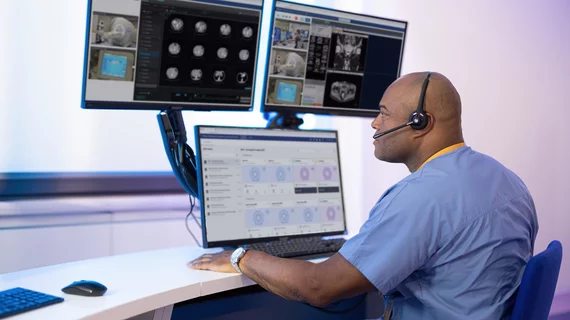
The concept of remote imaging operations has drawn both praise and apprehension from imaging leaders, with both sides of the debate centering on concerns over patient safety. As organizations have begun to explore the feasibility of such operations, it has become clear that the key to success—both administratively and clinically—might be the willingness to compromise.
The topic of remote operations garners a wide array of opinions from leaders across the industry. Supporters view it as a way to increase patients’ access to vital diagnostic exams, while those in opposition have expressed concerns pertaining to whether the increased access will further strain organizations where skilled technologists are already in short supply. But perhaps the biggest sticking point relates to the bedside. If a technologist is running the exam remotely, who is tending to patients on-site?
Radiology Business recently sat down with two imaging leaders—Liana Watson, DM, RT, CEO of the American Registry of Radiologic Technologists, and Melissa B. Pergola, EdD RT, CEO and executive director of the American Society of Radiologic Technologists—to learn more about how remote imaging can be conducted safely and what the trajectory of these operations might look like in the future.
Both agree that the demand for remote imaging is only going to grow. The technology is there, and so is the need.
“As leaders, we have to be futurists. We are not going to stick our heads in the sand and act like this isn’t happening,” Pergola said. “And this is not new. Technology has always evolved.”
How can organizations ensure patient safety for remote imaging exams?
Patient safety is at the center of the remote imaging debate. Both the ASRT and ARRT prefer having a registered technologist trained specifically in an exam’s modality at the bedside. Most imaging departments are already short-staffed though, so this option isn't always feasible. What concerns both Pergola and Watson is that, without set standards, facilities could put virtually anyone bedside with the patient during remote exams.
“Best case scenario, a registered technologist is there with the patient. Unfortunately, with workforce shortages, that isn’t always possible,” Watson noted. “What’s happening right now is that the imaging practices can just bring in anybody to help—without any standardized training, without standardized testing of their knowledge. There’s no standardization. It could be an MRI tech, it could be a registered radiographer, it could be a CNA or even a secretary.”
The compromise
Seeing the potential for interest in remote operations to grow, the ARRT recently devised a solution to address the demand safely. In July, it announced the rollout of a new credential aimed at assisting in remote MRI settings. The Imaging Assistant, Magnetic Resonance credential will ensure applicants complete a wide range of clinical competency requirements and structured education curriculum, in addition to passing a certification exam.
"We’ve got to set a standard. We know we can’t get registered MRI technologists up and running quick enough to address this issue,” Watson said. “But what we can do is set the minimum standard for the facilities using assistants for remote operations. We can develop a credential and the educational requirements, so we know that at least that environment is safe for the patient.”
“If we don’t own the competence of the person in that room and keep it in the house of radiology, there will be no standard,” Pergola added. “We ultimately have the responsibility to protect our profession and our patients.”
Watson and Pergola are both optimistic not only for how the credential can help ensure patient safety, but for how it could open an entire career pathway in imaging for applicants. They see this as a way for departments to retain more staff who are already dedicated to their organization.
What does the future of remote imaging look like?
In terms of the future, Watson indicated that remote imaging will likely expand into all modalities. It could become so prevalent that the ARRT may have to rethink how to structure curriculum and clinical requirements in the future, she added. This is something the organization already has its eye on.
“Our board did some future thinking a few years ago and talked about how the future of the technologist profession may end up being split at some point into those who are really focused on the patient care part of it and those who are more focused on the technology side of it. That’s what’s happening here with remote,” she said, adding that “there will be super techs who can do them both. They will be the ones who can put it all together.”
Pergola agreed and added that it’s important to remember that remote imaging does not have to be a bad thing. She suggested that it opens many new opportunities for education and training and for technologists’ careers. She believes the ASRT and ARRT will be able to say they did right by their patients.
“Hopefully we look back and say that we saw what was happening in clinic with people who were not competent at bedside, and that we took the steps to make sure we kept our patients safe,” she said. “I hope we can say that we kept it in the house of radiology and that we owned our service line.”

In addition to her background in journalism, Hannah also has patient-facing experience in clinical settings, having spent more than 12 years working as a registered rad tech. She began covering the medical imaging industry for Innovate Healthcare in 2021.