• Management
      |Management
    • Compensation
    • Economics
    • Leadership
    • Legal News
    • Mergers & Acquisitions
    • Patient Care
    • Policy & Regulations
    • Practice Management
    • Professional Associations
    • Quality
    • Staffing
  • Imaging
      |Imaging
    • CT
    • MRI
    • Nuclear Medicine
    • Ultrasound
    • Women's Imaging
    • X-ray
  • Technology
      |Technology
    • Artificial Intelligence
    • Enterprise Imaging
    • Imaging Informatics
    • Informatics
    • PACS
  • Videos
  • Conferences
      |Conferences
    • ACR
    • AHRA
    • ARRS
    • ASRT
    • RBMA
    • RSNA
    • SBI
    • SCCT
    • SIIM
    • SIR
    • SNMMI
  • Custom Content
      |Custom Content
    • Experience Stories
    • Webinars & Videos
  • Subscribe
  • Forty Under 40 Award
      |Forty Under 40 Award
    • Class of 2026
    • Class of 2025
    • Class of 2024

Search form

Home

News You Need to Know Today
How breast density impacts AI performance | Chronic lung disease rising in countertop workers | More
Tuesday, December 3, 2024
Link to Twitter Link to Facebook Link to Linkedin Link to Vimeo

Today's News and Trends

How does breast density affect AI accuracy?

AI has shown great promise for improving early detection of breast cancer, but many algorithms are hindered by a lack of training on diverse datasets. 

READ MORE >
Women with dense breasts and benign breast disease have increased risks of developing #breastcancer
Share on Twitter Share on Facebook Share on Linkedin

How does breast density affect AI accuracy?

Share on Twitter Share on Facebook Share on Linkedin
Women with dense breasts and benign breast disease have increased risks of developing #breastcancer
AI has shown great promise for improving early detection of breast cancer, but many algorithms are hindered by a lack of training on diverse datasets. 
READ MORE >

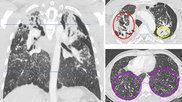
Abnormal CT findings increasingly common among countertop workers

Individuals who work with engineered stone countertops are increasingly being diagnosed with silicosis—a chronic lung condition that is the result of inhaling large amounts of silica dust.

READ MORE >
Silicosis on CT
Share on Twitter Share on Facebook Share on Linkedin

Abnormal CT findings increasingly common among countertop workers

Share on Twitter Share on Facebook Share on Linkedin
Silicosis on CT
Individuals who work with engineered stone countertops are increasingly being diagnosed with silicosis—a chronic lung condition that is the result of inhaling large amounts of silica dust.
READ MORE >

New AI-enabled CT system is officially available in North America

The scanner is equipped with features aimed at addressing some of the biggest pain points of both radiologists and technologists.

READ MORE >
Philips CT 5300
Share on Twitter Share on Facebook Share on Linkedin

New AI-enabled CT system is officially available in North America

Share on Twitter Share on Facebook Share on Linkedin
Philips CT 5300
The scanner is equipped with features aimed at addressing some of the biggest pain points of both radiologists and technologists.
READ MORE >

In Case You Missed It

Some soccer players are at risk of brain damage similar to CTE

American football isn’t the only contact sport that has medical experts concerned with the brain health of athletes. New evidence suggests certain soccer players may be at heightened risk of long-term brain abnormalities, too. 

READ MORE >
Share on Twitter Share on Facebook Share on Linkedin

Some soccer players are at risk of brain damage similar to CTE

Share on Twitter Share on Facebook Share on Linkedin
American football isn’t the only contact sport that has medical experts concerned with the brain health of athletes. New evidence suggests certain soccer players may be at heightened risk of long-term brain abnormalities, too. 
READ MORE >

GBCA dose reduced by up to 80% with help from deep learning-based image reconstruction

Although GBCAs are largely considered safe, there are concerns about how gadolinium retention could affect patients who require repeated imaging.

READ MORE >
gadolinium, GBCAs
Share on Twitter Share on Facebook Share on Linkedin

GBCA dose reduced by up to 80% with help from deep learning-based image reconstruction

Share on Twitter Share on Facebook Share on Linkedin
gadolinium, GBCAs
Although GBCAs are largely considered safe, there are concerns about how gadolinium retention could affect patients who require repeated imaging.
READ MORE >

Concussions may slow 'background' brain activity in athletes, new imaging shows

New research into post-concussion brain health suggests that the impact of head trauma may be more far-reaching than previously believed. 

READ MORE >
Share on Twitter Share on Facebook Share on Linkedin

Concussions may slow 'background' brain activity in athletes, new imaging shows

Share on Twitter Share on Facebook Share on Linkedin
New research into post-concussion brain health suggests that the impact of head trauma may be more far-reaching than previously believed. 
READ MORE >

In Other News

RSNA president offers 6 ingredients for a ‘better AI future’

Curtis P. Langlotz, MD, PhD, a noted physician and Stanford professor, spoke Sunday during the opening session of the society's 110th Scientific Assembly and Annual Meeting. 

READ MORE >
artificial intelligence AI deep learning ChatGPT OpenAI Microsoft Google
Share on Twitter Share on Facebook Share on Linkedin

RSNA president offers 6 ingredients for a ‘better AI future’

Share on Twitter Share on Facebook Share on Linkedin
artificial intelligence AI deep learning ChatGPT OpenAI Microsoft Google
Curtis P. Langlotz, MD, PhD, a noted physician and Stanford professor, spoke Sunday during the opening session of the society's 110th Scientific Assembly and Annual Meeting. 
READ MORE >

Shockwave Medical’s IVL technology still safe, effective in patients with calcified nodules

Intravascular lithotripsy is still a safe and effective frontline preparation tool when PCI patients present with calcified nodules, a new two-year study confirmed. Researchers focused on stent expansion and luminal gain, among other key data points.

READ MORE >
The use of intravascular lithotripsy (IVL) during percutaneous coronary intervention (PCI) is still safe and effective when patients present with calcified nodules (CNs), according to new long-term data published in EuroIntervention.[1] Researchers compared outcomes from patients with and without CNs, highlighting key similarities in stent expansion and luminal gain.
Share on Twitter Share on Facebook Share on Linkedin

Shockwave Medical’s IVL technology still safe, effective in patients with calcified nodules

Share on Twitter Share on Facebook Share on Linkedin
The use of intravascular lithotripsy (IVL) during percutaneous coronary intervention (PCI) is still safe and effective when patients present with calcified nodules (CNs), according to new long-term data published in EuroIntervention.[1] Researchers compared outcomes from patients with and without CNs, highlighting key similarities in stent expansion and luminal gain.
Intravascular lithotripsy is still a safe and effective frontline preparation tool when PCI patients present with calcified nodules, a new two-year study confirmed. Researchers focused on stent expansion and luminal gain, among other key data points.
READ MORE >

FDA recalls brain biopsy needles due to stainless steel debris

There have been no reported injuries. However, due to the risk of death or paralysis associated with metal debris entering brain tissue, the recall is designated Class I, the most serious of its type. 

READ MORE >
Recall
Share on Twitter Share on Facebook Share on Linkedin

FDA recalls brain biopsy needles due to stainless steel debris

Share on Twitter Share on Facebook Share on Linkedin
Recall
There have been no reported injuries. However, due to the risk of death or paralysis associated with metal debris entering brain tissue, the recall is designated Class I, the most serious of its type. 
READ MORE >

From our Partners


Samsung showcases enhanced portfolio at RSNA 2024

The company's floor-mounted digital X-ray offering, GF 85, and a pediatric cardiac-specific ultrasound probe were unveiled for the first time.  
READ MORE >
 

Innovate Healthcare thanks our partners for supporting our newsletters.
Sponsorship has no influence on editorial content.

Interested in reaching our audiences, contact our team

*|LIST:ADDRESSLINE|*

You received this email because you signed up for newsletters from Innovate Healthcare.
Change your preferences or unsubscribe here

Contact Us  |  Unsubscribe from all  |  Privacy Policy

© Innovate Healthcare, a TriMed Media brand
Innovate Healthcare

Recent Newsletters

Best of the Week: MRI links anxiety to brain changes | AI equals rads at prostate cancer detection | 4 deaths prompt US recall
Senate bill would slash radiology spending | MRI links ultraprocessed foods to brain injury | New imaging clinic chain launches
How departments are reducing wait times | Program increases exposure to radiology careers | Gaps in radiation safety knowledge
A warning about BI-RADS | 3-step buyer's guide for radiology AI | IR procedure reduces steroid reliance for KOA | Rad turnover
Radiologists worry of ripple effect after false claims | AI matches rads at prostate cancer detection | Rad Partners scores win
GE HealthCare acquiring radiopharma firm | RP seeks to expand teleradiology services | Telix and ITM merge in $1.65B deal | More
Siemens Healthineers ends general ultrasound sales | More liver cancer patients turning to IR treatments | Anxiety on MRI
Newsletter archive
  • Home
  • News
  • Article Archive
  • Custom Content
  • Webinars
  • Press Releases
  • Content Studio
  • Advertising
  • Submit Press Release
  • Contact Us
  • Terms of Use
  • Privacy Policy
  • Cardiovascular Business
  • HealthExec
  • Radiology Business
  • Press Releases
  • Submit Press Release
© 2026 Innovate Healthcare | All Rights Reserved. | Terms of Use | Privacy Policy
Design by Adaptive Theme
Trimed Popup