  • Management
      |Management
    • Compensation
    • Economics
    • Leadership
    • Legal News
    • Mergers & Acquisitions
    • Patient Care
    • Policy & Regulations
    • Practice Management
    • Professional Associations
    • Quality
    • Staffing
  • Imaging
      |Imaging
    • CT
    • MRI
    • Nuclear Medicine
    • Ultrasound
    • Women's Imaging
    • X-ray
  • Technology
      |Technology
    • Artificial Intelligence
    • Enterprise Imaging
    • Imaging Informatics
    • Informatics
    • PACS
  • Videos
  • Conferences
      |Conferences
    • ACR
    • AHRA
    • ARRS
    • ASRT
    • RBMA
    • RSNA
    • SBI
    • SCCT
    • SIIM
    • SIR
    • SNMMI
  • Custom Content
      |Custom Content
    • Experience Stories
    • Webinars & Videos
  • Subscribe
  • Forty Under 40 Award
      |Forty Under 40 Award
    • Class of 2026
    • Class of 2025
    • Class of 2024

Search form

Home

News You Need to Know Today
Care Delivery | November 2018
Monday, November 5, 2018
Link to Twitter Link to Facebook Link to Linkedin Link to Vimeo

Editor's Choice: Care Delivery

Top Stories

Unnecessary supplemental breast cancer screening skyrockets after density law passes

Breast density notification laws were designed to motivate supplemental breast cancer screening among women at an increased risk. However, they have resulted in more low-risk women undergoing unnecessary supplemental screening, according to new research published in the Journal of the American College of Radiology.

READ MORE >
woman_receives_mammogram.jpg
Share on Twitter Share on Facebook Share on Linkedin

Unnecessary supplemental breast cancer screening skyrockets after density law passes

Share on Twitter Share on Facebook Share on Linkedin
woman_receives_mammogram.jpg
Breast density notification laws were designed to motivate supplemental breast cancer screening among women at an increased risk. However, they have resulted in more low-risk women undergoing unnecessary supplemental screening, according to new research published in the Journal of the American College of Radiology.
READ MORE >

FDA approves 7T MRI scanner at USC for clinical use

The 7T MRI scanner at the Keck School of Medicine of USC in Los Angeles has received FDA approval for clinical use.
READ MORE >
The University of Southern California was among the first imaging centers in the U.S. to install a 7T MRI. This high-end part of the MRI market is small and is mainly made up of academic research centers. The main MRI market is made of of 1.5T systems, but there is rising demand for 3T, which Signify research may eventually become the standard for MRI.
Share on Twitter Share on Facebook Share on Linkedin

FDA approves 7T MRI scanner at USC for clinical use

Share on Twitter Share on Facebook Share on Linkedin
The University of Southern California was among the first imaging centers in the U.S. to install a 7T MRI. This high-end part of the MRI market is small and is mainly made up of academic research centers. The main MRI market is made of of 1.5T systems, but there is rising demand for 3T, which Signify research may eventually become the standard for MRI.
The 7T MRI scanner at the Keck School of Medicine of USC in Los Angeles has received FDA approval for clinical use.
READ MORE >

Featured Articles

Many native Spanish speakers unaware of breast density information

Spanish-speaking women are faced with unique challenges when receiving information such as dense breast notifications (DBN) and mammogram results, according to new research published in the Journal of General Internal Medicine.
READ MORE >
Share on Twitter Share on Facebook Share on Linkedin

Many native Spanish speakers unaware of breast density information

Share on Twitter Share on Facebook Share on Linkedin
Spanish-speaking women are faced with unique challenges when receiving information such as dense breast notifications (DBN) and mammogram results, according to new research published in the Journal of General Internal Medicine.
READ MORE >

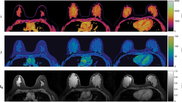
New technique brings MR fingerprinting to breast imaging

A new breast imaging technique uses MR fingerprinting for the volumetric quantification of T1 and T2 relaxation times for breast tissue, according to new research published in Radiology.
READ MORE >
MR fingerprinting breast imaging
Share on Twitter Share on Facebook Share on Linkedin

New technique brings MR fingerprinting to breast imaging

Share on Twitter Share on Facebook Share on Linkedin
MR fingerprinting breast imaging
A new breast imaging technique uses MR fingerprinting for the volumetric quantification of T1 and T2 relaxation times for breast tissue, according to new research published in Radiology.
READ MORE >

Tech company files patent for AI software that makes gadolinium-free imaging possible

IQ-AI, the healthcare technology and software holding company formerly known as Flying Brands, announced it has filed a patent for MR imaging that does not use gadolinium-based contrast agents (GBCAs).
READ MORE >
Share on Twitter Share on Facebook Share on Linkedin

Tech company files patent for AI software that makes gadolinium-free imaging possible

Share on Twitter Share on Facebook Share on Linkedin
IQ-AI, the healthcare technology and software holding company formerly known as Flying Brands, announced it has filed a patent for MR imaging that does not use gadolinium-based contrast agents (GBCAs).
READ MORE >

Should patients be included in multidisciplinary team meetings?

The authors of a new analysis published in Clinical Radiology believe all parties—the radiologist, the referring clinician, any other relevant physicians, and the patient—should be brought together to help achieve the best patient care possible.
READ MORE >
Share on Twitter Share on Facebook Share on Linkedin

Should patients be included in multidisciplinary team meetings?

Share on Twitter Share on Facebook Share on Linkedin
The authors of a new analysis published in Clinical Radiology believe all parties—the radiologist, the referring clinician, any other relevant physicians, and the patient—should be brought together to help achieve the best patient care possible.
READ MORE >

X-ray utilization for infants with bronchitis still high

In spite of guidelines recommending against routine x-rays for infants diagnosed with bronchitis, new analysis of emergency department visits in the United States suggests there has been no decrease in x-ray utilization.
READ MORE >
Share on Twitter Share on Facebook Share on Linkedin

X-ray utilization for infants with bronchitis still high

Share on Twitter Share on Facebook Share on Linkedin
In spite of guidelines recommending against routine x-rays for infants diagnosed with bronchitis, new analysis of emergency department visits in the United States suggests there has been no decrease in x-ray utilization.
READ MORE >

Burnout in pediatric radiology: 3 key takeaways from a new survey

Pediatric radiologists experience significant burnout, according to a new study published in the Journal of the American College of Radiology (JACR). With resident interest in pediatric radiology already declining, what does this mean for the specialty going forward?
READ MORE >
Share on Twitter Share on Facebook Share on Linkedin

Burnout in pediatric radiology: 3 key takeaways from a new survey

Share on Twitter Share on Facebook Share on Linkedin
Pediatric radiologists experience significant burnout, according to a new study published in the Journal of the American College of Radiology (JACR). With resident interest in pediatric radiology already declining, what does this mean for the specialty going forward?
READ MORE >

From the Magazine

5 Steps Toward Better-Informed Radiology Patients

How best to participate in the pre-exam patient education process? Consider some tips from radiologists who take a proactive stance in the process.
READ MORE >
womans_diagnostics.png
Share on Twitter Share on Facebook Share on Linkedin

5 Steps Toward Better-Informed Radiology Patients

Share on Twitter Share on Facebook Share on Linkedin
womans_diagnostics.png
How best to participate in the pre-exam patient education process? Consider some tips from radiologists who take a proactive stance in the process.
READ MORE >

Innovate Healthcare thanks our partners for supporting our newsletters.
Sponsorship has no influence on editorial content.

Interested in reaching our audiences, contact our team

*|LIST:ADDRESSLINE|*

You received this email because you signed up for newsletters from Innovate Healthcare.
Change your preferences or unsubscribe here

Contact Us  |  Unsubscribe from all  |  Privacy Policy

© Innovate Healthcare, a TriMed Media brand
Innovate Healthcare

Recent Newsletters

How departments are reducing wait times | Program increases exposure to radiology careers | Gaps in radiation safety knowledge
A warning about BI-RADS | 3-step buyer's guide for radiology AI | IR procedure reduces steroid reliance for KOA | Rad turnover
Radiologists worry of ripple effect after false claims | AI matches rads at prostate cancer detection | Rad Partners scores win
GE HealthCare acquiring radiopharma firm | RP seeks to expand teleradiology services | Telix and ITM merge in $1.65B deal | More
Siemens Healthineers ends general ultrasound sales | More liver cancer patients turning to IR treatments | Anxiety on MRI
Imaging systems recalled after 4 deaths | Radiology trainees balk at strict in-person work models | Bayer sells Blackford
Best of the Week: 8 years in jail for $37M radiology scam | Rad Partners seeks $485M loan | IR procedure relieves carpal tunnel
Newsletter archive
  • Home
  • News
  • Article Archive
  • Custom Content
  • Webinars
  • Press Releases
  • Content Studio
  • Advertising
  • Submit Press Release
  • Contact Us
  • Terms of Use
  • Privacy Policy
  • Cardiovascular Business
  • HealthExec
  • Radiology Business
  • Press Releases
  • Submit Press Release
© 2026 Innovate Healthcare | All Rights Reserved. | Terms of Use | Privacy Policy
Design by Adaptive Theme