• Management
      |Management
    • Compensation
    • Economics
    • Leadership
    • Legal News
    • Mergers & Acquisitions
    • Patient Care
    • Policy & Regulations
    • Practice Management
    • Professional Associations
    • Quality
    • Staffing
  • Imaging
      |Imaging
    • CT
    • MRI
    • Nuclear Medicine
    • Ultrasound
    • Women's Imaging
    • X-ray
  • Technology
      |Technology
    • Artificial Intelligence
    • Enterprise Imaging
    • Imaging Informatics
    • Informatics
    • PACS
  • Videos
  • Conferences
      |Conferences
    • ACR
    • AHRA
    • ARRS
    • ASRT
    • RBMA
    • RSNA
    • SBI
    • SCCT
    • SIIM
    • SIR
    • SNMMI
  • Custom Content
      |Custom Content
    • Experience Stories
    • Webinars & Videos
  • Subscribe
  • Forty Under 40 Award
      |Forty Under 40 Award
    • Class of 2026
    • Class of 2025
    • Class of 2024

Search form

Home

News You Need to Know Today
The Week's Top News: The brains of smartphone addicts | C-19 lung scarring | Contrast recycling
Saturday, December 10, 2022
Link to Twitter Link to Facebook Link to Linkedin Link to Vimeo

Today's News and Trends

Top Stories

This is your brain on smartphones: MRI study reveals altered network strength in brains of smartphone 'addicts'

The study, which was published in Brain and Behavior, found that individuals who used their smartphone excessively displayed different strengths in the prefrontal and parietal neural network.

READ MORE >
smartphone.jpg
Share on Twitter Share on Facebook Share on Linkedin

This is your brain on smartphones: MRI study reveals altered network strength in brains of smartphone 'addicts'

Share on Twitter Share on Facebook Share on Linkedin
smartphone.jpg
The study, which was published in Brain and Behavior, found that individuals who used their smartphone excessively displayed different strengths in the prefrontal and parietal neural network.
READ MORE >

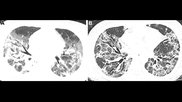
Lung scarring occurs in up to 11% of patients recovered from COVID, regardless of infection severity

Researchers cannot yet determine whether these changes will progress or resolve in the long term.

READ MORE >
Patient with severe, lung damage from COVID. Images in a 54-year-old man with COVID-19–related acute respiratory distress syndrome and subsequent fibrosis. (A) Axial CT 2 weeks after admission shows diffuse ground-glass opacity (GGO) with reticular abnormality and traction bronchiectasis in right middle lobe, indicating organizing phase of lung injury. (B) Axial CT 6 months after admission shows decreased GGO but extensive traction bronchiectasis and architectural distortion, suggesting fibrosis. RSNA
Share on Twitter Share on Facebook Share on Linkedin

Lung scarring occurs in up to 11% of patients recovered from COVID, regardless of infection severity

Share on Twitter Share on Facebook Share on Linkedin
Patient with severe, lung damage from COVID. Images in a 54-year-old man with COVID-19–related acute respiratory distress syndrome and subsequent fibrosis. (A) Axial CT 2 weeks after admission shows diffuse ground-glass opacity (GGO) with reticular abnormality and traction bronchiectasis in right middle lobe, indicating organizing phase of lung injury. (B) Axial CT 6 months after admission shows decreased GGO but extensive traction bronchiectasis and architectural distortion, suggesting fibrosis. RSNA
Researchers cannot yet determine whether these changes will progress or resolve in the long term.
READ MORE >

GE Healthcare program recycles departments' leftover iodinated contrast for future use

In 2006, the company started an iodine recycling program for imaging departments that had leftover contrast that would go to waste at the end of the day if left unused. That program expanded into the U.S. and Canada in 2021.

READ MORE >
Share on Twitter Share on Facebook Share on Linkedin

GE Healthcare program recycles departments' leftover iodinated contrast for future use

Share on Twitter Share on Facebook Share on Linkedin
In 2006, the company started an iodine recycling program for imaging departments that had leftover contrast that would go to waste at the end of the day if left unused. That program expanded into the U.S. and Canada in 2021.
READ MORE >

Radiologists reduce time spent on noninterpretive tasks by 70% with communication support

Having this support allows radiologists to have more uninterrupted interpretation time and has been linked with a 12% reduction in error rates in prior research.

READ MORE >
Share on Twitter Share on Facebook Share on Linkedin

Radiologists reduce time spent on noninterpretive tasks by 70% with communication support

Share on Twitter Share on Facebook Share on Linkedin
Having this support allows radiologists to have more uninterrupted interpretation time and has been linked with a 12% reduction in error rates in prior research.
READ MORE >

Featured Articles

Cognitive decline not far behind amyloid and tau PET-positive scans, even for the asymptomatic

Common markers of Alzheimer's disease visualized on PET scans of asymptomatic patients might foreshadow the onset of symptoms in the years following their initial discovery.

READ MORE >
An example of a positive amyloid plaque PET nuclear brain scan. these tests can help identify Alzheimer's patients earlier so they can be prescribed drugs to treat the condition.
Share on Twitter Share on Facebook Share on Linkedin

Cognitive decline not far behind amyloid and tau PET-positive scans, even for the asymptomatic

Share on Twitter Share on Facebook Share on Linkedin
An example of a positive amyloid plaque PET nuclear brain scan. these tests can help identify Alzheimer's patients earlier so they can be prescribed drugs to treat the condition.
Common markers of Alzheimer's disease visualized on PET scans of asymptomatic patients might foreshadow the onset of symptoms in the years following their initial discovery.
READ MORE >

For many patients, medical jargon relative to imaging relays opposite message of what is intended

For example, the term “negative” when used in an everyday context typically refers to something that is bad—negative feedback, negative balance, etc. But in the medical field, negative test results are most often a good thing.

READ MORE >
Share on Twitter Share on Facebook Share on Linkedin

For many patients, medical jargon relative to imaging relays opposite message of what is intended

Share on Twitter Share on Facebook Share on Linkedin
For example, the term “negative” when used in an everyday context typically refers to something that is bad—negative feedback, negative balance, etc. But in the medical field, negative test results are most often a good thing.
READ MORE >

'Gamified' social media strategies can drive radiology education initiatives

The pandemic presented an unexpected yet fruitful opportunity for institutions to utilize social media in order to engage in meaningful medical discussions while also “building a brand” and increasing outreach efforts. 

READ MORE >
twitter-292994_960_720.jpg
Share on Twitter Share on Facebook Share on Linkedin

'Gamified' social media strategies can drive radiology education initiatives

Share on Twitter Share on Facebook Share on Linkedin
twitter-292994_960_720.jpg
The pandemic presented an unexpected yet fruitful opportunity for institutions to utilize social media in order to engage in meaningful medical discussions while also “building a brand” and increasing outreach efforts. 
READ MORE >

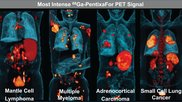
New radiotracer IDs numerous cancers likely to respond to targeted therapy

The radiotracer, 68Ga-PentixaFor, can be used for detecting C-X-C motif chemokine receptor 4 (CXCR4), which plays a significant role in cancer progression.

READ MORE >
Share on Twitter Share on Facebook Share on Linkedin

New radiotracer IDs numerous cancers likely to respond to targeted therapy

Share on Twitter Share on Facebook Share on Linkedin
The radiotracer, 68Ga-PentixaFor, can be used for detecting C-X-C motif chemokine receptor 4 (CXCR4), which plays a significant role in cancer progression.
READ MORE >

Innovate Healthcare thanks our partners for supporting our newsletters.
Sponsorship has no influence on editorial content.

Interested in reaching our audiences, contact our team

*|LIST:ADDRESSLINE|*

You received this email because you signed up for newsletters from Innovate Healthcare.
Change your preferences or unsubscribe here

Contact Us  |  Unsubscribe from all  |  Privacy Policy

© Innovate Healthcare, a TriMed Media brand
Innovate Healthcare

Recent Newsletters

Best of the Week: MRI links anxiety to brain changes | AI equals rads at prostate cancer detection | 4 deaths prompt US recall
Senate bill would slash radiology spending | MRI links ultraprocessed foods to brain injury | New imaging clinic chain launches
How departments are reducing wait times | Program increases exposure to radiology careers | Gaps in radiation safety knowledge
A warning about BI-RADS | 3-step buyer's guide for radiology AI | IR procedure reduces steroid reliance for KOA | Rad turnover
Radiologists worry of ripple effect after false claims | AI matches rads at prostate cancer detection | Rad Partners scores win
GE HealthCare acquiring radiopharma firm | RP seeks to expand teleradiology services | Telix and ITM merge in $1.65B deal | More
Siemens Healthineers ends general ultrasound sales | More liver cancer patients turning to IR treatments | Anxiety on MRI
Newsletter archive
  • Home
  • News
  • Article Archive
  • Custom Content
  • Webinars
  • Press Releases
  • Content Studio
  • Advertising
  • Submit Press Release
  • Contact Us
  • Terms of Use
  • Privacy Policy
  • Cardiovascular Business
  • HealthExec
  • Radiology Business
  • Press Releases
  • Submit Press Release
© 2026 Innovate Healthcare | All Rights Reserved. | Terms of Use | Privacy Policy
Design by Adaptive Theme