• Management
      |Management
    • Compensation
    • Economics
    • Leadership
    • Legal News
    • Mergers & Acquisitions
    • Patient Care
    • Policy & Regulations
    • Practice Management
    • Professional Associations
    • Quality
    • Staffing
  • Imaging
      |Imaging
    • CT
    • MRI
    • Nuclear Medicine
    • Ultrasound
    • Women's Imaging
    • X-ray
  • Technology
      |Technology
    • Artificial Intelligence
    • Enterprise Imaging
    • Imaging Informatics
    • Informatics
    • PACS
  • Videos
  • Conferences
      |Conferences
    • ACR
    • AHRA
    • ARRS
    • ASRT
    • RBMA
    • RSNA
    • SBI
    • SCCT
    • SIIM
    • SIR
    • SNMMI
  • Custom Content
      |Custom Content
    • Experience Stories
    • Webinars & Videos
  • Subscribe
  • Forty Under 40 Award
      |Forty Under 40 Award
    • Class of 2026
    • Class of 2025
    • Class of 2024

Search form

Home

News You Need to Know Today
MR scanners to change with the times | Osteoarthritis AI | more
Tuesday, December 20, 2022
Link to Twitter Link to Facebook Link to Linkedin Link to Vimeo

Today's News and Trends

Appetite for AI, portability likely to shape future MRI design

MRI scanner OEMs will soon face increased pressure to differentiate machines in their R&D pipelines with superconducting magnets, open designs, AI integrations and—maybe most challenging—potential for portability.

READ MORE >
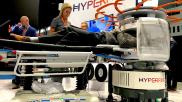
An RSNA attendee undergoes an MRI brain scan on the expo floor using the Hyperfine Swoop head MRI system. It is self-shields with a low field 0.064 T. It uses a standard wall power outlet and can be wheeled through a standard 34-inch wide door frame. It weighs 1,400 pounds. Imaging sequences include T1, T2, FLAIR, and DWI (with ADC map) and its operational controls are all directed on an iPad interface. #RSNA #RSNA22
Share on Twitter Share on Facebook Share on Linkedin

Appetite for AI, portability likely to shape future MRI design

Share on Twitter Share on Facebook Share on Linkedin
An RSNA attendee undergoes an MRI brain scan on the expo floor using the Hyperfine Swoop head MRI system. It is self-shields with a low field 0.064 T. It uses a standard wall power outlet and can be wheeled through a standard 34-inch wide door frame. It weighs 1,400 pounds. Imaging sequences include T1, T2, FLAIR, and DWI (with ADC map) and its operational controls are all directed on an iPad interface. #RSNA #RSNA22
MRI scanner OEMs will soon face increased pressure to differentiate machines in their R&D pipelines with superconducting magnets, open designs, AI integrations and—maybe most challenging—potential for portability.
READ MORE >

AI detects early signs of osteoarthritis from X-ray images

Increased ability to catch osteoarthritis early from X-ray images alone could help treat symptoms and prevent costly MRI examinations.

READ MORE >
knee x-ray
Share on Twitter Share on Facebook Share on Linkedin

AI detects early signs of osteoarthritis from X-ray images

Share on Twitter Share on Facebook Share on Linkedin
knee x-ray
Increased ability to catch osteoarthritis early from X-ray images alone could help treat symptoms and prevent costly MRI examinations.
READ MORE >

RadNet subsidiary gets green light for breast density AI

The FDA has cleared software that automatically assesses density of breast tissue on mammography.

READ MORE >
Green Light
Share on Twitter Share on Facebook Share on Linkedin

RadNet subsidiary gets green light for breast density AI

Share on Twitter Share on Facebook Share on Linkedin
Green Light
The FDA has cleared software that automatically assesses density of breast tissue on mammography.
READ MORE >

Featured Articles

JACR’s top 5 articles of 2022

The Journal of the American College of Radiology has named five peer-reviewed papers its best of the year.

READ MORE >
Share on Twitter Share on Facebook Share on Linkedin

JACR’s top 5 articles of 2022

Share on Twitter Share on Facebook Share on Linkedin
The Journal of the American College of Radiology has named five peer-reviewed papers its best of the year.
READ MORE >

RSNA shows conference attendance, radiology research still recovering from COVID

In-person attendance for RSNA 2022 dipped by more than 11,000 compared with the last conference held before the global descent of the COVID-19 pandemic.   

READ MORE >
Share on Twitter Share on Facebook Share on Linkedin

RSNA shows conference attendance, radiology research still recovering from COVID

Share on Twitter Share on Facebook Share on Linkedin
In-person attendance for RSNA 2022 dipped by more than 11,000 compared with the last conference held before the global descent of the COVID-19 pandemic.   
READ MORE >

Urinary stones in the ED: What will it take for ultrasound to gain ground on costly, radiative CT?

Professional consensus supports the use of ultrasound for initial imaging evaluation of patients presenting in the ED with suspected urinary stone disease (USD). However, as of 2018, only 2% of these patients received ultrasound while some 59% had CT.

READ MORE >
Share on Twitter Share on Facebook Share on Linkedin

Urinary stones in the ED: What will it take for ultrasound to gain ground on costly, radiative CT?

Share on Twitter Share on Facebook Share on Linkedin
Professional consensus supports the use of ultrasound for initial imaging evaluation of patients presenting in the ED with suspected urinary stone disease (USD). However, as of 2018, only 2% of these patients received ultrasound while some 59% had CT.
READ MORE >

In Other News

Trends in the number of radiology studies and a decline in radiation dose

A special report in Radiology offers a rare overview of the number of radiology exams performed each year worldwide and focuses on the decline of associated radiation doses patients receive.

READ MORE >
A CT coronary calcium scoring exam at Northwestern Medicine's Central DuPage Hospital in the Chicago Suburbs. Dave Fornell
Share on Twitter Share on Facebook Share on Linkedin

Trends in the number of radiology studies and a decline in radiation dose

Share on Twitter Share on Facebook Share on Linkedin
A CT coronary calcium scoring exam at Northwestern Medicine's Central DuPage Hospital in the Chicago Suburbs. Dave Fornell
A special report in Radiology offers a rare overview of the number of radiology exams performed each year worldwide and focuses on the decline of associated radiation doses patients receive.
READ MORE >

Lack of transparency in AI research limits reproducibility, renders work 'worthless'

A recent analysis found that a significant amount of studies do not provide information pertaining to their raw data, source code or model. As a result, up to 97% of these studies do not produce systems that are fit to be used in real-world clinical scenarios. 

READ MORE >
big_data.jpg
Share on Twitter Share on Facebook Share on Linkedin

Lack of transparency in AI research limits reproducibility, renders work 'worthless'

Share on Twitter Share on Facebook Share on Linkedin
big_data.jpg
A recent analysis found that a significant amount of studies do not provide information pertaining to their raw data, source code or model. As a result, up to 97% of these studies do not produce systems that are fit to be used in real-world clinical scenarios. 
READ MORE >

COVID-19 vaccines prevented 3M deaths

An estimated 3.2 million excess deaths and 18.5 million hospitalizations have been prevented due to COVID-19 vaccines, the Commonwealth Fund found.


READ MORE >
There has been fear of a small number of patients who experience myocarditis after COVID vaccination, but a new study found it is safe in patients with prior heart damage. Image courtesy of Banner Health. #COVID19 #COVIDvaccination
Share on Twitter Share on Facebook Share on Linkedin

COVID-19 vaccines prevented 3M deaths

Share on Twitter Share on Facebook Share on Linkedin
There has been fear of a small number of patients who experience myocarditis after COVID vaccination, but a new study found it is safe in patients with prior heart damage. Image courtesy of Banner Health. #COVID19 #COVIDvaccination
An estimated 3.2 million excess deaths and 18.5 million hospitalizations have been prevented due to COVID-19 vaccines, the Commonwealth Fund found.  
READ MORE >

Innovate Healthcare thanks our partners for supporting our newsletters.
Sponsorship has no influence on editorial content.

Interested in reaching our audiences, contact our team

*|LIST:ADDRESSLINE|*

You received this email because you signed up for newsletters from Innovate Healthcare.
Change your preferences or unsubscribe here

Contact Us  |  Unsubscribe from all  |  Privacy Policy

© Innovate Healthcare, a TriMed Media brand
Innovate Healthcare

Recent Newsletters

Best of the Week: MRI links anxiety to brain changes | AI equals rads at prostate cancer detection | 4 deaths prompt US recall
Senate bill would slash radiology spending | MRI links ultraprocessed foods to brain injury | New imaging clinic chain launches
How departments are reducing wait times | Program increases exposure to radiology careers | Gaps in radiation safety knowledge
A warning about BI-RADS | 3-step buyer's guide for radiology AI | IR procedure reduces steroid reliance for KOA | Rad turnover
Radiologists worry of ripple effect after false claims | AI matches rads at prostate cancer detection | Rad Partners scores win
GE HealthCare acquiring radiopharma firm | RP seeks to expand teleradiology services | Telix and ITM merge in $1.65B deal | More
Siemens Healthineers ends general ultrasound sales | More liver cancer patients turning to IR treatments | Anxiety on MRI
Newsletter archive
  • Home
  • News
  • Article Archive
  • Custom Content
  • Webinars
  • Press Releases
  • Content Studio
  • Advertising
  • Submit Press Release
  • Contact Us
  • Terms of Use
  • Privacy Policy
  • Cardiovascular Business
  • HealthExec
  • Radiology Business
  • Press Releases
  • Submit Press Release
© 2026 Innovate Healthcare | All Rights Reserved. | Terms of Use | Privacy Policy
Design by Adaptive Theme