
He Didn't Leave His Practice. He Expanded What's Possible.
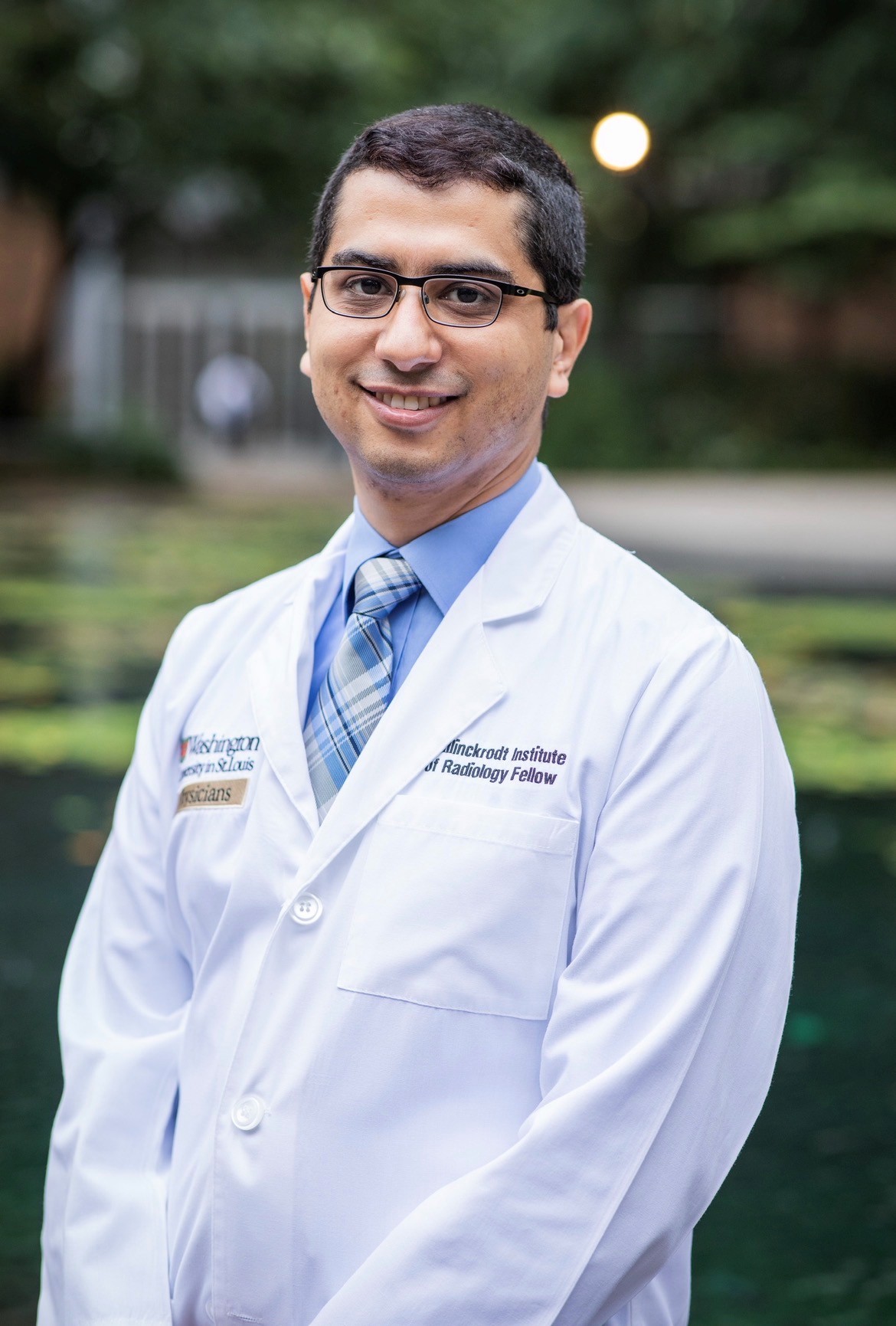
When he happened upon the CIVIE booth at RBMA PaRADigm 2025, Mina Mousa, MD, had no thoughts of leaving his job at 10-physician Radiology Associates of Tallahassee in Florida.
Why would he? He was happy and comfortable with his teammates serving the practice’s anchor client, FSU Health at Tallahassee Memorial Hospital. Plus he’d only been in practice since 2022.
This year, schedule permitting, Mousa will attend RSNA 2026 as the new chief medical AI officer (CMAIO) of CIVIE’s fast-growing teleradiology division, RadPod.
That doesn’t mean Mousa has abandoned his team in Tallahassee: He’s still a colleague in good standing. In fact, Tallahassee Memorial recognized him in August with a prestigious award for excellent service to patients, co-workers and the community. This was doable because “RadPodder” radiologists are independent 1099 contractors; all their billing and RCM activities are handled by CIVIE.
How did Mousa, who is subspecialized in neuroradiology, grow from local radiologist to national teleradiology executive—all without sacrificing his core connections and care skillsets?
Radiology Business asked him that question and several others. Here are excerpts from our conversation.
Q. What was it about CIVIE and RadPod that first grabbed your attention?
A. I thought what they were saying was too good to be true. I thought it was just marketing-speak to attract resident radiologists. When I told them I had no intention of leaving my current job, they said, “Keep your job, join us and read just two cases a day or two cases a week. Get a feel for it and then tell us what you think.”
It’s very important for me to know that no patient waits long to get their imaging read—and by a highly qualified radiologist, at that. With RadPod, I have no doubt.
—Mina Mousa, MD, Chief Medical AI Officer, RadPod
So that’s what I did. I went through the credentialing and licensing processes [needed to read exams from other states]. I’ve now been using the RadPod platform every day for going on half a year, and I’m even more impressed with the software than when I started using it.
What do you like most about the RadPod platform?
With the RadPod way of doing teleradiology, your workday is yours to organize. You can even come and go on the fly, without planning ahead, whenever you need to. That’s because there are always other radiologists on duty to cover for you, and CIVIE’s AI-native platform automatically routes studies not only by rad availability but also by case urgency, relevant subspecialty and radiologists’ personal preferences.
It’s very important for me to know that no patient waits long to get their imaging read—and by a highly qualified radiologist, at that. With RadPod, I have no doubt.
RadPod at a glance
- Parent company: CIVIE
- Designation: CIVIE’s physician arm
- Category: AI-native teleradiology
- Headcount: ~1,000 radiologists
- Volume: ~8,000 studies per day
- Reach: 5 states—CA, FL, GA, IL, TX—and growing (ME, MI, LA)
- Average wRVUs: 14 per radiologist per hour
- Average STAT turnaround: 11 minutes emergency, 40 minutes inpatient, 4 hours outpatient
- Average routine turnaround: 4 hours inpatient, 18 hours outpatient
- Concordance rate: 98.2%
- Website: radpod.com
So the RadPod model helped convince you that teleradiology could be right for you?
Yes. I knew about teleradiology as a concept but hadn’t thought it might be for me. When I saw how smart the RadPod interface is, and how intuitive, I started thinking I might like working from home—as long as I could keep practicing radiology the way I like to, which is patient-centered and clinically collaborative.
Ultimately what drew me in was the work-from-home mentality. In conventional radiology, you’re stuck with a shift that may or may not be best for you. With RadPod teleradiology, you log in and log out anytime you want. If you like to have dinner with your family every day, you can do that. Pick up your kids from school? No problem.
And as I alluded to earlier, you feel no guilt when you’re away from your workstation because another highly skilled rad is always there to cover for you.
Plus you can remain reachable by referrers—and even consult with them over shared images—through your smartphone or whatever mobile device you prefer.
How will you juggle life as a ‘RadPodder’ radiologist with life as an industry CMAIO?
The flexible schedule for clinical duties allows plenty of time to focus on my job as RadPod’s CMAIO. Meantime, by working closely with the engineering team at CIVIE and RadPod, I am only getting better at fusing technology with clinical practice. That’s clearly where radiology is going, so I believe I can help the profession progress along that road.
What was the response of practice leaders at Radiology Associates of Tallahassee when you told them you wanted to work with the RadPod platform rather than theirs?
They didn’t mind. As long as I carried my share of the workload, they had no objections.
What do you hope to accomplish as the CMAIO of an up-and-coming healthtech company?
I like that it’s a very specific and, believe it or not, simple job. My role is laser-focused on the software. The engineers and I videoconference at least once a week. We talk about what’s working well, what needs refining, that sort of thing. I might say something like, “Can we shave a few seconds off the time it takes to do this or that?” They hop right on it and make it happen.
Our specific goal is to make the software as fast, efficient and accurate as it can be. The overarching aim is to make RadPod radiologists as productive as they want to be.
—Mina Mousa, MD, Chief Medical AI Officer, RadPod
Our specific goal is to make the software as fast, efficient and accurate as it can be. The overarching aim is to make RadPod radiologists as productive as they want to be.
How big a part of your job is helping the company recruit more radiologists?
We have around 1,000 “RadPodder” radiologists right now, and supporting radiologist recruitment is a pretty big part of my job. The more RadPodders we have in our ranks, the more certainty we have about providing unbroken coverage 24/7/365.
How satisfying do you find it to work in healthcare at this moment in its technological evolution?
Well, I just turned 40 years old, and I feel super lucky and blessed to be where I am in my life and my career. The work is very exciting. I think back to the first time I talked on the phone to [CIVIE founder and CEO] Dhruv Chopra. He said his dream is to one day see radiologists opening imaging exams, looking them over and then hitting either Approve or Deny. And that’s all. Native AI agents will have done everything up to the point of signing the report. The technology will have measured lesions, compared present images with priors, drafted the report—everything. All that’s left for the radiologist to do is review the case, sign the report and go to the next case.
If the rad hits Deny, which we expect to happen around 10% of the time, the study goes into a second queue. The AI monitors why the radiologist rejected the work and teaches itself on that data. In this way, it keeps getting better in ongoing feedback loops, ensuring continuous improvement.
With RadPod’s AI-native software making headway toward doing all of that, aren’t you just a little worried about machines eventually replacing radiologists?
No, I’m not, because I am certain that radiologists will always play a critical role in radiology. At a minimum they’ll be needed to direct the machine and help it to do better—always better. This is Dhruv’s vision for RadPod, and I’m sold on it.
Learn more:
- To read about RadPod from CIVIE, click here.
- For prior coverage of CIVIE and RadPod from Radiology Business, click here.
Dave P. has worked in journalism, marketing and public relations for more than 30 years, frequently concentrating on hospitals, healthcare technology and Catholic communications. He has also specialized in fundraising communications, ghostwriting for CEOs of local, national and global charities, nonprofits and foundations.