
AI-backed imaging workflow helps generalist radiologists perform like breast specialists
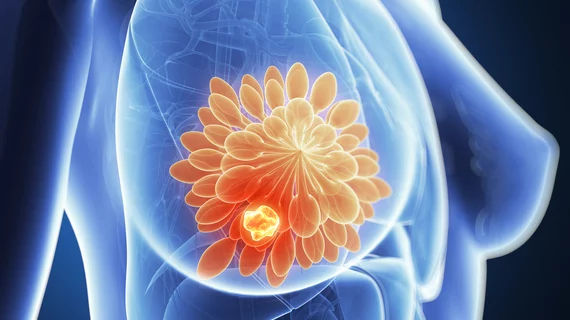
An artificial intelligence-powered workflow can help generalist radiologists perform like breast experts, according to new research published Tuesday.
Radiologist expertise can play a critical role in bolstering breast cancer screening outcomes. However, about 70% of screening mammogram interpretations in the U.S. are handled by general radiologists, rather than breast imaging specialists, experts write in RSNA’s Radiology.
Researchers recently evaluated the impact of an AI-driven workflow on helping generalists match their fellowship-trained counterparts. They highlighted key findings from a prospective study, demonstrating that AI improves cancer detection and positive predictive value of recalls for generalists, with results “on par with breast imaging specialists.”
Experts see this as a potentially scalable solution, aimed at enhancing and standardizing screening nationwide.
“This AI-driven Safeguard Review solution could improve the quality of mammography interpretation and provide specialist-level interpretive performance for all U.S. women,” lead author Matthew P. McCabe, PhD, a clinical data scientist with DeepHealth, the AI division of RadNet, and co-authors wrote July 22. “Future studies should evaluate the types of breast cancers detected through this AI-driven Safeguard Review solution.”
The prospective study included screening mammogram interpretations from radiologists working across 109 U.S. imaging facilities between 2021 and 2022. Only rads handling digital breast tomosynthesis exams during both study periods were included in the study. The multistage, AI-driven workflow integrates a computer-aided detection and diagnosis device with a separate “Safeguard Review,” which routes AI-identified suspicious exams that were not recalled for additional evaluation.
A total of 95 radiologists, including 60 generalists and 35 breast imaging specialists, took part in the study, handling almost 578,000 scans. Adjusted results showed that the detection rate of generalists increased from 3.76 cancers per 1,000 exams up to 4.99 with the AI workflow. Meanwhile, the detection rate of breast specialists was similar before and after AI (4.47 vs. 4.76), and in line with AI-backed generalists (P = 0.53). Among the generalists, positive predictive value of recalls increased by 15.09% from 3.38% to 3.89%, “indicating more efficient cancer detection." This despite a 14.79% relative increase in recall rate (from 9.06% to 10.4%). Specialists demonstrated no change in positive predictive value of recalls with AI, the authors noted.
“These findings highlight the potential clinical utility of this AI-driven workflow to deliver standardized outcomes, which could extend specialist-level care to the approximately 70% of women whose screening mammograms are interpreted by general radiologists, thereby mitigating the current shortfall of breast imaging specialists,” the authors noted.
Read more, including potential study limitations, in the Radiological Society of North America’s flagship journal. McCabe and colleagues also shared their early findings in a podium presentation at RSNA 2025 in November.

Marty Stempniak has covered healthcare since 2012, with his byline appearing in the American Hospital Association's member magazine, Modern Healthcare and McKnight's. Prior to that, he wrote about village government and local business for his hometown newspaper in Oak Park, Illinois. He won a Peter Lisagor and Gold EXCEL awards in 2017 for his coverage of the opioid epidemic.