
AI matches radiologists at prostate cancer detection via MRI
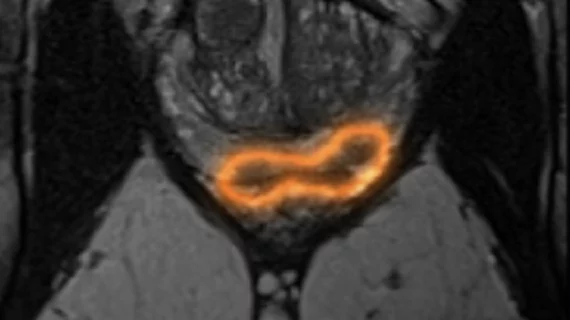
New research suggests that artificial intelligence can perform on par with radiologists at detecting prostate cancer on MRIs, even across diverse patient datasets.
It is critical that AI applications have strong generalizability so that they can be used in varying healthcare settings. A lack of generalizability in the early days of AI development was one of the biggest caveats attached to the technology, but incorporating training on varied data has helped address the issue. Now, a new paper in RSNA’s Radiology, highlights the utility of an algorithm that has undergone such training, revealing that its performance at identifying prostate lesions on MRI scans is comparable to that of human readers.
This achievement, authors of the paper contend, has the potential to substantially increase access to prostate cancer diagnostics across the globe.
“By automating key components in the MRI pathway and reducing resource-intensive tasks, AI offers a means to address workforce deficit, expand access to care and support cost-effective screening,” corresponding author Joeran S. Bosma, MSc, with the Diagnostic Image Analysis Group, Radboud University Medical Center in the Netherlands, and colleagues explained. “However, confirmatory studies of such AI systems in global, multiethnic populations across real-world diagnostic settings and organized screening remain limited.”
The SCARLET-1 study helps fill this gap. The retrospective study evaluated AI performance using 22,445 prostate MRI examinations involving 21,252 patients. The research included training and internal testing data from 26 cities in 14 countries, as well as external validation across 20 cities in 12 countries.
Researchers assessed the system’s ability to identify prostate cancer of Gleason grade group 2 or higher, which distinguishes clinically significant disease. The primary outcome measured agreement between AI assessments and standard-of-care diagnoses, with diagnostic interchangeability defined against the estimated agreement of an average radiologist.
In external testing, the AI system achieved an area under the curve of 0.86 in the PRIME diagnostic dataset, 0.89 in the STHLM3-MRI screening dataset and 0.84 in the IP1-PROSTAGRAM screening dataset. The system also met the study’s criteria for diagnostic interchangeability across all three datasets. Agreement with standard-of-care diagnoses was 83% in PRIME, 87.9% in STHLM3-MRI and 87.7% in IP1-PROSTAGRAM.
Its performance remained consistent across patient subgroups defined by age, cancer risk, tumor location and ethnicity, with a mean AUC difference of 0.02. However, results varied substantially across clinical sites, with 28% having an AUC below 0.80, while 32% achieved an AUC of at least 0.90.
Image quality also affected performance, with AUCs ranging from 0.78 to 0.88 across image quality categories.
The study authors believes these findings address an important evidence gap in prostate MRI AI research. Although previous studies have demonstrated that AI can perform comparably to radiologists for prostate cancer detection, evidence across different healthcare systems and population-based screening programs has been more limited.
Their work provides additional data supporting the safe use of AI in prostate diagnostics, they added.
“These findings support a potential role for AI in extending prostate MRI interpretation, particularly where subspecialty expertise is limited,” the authors noted. “Safe clinical use will require careful operating point selection, local testing, and longitudinal performance monitoring, and prospective evaluation of clinical, equity, and cost outcomes.”
Read more here.

In addition to her background in journalism, Hannah also has patient-facing experience in clinical settings, having spent more than 12 years working as a registered rad tech. She began covering the medical imaging industry for Innovate Healthcare in 2021.