
AI outperforms standard methods of predicting organ failure in acute pancreatitis patients
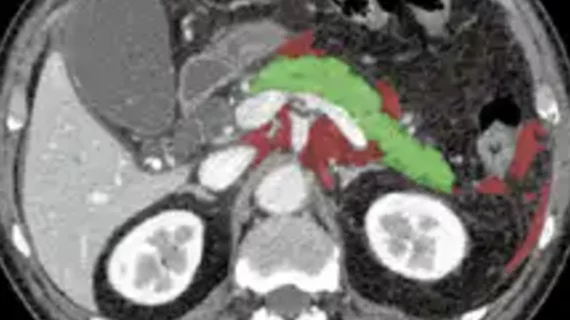
An artificial intelligence (AI) tool can provide clinicians with an early warning sign of impending organ failure (OF) in patients with pancreatitis.
Persistent organ failure, among the most serious complications of acute pancreatitis (AP), is associated with mortality rates of 30% to 50%. Existing scoring systems and CT-based severity assessments can have limitations for early risk stratification, particularly when they depend on lab results or other clinical information that may not be immediately available when treatment decisions are being made.
“Acute pancreatitis incidence is rising globally. Current scoring systems lack sensitivity for early organ failure prediction and suffer from interobserver variability,” Yun Bian, with the department of radiology at Changhai Hospital, and colleagues noted. “This study aimed to develop and validate an AI-driven model for fully automated early prediction of OF in AP using multiphase computed tomography imaging.”
The tool, known as ORACLE (Organ failure Risk Assessment with CT and Learning Engine), can predict whether a patient could go into organ failure up to 3.5 hours prior to the onset of symptoms, offering providers an opportunity to proactively treat patients. The model combines deep learning radiomics extracted from routine multiphase CT scans with clinical variables to automatically assess the risk of organ failure.
Researchers recently retrospectively evaluated ORACLE in 2,746 patients with acute pancreatitis who were treated between 2011 and 2024. Patients were divided into training, validation and independent external test cohorts. The model’s performance was compared to standard prediction methods and those that utilize clinical data alone.
In terms of predicting whether a patient would experience organ failure, the model achieved an AUC of 0.85 in the training cohort, 0.89 in validation and 0.81 in the external test cohort. Notably, these results were higher than those of the Modified CT Severity Index, which produced AUCs ranging from 0.68 to 0.74, and clinical models, which had AUCs ranging from 0.67 to 0.71.
What's more, the tool provided a median 3.5-hour early warning before organ failure became clinically evident, with 55% of cases predicted at least three hours in advance. Among patients classified as high risk by the model, 92.1% developed organ failure. Its overall negative predictive value was 97.2%, suggesting that a low-risk result could help identify patients unlikely to develop the complication.
By extracting quantitative information from imaging that is already routinely acquired for pancreatitis, the researchers said ORACLE could potentially help clinicians identify high-risk patients earlier and allocate intensive monitoring and other resources accordingly.
“This risk-adaptive strategy addresses the unmet clinical need for early triage tools in AP, particularly in the first 24–48 h when traditional scoring systems are often inconclusive,” the authors concluded.
Read more here.

In addition to her background in journalism, Hannah also has patient-facing experience in clinical settings, having spent more than 12 years working as a registered rad tech. She began covering the medical imaging industry for Innovate Healthcare in 2021.