
AI solution can help nearly 1 in 5 patients avoid prostate biopsies, RadNet says
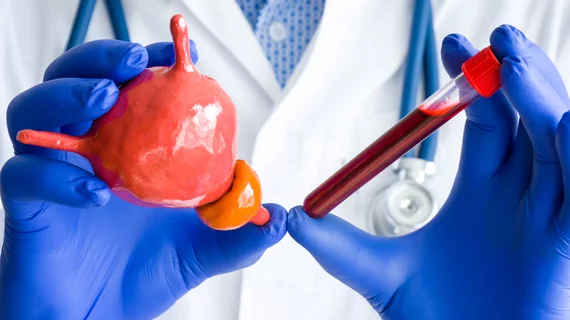
An artificial intelligence solution from RadNet subsidiary DeepHealth can help nearly 1 in 5 patients avoid prostate biopsies, according to new research.
Early detection of clinically significant prostate cancer is critical to reducing mortality while avoiding unnecessary treatments. In recent years, multiparametric MRI—an advanced scanning technique that combines standard anatomical pictures with functional measurements—has become a cornerstone of the diagnostic pathway, experts write in European Radiology.
The Prostate Imaging Reporting and Data System, or PI-RADS, was introduced to help standardize interpretations of these MRIs. Researchers recently aimed to compare an AI risk-classification tool against radiologist-assigned PI-RADS scores for detecting clinically significant prostate cancer.
They also investigated whether AI-assisted biopsy triage could help to eliminate any unnecessary procedures. Researchers found clear benefit, with nearly 19% of biopsies avoided while still maintaining a 98.4% sensitivity for identifying clinically significant cancer.
“When an MRI finding is uncertain, deciding whether to recommend a biopsy can be difficult,” senior author Francesco Giganti, MD, a professor of radiology at University College London, said in a statement Oct. 8. “Our findings suggest that AI could provide another piece of evidence to help clinicians make that decision. The opportunity is to use DeepHealth’s Prostate MR Solution to better identify which men may benefit from a biopsy, with the final medical decision remaining with the clinical team.”
The retrospective study analyzed prostate MRI exams performed between 2014 and 2025 across the United States, Germany and the Netherlands. It incorporated nearly 800 subjects who underwent clinical evaluation for suspected prostate cancer, of whom 48% (or 380) had clinically significant disease. Scans were acquired on equipment from five different imaging vendors, “supporting the vendor neutral performance” of the AI technology.
Experts noted that the AI solution uses a simplified, three-tier risk classification system to support prostate MRI biopsy triage (low, medium or high risk). This compares to the five categories seen in PI-RADS, ranging from “highly unlikely” for significant cancer at 1, up to “highly likely” at category 5. In regular clinical practice, providers often have collapsed the five categories into three functional groups—low likelihood (PI-RADS 1 and 2), equivocal (PI-RADS 3), and high likelihood (PI-RADS 4 and 5) for clinically significant prostate cancer.
Researchers determined that AI achieved non-inferior, patient-level sensitivity and higher patient-level discrimination than PI-RADS. However, it had lower lesion-level sensitivity at the predefined threshold. Giganti and colleagues believe their findings show that AI risk categories can complement PI-RADS by supporting high-sensitivity biopsy triage, especially for equivocal PI-RADS 3 lesions, while “radiologists retain responsibility for lesion mapping.”
While biopsies are essential for diagnosis, they add, these procedures are invasive and can sometimes find no cancer or only low-grade disease that doesn’t require treatment. Reducing unnecessary biopsies can help spare men related risks while focusing care “on those most likely to benefit.”
“These findings show how AI applications within our Prostate MR Solution can support clinicians at one of the most consequential decision points in prostate care,” added Niccolò Stefani, MD, business and product leader, clinical AI, at DeepHealth. “Our aim is to help care teams make more informed decisions about the next step for each patient.”
Read more, including potential study limitations, in European Radiology.

Marty Stempniak has covered healthcare since 2012, with his byline appearing in the American Hospital Association's member magazine, Modern Healthcare and McKnight's. Prior to that, he wrote about village government and local business for his hometown newspaper in Oak Park, Illinois. He won a Peter Lisagor and Gold EXCEL awards in 2017 for his coverage of the opioid epidemic.