
Current imaging AI systems can be repurposed to address future pandemics, study asserts
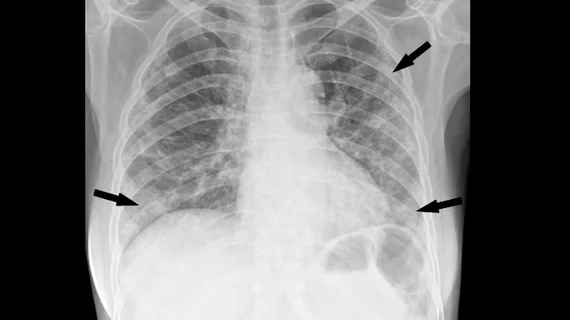
A new paper published in Scientific Reports details the potential of repurposed ready-to-use AI detection systems in lessening the impact of future pandemics.
Not long after the onset of COVID-19, medical professionals quickly realized that imaging was a vital tool in both diagnosing the virus and determining its severity. Chest CT scans became critical for patient care, but more readily accessible exams, such as chest radiographs, were imperative, especially in settings with fewer resources.
“With the rapid surge of imaging volume during the pandemic, rapid screening, triaging, and isolation of COVID-19-positive or suspected patients became critical such that precautionary preparations, planning and management can be readily made for hospitals and clinics,” Young Beom Kim, with the College of IT Engineering at Pyeongtaek University, Republic of Korea, and colleagues noted. “To those purposes, the use of commercially available artificial intelligence software could be of potential benefit, especially in situations where medical resources may be limited.”
Since the onset of the pandemic in late 2019, multiple AI-enabled applications, tailored to identifying signs of COVID on imaging, have emerged. Though effective, these tools came after the most severe surges of the virus, limiting their ability to mitigate the spread of the virus. These tools also were trained on data specific to COVID, which has the potential to inhibit their utility in the future if other widespread viral outbreaks with different etiologies were to occur.
Recently, researchers explored whether pre-trained applications—developed to assess chest radiographs for conditions other than COVID—could identify signs of the virus. They tested their theory using a commercial AI software that was originally designed for detecting pulmonary nodules in chest radiographs. The team used a public dataset of chest radiographs acquired during the early stages of COVID to test the software's ability to detect signs of infectious pulmonary disease.
Without any additional training on COVID-specific data, the software performed admirably. It achieved a sensitivity of 86.8% and a specificity of 59.6% in detecting pneumonia features, including those caused by COVID-19. It also yielded promising results when presented with just a single PA chest X-ray, achieving a sensitivity of 89.2% and specificity of 67.4%. The software performed better with PA radiographs compared to those captured in AP views, highlighting the need for standardized imaging protocols in situations similar to the COVID outbreak.
The team suggested these findings represent “a significant advancement in the field of radiology.”
“This study demonstrated the feasibility and effectiveness of utilizing existing AI technology, originally designed for detecting pulmonary nodules, in addressing urgent healthcare needs during a global pandemic,” the authors noted, later adding that the study provides “compelling evidence for the immediate clinical deployment of existing AI technology in responding to infectious disease outbreaks.”
Read more about the team’s findings here.

In addition to her background in journalism, Hannah also has patient-facing experience in clinical settings, having spent more than 12 years working as a registered rad tech. She began covering the medical imaging industry for Innovate Healthcare in 2021.