
Researchers' testing of industrial dyes could lead to the development of dementia-specific imaging agents
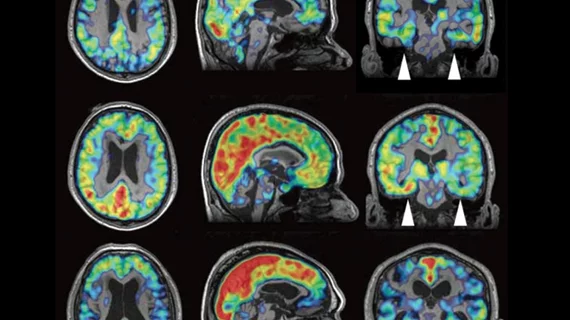
Experts are working on a way to repurpose industrial days to help create dementia-specific imaging agents.
There are dozens of different subtypes of dementia, and it can be challenging to determine the exact type affecting a patient. However, an accurate diagnosis is critical to ensure patients receive the treatment and management that best suits their unique situation.
Diagnosing dementia traditionally entails a series of behavioral observations and assessments, imaging exams and lab tests. While beneficial, these exams are still vulnerable to a level of subjectivity that could impact diagnostic accuracy. To address this, a team of chemists at UC San Francisco has been working to develop imaging agents from industrial dyes. The team has been screening these dyes to determine if they will bind to different types of protein clumps known to be associated with dementia.
“Progress with diagnosing and treating all the different dementias has been halting and slow,” senior author Jason Gestwicki, PhD, professor of pharmaceutical chemistry at UCSF, said in a news release. “We’re optimistic that our streamlined approach to screening dyes can change the landscape of research and, ultimately, the care we provide for these devastating conditions.”
The group first focused their work on tau proteins, as these are implicated in Alzheimer’s disease—the most common type of dementia. They created different types of tau clumps in various shapes and sizes and tested 300 dyes to see if any had superior binding potential.
Eventually, they narrowed this figure down to 10 dyes that stuck to each of the various clumps. One of those dyes stood out from the rest, showing utility in both animal models and in tau protein samples acquired from deceased Alzheimer’s patients.
“Industrial chemistry has produced thousands of molecules that might fail in their first intended application,” Gestwicki said. “But some of them could be repurposed as winners when it comes to biomedicine.”
Although it is still early in the team’s research, they are hopeful that their work can lead to improved diagnoses across a myriad of neurological conditions.
Read more about their work in Nature Chemistry.

In addition to her background in journalism, Hannah also has patient-facing experience in clinical settings, having spent more than 12 years working as a registered rad tech. She began covering the medical imaging industry for Innovate Healthcare in 2021.