
A simple, scalable way to increase access to pediatric radiologist reads
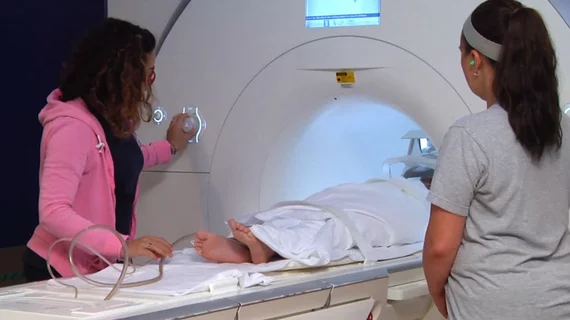
New research details how a large healthcare organization was able to increase subspecialty reads by pediatric radiologists across its system using a centralized imaging platform.
Access to pediatric radiologists is often concentrated at children’s hospitals and larger specialty centers, which can leave community hubs with fewer opportunities to obtain subspecialty reads. Centralized imaging infrastructure may help health systems share access to specialist expertise across multiple locations without requiring every hospital to maintain its own dedicated pediatric radiology team.
Published in Current Problems in Diagnostic Radiology, experts recently detailed how such a centralized system can benefit both patients and providers.
“The advent of [the] electronic medical record-picture archiving and communication system has enabled remote interpretation of imaging examinations across multiple institutions, facilitating a centralized workflow and allowing for broader pediatric subspecialty coverage,” Connor Latterman, with the Michigan State University College of Human Medicine, and colleagues noted. “This system may be particularly beneficial in rural or small-community settings where on-site pediatric radiologists are often unavailable.”
The retrospective study evaluated 191,250 imaging examinations in patients younger than 18 years across 33 hospitals during two six-month periods before and after implementation of a common EMR-PACS system that flagged pediatric exams for subspecialists. Researchers compared the proportion of examinations interpreted by pediatric radiologists and report turnaround times.
At the non-children’s hospitals, the share of examinations interpreted by pediatric radiologists increased from 39% before implementation to 74% afterward. Coverage also improved at the children’s hospital, rising from 84% to 91%. Across the entire hospital network, pediatric subspecialty interpretation increased from 68% to almost 83%, indicating that the centralized approach extended specialized expertise beyond the system’s primary pediatric center.
Report turnaround times also improved. The average fell from 8 hours and 47 minutes before implementation to 5 hours and 35 minutes afterward, a reduction of 3 hours and 12 minutes.
The findings suggest that a shared EMR-PACS platform can help large, geographically expansive health systems improve access to pediatric imaging expertise while streamlining reporting. The authors described the approach as a scalable model for expanding subspecialty coverage beyond tertiary care centers.
Read more here.

In addition to her background in journalism, Hannah also has patient-facing experience in clinical settings, having spent more than 12 years working as a registered rad tech. She began covering the medical imaging industry for Innovate Healthcare in 2021.