
Radiologists often suffer repetitive-stress injuries from PACS use
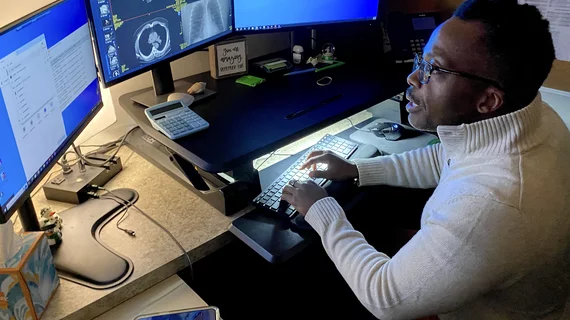
Radiologists are often suffering repetitive-stress injuries from repeated PACS use, underlining the need for ergonomic intervention, according to new research.
Members of the specialty spend much of their workday interpreting images at picture archiving and communication system workstations, typically in static postures while making monotonous mouse movements. These occupational exposures can place radiologists at risk of work-related musculoskeletal injuries, with some studies suggesting prevalence rates as high as 60%, experts write in the European Journal of Radiology.
Researchers with the department of imaging at the University of Ottawa recently aimed to better understand this challenge at their own institution. They found that about 74% of PACS users had suffered repetitive-stress injuries, with emotional exhaustion independently tied to this burden.
“Work-related musculoskeletal symptoms are highly prevalent among radiology PACS users, highlighting a critical occupational health issue,” corresponding author Marlise Santos, MD, an associate professor and neuroradiologist with uOttawa, and colleagues wrote Oct. 28. “The association between musculoskeletal symptom and emotional exhaustion underscores the need for further research examining whether ergonomic interventions and training may help improve physician well-being and mitigate physician burnout,” they added.
Santos and colleagues conducted their survey between March and May of 2025, targeting all clinical users of PACS workstations including radiologists, residents and fellows. A total of 76 users filled out the questionnaire, for a response rate of 61%. Researchers utilized the Cornell Musculoskeletal Discomfort Questionnaire and the Abbreviated Maslach Burnout Inventory to help assess stress injuries and any related workplace fatigue.
About 74% of respondents reported at least one work-related musculoskeletal symptom, with neck and upper back pain the most common. Among those impacted, 85% believed workstations had worsened their condition. About 79% indicated a component of their hospital workstation had been broken in the past year, and 87% had never received formal ergonomic training. Another 52% said their musculoskeletal ailments contributed to burnout, and multivariate analysis further showed that such symptoms were significantly associated with higher emotional exhaustion (along with female sex).
Each unit increase in emotional exhaustion scores was tied to a fourfold increase in symptom burden, the study found.
“From a practical standpoint, the high prevalence of musculoskeletal symptoms, limited ergonomic training, and frequent workstation equipment malfunctions identified in our cohort highlight several opportunities for intervention,” the authors charged. “Potential strategies include formal ergonomic training programs, regular workstation assessments, timely equipment maintenance, and greater workstation customization to accommodate individual users. Such interventions may reduce musculoskeletal symptom burden and improve the overall work environment for radiologists and trainees.”

Marty Stempniak has covered healthcare since 2012, with his byline appearing in the American Hospital Association's member magazine, Modern Healthcare and McKnight's. Prior to that, he wrote about village government and local business for his hometown newspaper in Oak Park, Illinois. He won a Peter Lisagor and Gold EXCEL awards in 2017 for his coverage of the opioid epidemic.