Providers utilize business intelligence to monitor referral patterns and collaborate with clinicians who order their services. Such analytics tools have also been deployed in the specialty to improve productivity, track patient satisfaction and bolster quality.
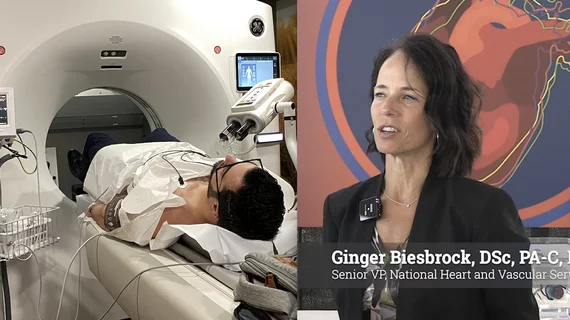
Advocates say the shift to CCTA can translate into a broader financial impacts, with some cath labs potentially seeing margin increases of as much as 40%.
RadNet Chaiman and CEO Howard Berger, MD, explains why the company has invested tens of millions into DeepHealth to rapidly build up a new business model.
The Los Angeles-based imaging group believes the move will make its DeepHealth subsidiary the “largest provider of radiology clinical AI solutions worldwide.”
Whatever specific shape work takes in the near and distant future, it’s likely the COVID-19 era will be looked back upon as a before-and-after dividing line.
Clarius Mobile Health of Vancouver, B.C., has won FDA approval to market an AI model that works with the company’s handheld point-of-care ultrasound devices to identify and measure tendons of the foot, ankle and knee.
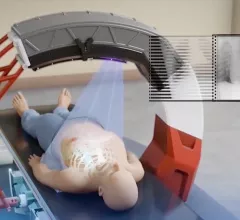
The FDA has cleared U.K.-based Adaptix to market a 3D X-ray system that, according to the company, images hands, feet and elbows “at a fraction of the radiation dose and per-study cost of traditional CT.”
Bhvita Jani, research manager at Signify Research, explains advances in cold-cathode X-ray tube technology and how this might represent a major shift in radiology imaging systems.
The firm in question, TRC Capital Investment Corp., has a history of making below-market offers to shareholders of large corporations. These offers are typically unsolicited.