Providers utilize business intelligence to monitor referral patterns and collaborate with clinicians who order their services. Such analytics tools have also been deployed in the specialty to improve productivity, track patient satisfaction and bolster quality.
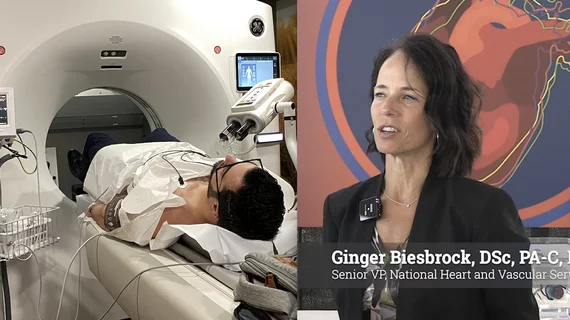
Advocates say the shift to CCTA can translate into a broader financial impacts, with some cath labs potentially seeing margin increases of as much as 40%.
RadNet Chaiman and CEO Howard Berger, MD, explains why the company has invested tens of millions into DeepHealth to rapidly build up a new business model.
The Los Angeles-based imaging group believes the move will make its DeepHealth subsidiary the “largest provider of radiology clinical AI solutions worldwide.”
Last fall Yale Radiology began offering users of its EHR-based patient portal a link to a page on RadiologyInfo.org headed “How to read your radiology report.” The page drew 400 or so clicks in its first two weeks. Today it’s getting 5,000 to 10,000 a month.
Aidence will license, develop, and validate Google Health’s existing AI research module, hoping to offer better differentiation between benign and malignant lung nodules at an early stage.
Also worth a look: the ACR Data Science Institute’s AI Central, updated this week with detailed information on imaging AI products that have been cleared by the FDA.
A university in the Lone Star State is readying a master’s degree program that will prepare grad students to work as radiologic “techs” in all 50 states.
Three and a half weeks after abruptly closing shop due to unspecified technical difficulties, Hawaii Radiologic Associates is reopening its doors in stages.