
The 2022 contrast shortage changed CT patterns, driving higher costs and longer stays
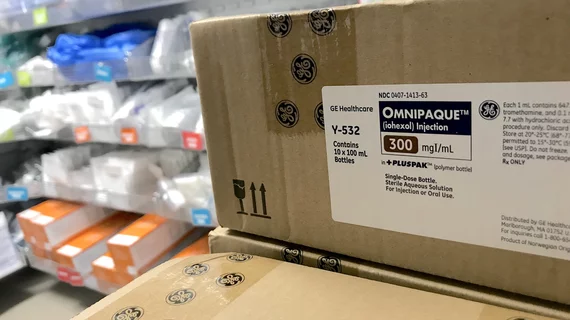
New data is offering insight into how the contrast shortage of 2022 impacted hospitals’ bottom lines, revealing that it substantially altered CT utilization and patients’ length of stay (LOS).
Several years have now passed since the temporary closure of GE’s manufacturing plant in Shanghai had radiology departments across the globe scrambling for solutions to maintain their contrast supplies. Though numerous steps have since been taken to ensure departments are prepared for similar events in the future, until recently, the economic impact of the shortage has not been widely explored. Now, new data published in Current Problems in Diagnostic Radiology is offering a better idea of exactly how the supply chain strain affected departments' workflows and finances.
The findings suggest that many patients had to undergo repeat imaging during the shortage, often completing a noncontrast CT initially before being referred to CT again to have a contrast-enhanced study performed. This inevitably increased CT utilization and LOS for many, which in turn increased the associated costs for both organizations and patients.
“Particularly in emergency radiology setting, contrast-enhanced CT has undoubtedly greater diagnostic accuracy than non-contrast CT and is used as the imaging modality of choice for trauma and acute abdominal symptoms. In addition, when non-contrast exams are non-diagnostic, repeat scans are often required, unnecessarily exposing patients to additional radiation,” Eline M. van den Broek-Altenburg, PhD, with the University of Vermont, Larner College of Medicine, and colleagues noted.
For their work, researchers examined electronic health record data from more than 12,000 CT encounters between August 2021 and February 2023, covering periods before, during and after the ICM shortage. The investigators divided the shortage into four phases: pre-shortage, wash-in, rationing and post-shortage, analyzing how LOS, repeat exams and costs fluctuated during each phase.
During the shortage phases, 38% to 55% of initial abdominal/pelvic CT exams were performed without contrast, reflecting changes in contrast availability and institutional rationing protocols. The proportion of patients requiring multiple follow-up scans increased during the shortage, with a notable spike during the rationing phase. However, after adjustment for patient characteristics and emergency department presentation, repeat imaging was actually lower during rationing than during the pre- and post-shortage periods.
When repeat imaging did occur, it was associated with longer LOS for both outpatient and inpatient encounters. Median LOS also was longer among patients who initially underwent noncontrast CT compared with those who received contrasted first scans during the same period.
Healthcare spending increased during the shortage periods as well. Total costs within two months of the initial imaging encounter were higher, driven in large part by additional imaging and longer stays. Although imaging utilization and LOS measures moved back toward pre-shortage levels after contrast supplies recovered, costs remained elevated in the short term.
The findings illustrate that the effects of a contrast shortage can extend well beyond the radiology department. Although rationing reduced the use of ICM, changes in initial imaging strategies and subsequent care created additional resource demands. The researchers said the results highlight the need for structured crisis management strategies in the event of future contrast disruptions, including prioritization of contrast-enhanced examinations, use of alternative imaging modalities when appropriate and standardized documentation of decisions to modify imaging protocols.
“Together, these findings demonstrate that the clinical and economic effects of contrast-conservation strategies are complex and should be evaluated using both imaging utilization and downstream resource-use measures, the authors concluded.
Read more here.

In addition to her background in journalism, Hannah also has patient-facing experience in clinical settings, having spent more than 12 years working as a registered rad tech. She began covering the medical imaging industry for Innovate Healthcare in 2021.