
Acute imaging contrast reactions costing hospitals big bucks
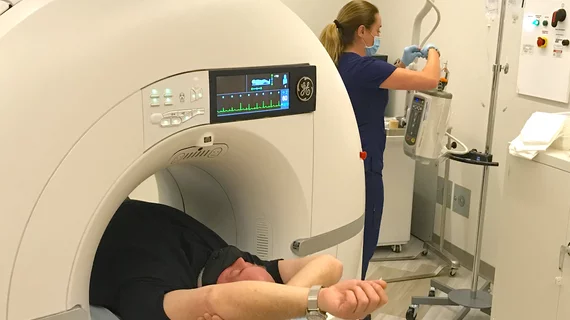
Acute contrast reactions are costing hospital radiology departments considerable resources, according to a new single-center study.
These allergic-like and physiologic reactions to imaging agents are routinely encountered in clinical practice following administration for certain scans. Incidence rates have been reported at between 0.2% to 0.7%, with severe, life-threatening reactions occurring in about 0.002% to 0.06% of instances, experts write Oct. 17 in JACR.
Beyond direct patient risks, contrast reactions also can burden the healthcare infrastructure, requiring additional demands on workflows, staffing and healthcare resources. Researchers with the Mayo Clinic aimed to better understand the financial ramifications of these reactions, analyzing five years’ worth of data from the Rochester, Minnesota-based institution.
“To our knowledge, the costs and workflow delays associated with acute reactions to contrast material have not been specifically studied,” lead author Jennifer S. McDonald, PhD, with the Department of Radiology at Mayo, and colleague detailed Saturday. “We hypothesized that costs and departmental delays would increase with reaction severity and sought to quantify these associations across the full spectrum of acute reactions.”
The study sample included all contrast-enhanced CT and MRI exams performed at Mayo between 2019 and 2024. Acute reactions were identified as allergic-like or physiologic and categorized by severity using established American College of Radiology criteria. Drug, procedural and hospitalization costs were estimated using CMS and Veterans Affairs databases.
A total of nearly 364,000 contrast-enhanced CT exams and another 254,000 enhanced MRI scans were included in the study. These produced a total of almost 1,100 acute iodinated contrast material reactions (789 allergic-like, 310 physiologic) and over 500 gadolinium reactions (321 allergic, 200 physiologic).
A minority of patients received a billable medication or procedure for treating these reactions (29% in CT and 21% for MRI). Median costs were modest, the authors noted, at about $15 for contrast-enhanced CT and $1.66 for enhanced MRI. However, they varied substantially by severity (up to $238,000 for serious reactions) and outcome (i.e., $326 for emergency patients or nearly $14,000 for those who were admitted to the hospital).
In addition, acute iodine reactions resulted in median additional time spent on the patient of 25 minutes (with an interquartile range of 11 to 43 minutes) or 27 minutes for gadolinium reactions (IQR of 8-59 minutes). The study authors note that these costs would likely be higher when accounting for lost wages and workforce productivity by hospitalized patients, along with additional staffing and expenditures needed to meet the added clinical demands.
“In conclusion, our retrospective study found that acute ICM and GBCA reactions contributed to additional estimated direct medical costs and imaging delays, both of which increased with the severity of the reaction,” the authors wrote. “Our findings help quantify how these adverse events increase estimated direct medical costs and negatively affect radiology workflow and provide decision makers with important economic and operational context.”
Read more, including potential study limitations, in the Journal of the American College of Radiology.

Marty Stempniak has covered healthcare since 2012, with his byline appearing in the American Hospital Association's member magazine, Modern Healthcare and McKnight's. Prior to that, he wrote about village government and local business for his hometown newspaper in Oak Park, Illinois. He won a Peter Lisagor and Gold EXCEL awards in 2017 for his coverage of the opioid epidemic.